If your phone's blowing up after a Gunnison arrest, you're probably trying to answer the same three questions at once, where is the person, can anyone see them, and how fast can they get out. In a rural county, those answers don't always sit on one clean public page, and Gunnison County Jail is a good example of why families get mixed signals before they get help.
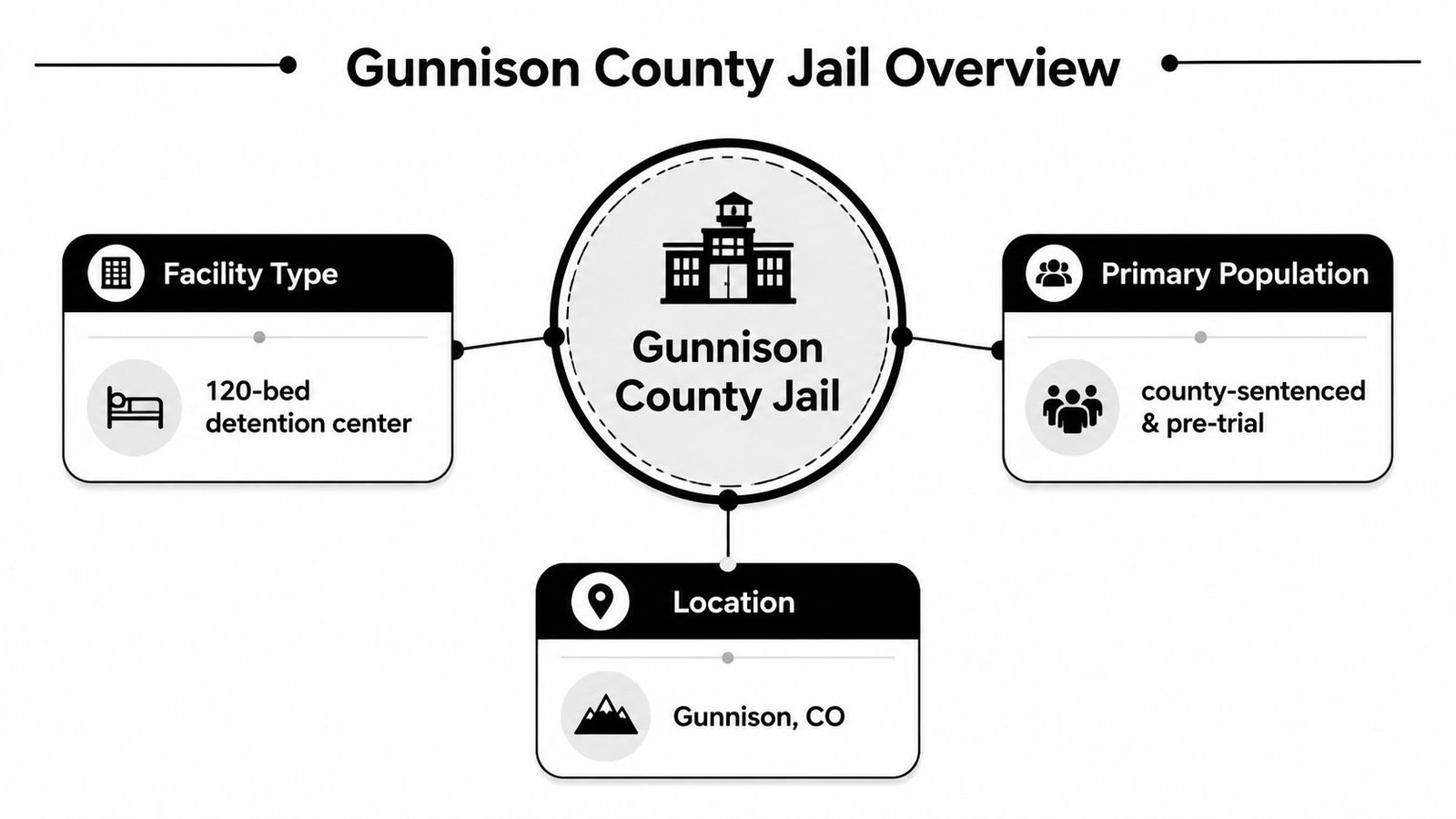
Gunnison County Jail is a 120-bed detention center inside the Gunnison Public Safety Center at 510 West Bidwell Avenue in Gunnison, Colorado. It houses men and women arrested locally or serving sentences for Colorado misdemeanor or felony crimes, so it's not just a short-term holding spot, it's the county's main detention point for a wide range of cases.[^1]
What Gunnison County Jail Is and Who Ends Up There
The first call I usually hear goes something like this, “My brother got picked up in Gunnison, and nobody can tell me where they took him.” That panic makes sense. In a county setup like this, one arrest can move straight from the street to the jail, and families have to deal with booking, records, and release through a single public safety hub.
A county jail, not a metro system
Gunnison County Jail operates inside the county's public safety complex at 510 West Bidwell Avenue.[^2] That matters because the booking desk, supervision, and administrative contact all run through one place. In a smaller county system, that can speed things up once you reach the right person, but it also means there is less room for the kind of public-facing updates people expect from a larger metro jail.
The people who end up here are usually local arrests, or people serving time tied to a Colorado misdemeanor or felony case.[^1] Families often ask me if the jail is just for short holds. It is not. It serves as the county's main detention point for a mix of short-term bookings and case-related custody, so the first question is usually not whether the person is in Gunnison County, but whether they have been booked yet and under what status.
Why rural bookings feel different
Smaller jails usually have fewer front-desk lanes, fewer online updates, and fewer staff members answering public questions at once. Gunnison's county sources show the jail and sheriff's office tied to the same public safety address, which is a good sign that the process is centralized, but it also explains why answers can come slower when you are calling from somewhere else.[^2]
That difference trips people up. A metro jail page often gives families a clean search box and a stack of public details. A rural county jail can require a direct call, a little patience, and a willingness to work through county staff instead of expecting a polished lookup page to solve everything. If you are trying to confirm whether the arrest landed here, start with a proper county search like the county jail lookup page before you waste time guessing or driving in blind.
Practical rule: when a county jail sits inside the sheriff's public safety building, the fastest answer usually comes from the county contact line, not a generic directory listing.
Location, Phone Numbers, and Confirming an Inmate Is There
Before you drive up the canyon, get the contact path straight. Gunnison County Jail is tied to the county public safety building, while the courts sit at a separate address, so families mix them up when they are trying to move fast. That confusion costs time, and in a rural booking it can cost the whole day.
Call in the right order
Start with the jail line at 970-641-1108. Use that number to confirm whether the person has been booked, whether the front desk can answer status questions, and whether you need to keep working through county staff.[^3] If the jail line does not give you a full answer, the sheriff's office is listed at 970-641-8200 on the county directory.[^4]
The county also says visitors must call ahead to schedule at 970-641-1113.[^5] That call matters even if you already know the inmate is inside. Rural facilities do not run like metro jails, and a drive-in visit can fail because the schedule has to be set first.
Work through the county contacts, not assumptions
Families often waste time calling the wrong office first. If you are trying to confirm status, schedule a visit, or figure out whether the person is in the correct facility, stay with the county numbers and do not rely on a random directory listing or a stale search result. Gunnison County keeps the detention center, sheriff's office, and courts in separate entries within the same public structure, and that setup is exactly why the call sequence matters.[^3][^4]
For a quick checklist of what to have ready before you call, use this county jail lookup guide. It keeps the process focused on the right questions and helps you avoid repeating the same call twice.
Visitation Rules, Mail, and Phone Calls at the Jail
Visitation at Gunnison County Jail is one of those topics that looks simple online and gets messy in real life. The county's own detention handout uses a 30-minute visit block structure with a day-by-day schedule and no Friday visitation, while some third-party pages describe a different setup and even say visits happen by video only. That conflict is why families should treat any generic county-jail template with caution.
Confirm before you drive
The cleanest answer is still the county line, 970-641-1113, which the detention services page says to call in advance for visitation scheduling.[^5] That's the number that matters when you're deciding whether to leave the Front Range, the Western Slope, or another state entirely. If custody status changes, or if the jail adjusts access rules, the phone call is what keeps you from arriving with the wrong expectation.
The county inmate handbook also gives inmates a formal complaint path for civil-rights or conditions-of-confinement issues. The process is to call 970-641-1108 and ask for a sergeant or captain.[^6] That's more than a routine complaint line, it creates a supervisory escalation track when the issue is about policy, access, or staff conduct.
Communication channels at a glance
| Channel | How It Works | Key Number or Address |
|---|---|---|
| Visitation | Call ahead before traveling, because the county requires scheduling and public schedules can conflict | 970-641-1113 |
| Facility contact | Main detention center line for booking and inmate-status questions | 970-641-1108 |
| Sheriff's office | County office listed at the same public safety address for broader follow-up | 970-641-8200 |
| Complaint path | Ask for a sergeant or captain through the jail line for conditions issues | 510 W. Bidwell Ave., Gunnison, CO 81230 |
Mail and phone access usually become the next questions after visitation, especially when a family is trying to stay in touch while the case moves forward. For practical guidance on whether visits are allowed and how those rules tend to work, the jail visitation guide at can you visit someone in jail is a helpful companion.
Booking, Classification, and Release Pathways
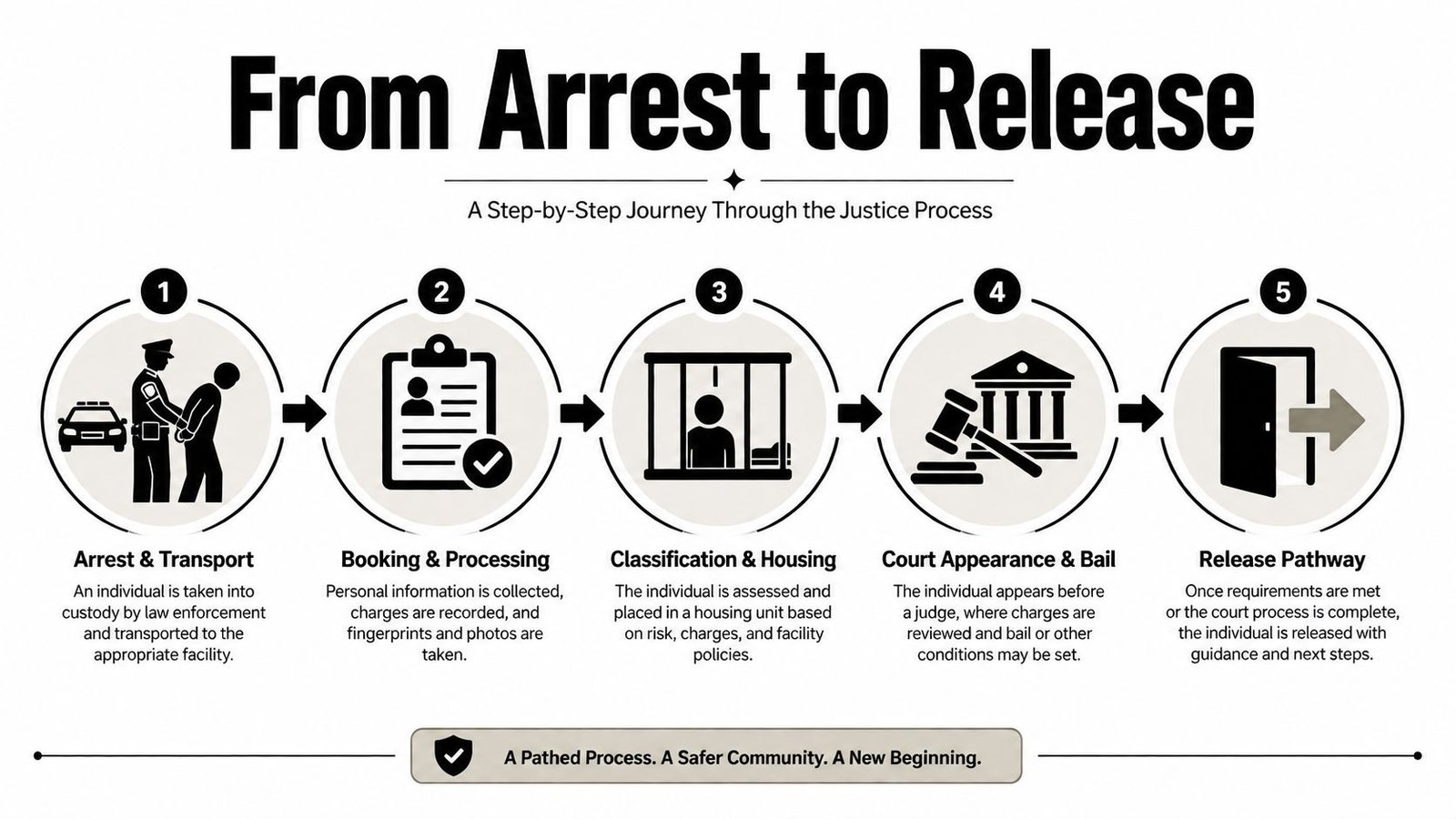
Arrest is only the first stop. At Gunnison County Jail, the path after transport typically runs through booking, processing, classification, and then whatever release route the inmate qualifies for. Families often assume a person is either “in” or “out,” but the county paperwork shows more layers than that.
What happens after intake
Once someone reaches the detention center, staff have to identify the person, record property, and handle the standard intake process before any release conversation really makes sense. That's also where classification starts, because housing and program eligibility don't look the same for every inmate. A person being held locally, a sentenced inmate, and someone who may qualify for a work-related release option are not all treated the same way.
Gunnison County publishes a dedicated work-release and school-release packet for the detention center, and that's a big clue about how the county manages structured release pathways.[^7] The packet shows that eligible inmates can move through a separate administrative process with a coordinator available on weekdays. That doesn't mean everyone gets approved. It means the county has an actual channel for people who qualify.
Why release timing is rarely just one thing
Families usually want to know, “Why hasn't he been released yet?” The honest answer is that release can depend on booking completion, classification, court handling, and whether the inmate fits a program pathway. The county also provides detention materials in Spanish, which matters for accessibility when the person or family needs clearer written guidance.
Practical rule: if the jail says a person is still in processing, that can mean paperwork, classification, or program review, not just a delay for the sake of delay.
The court piece matters too, because a release path can be tied to what happens next at the courthouse, not only what happens inside the jail. Gunnison County Courts are at 200 E. Virginia Ave., separate from the detention facility itself, so anyone coordinating a pickup or release should keep those addresses straight.[^3]
For a closer look at how long booking can take before the rest of the process moves forward, see how long booking takes in jail.
How Bail Works in Gunnison County and the Role of a Bondsman
Bail starts with the judge, not the jail. In Colorado, the court sets the bond amount at the first appearance, and that decision drives whether the family can post cash, secure a surety bond, or use property in support of release. The pressure on county detention systems also isn't standing still, Colorado projected adult and juvenile correctional populations to increase 3.3% during FY 2025 to 273.6, then rise another 4.8% over the following four years to 286.7 by the end of FY 2029.[^8]
Cash, surety, and property
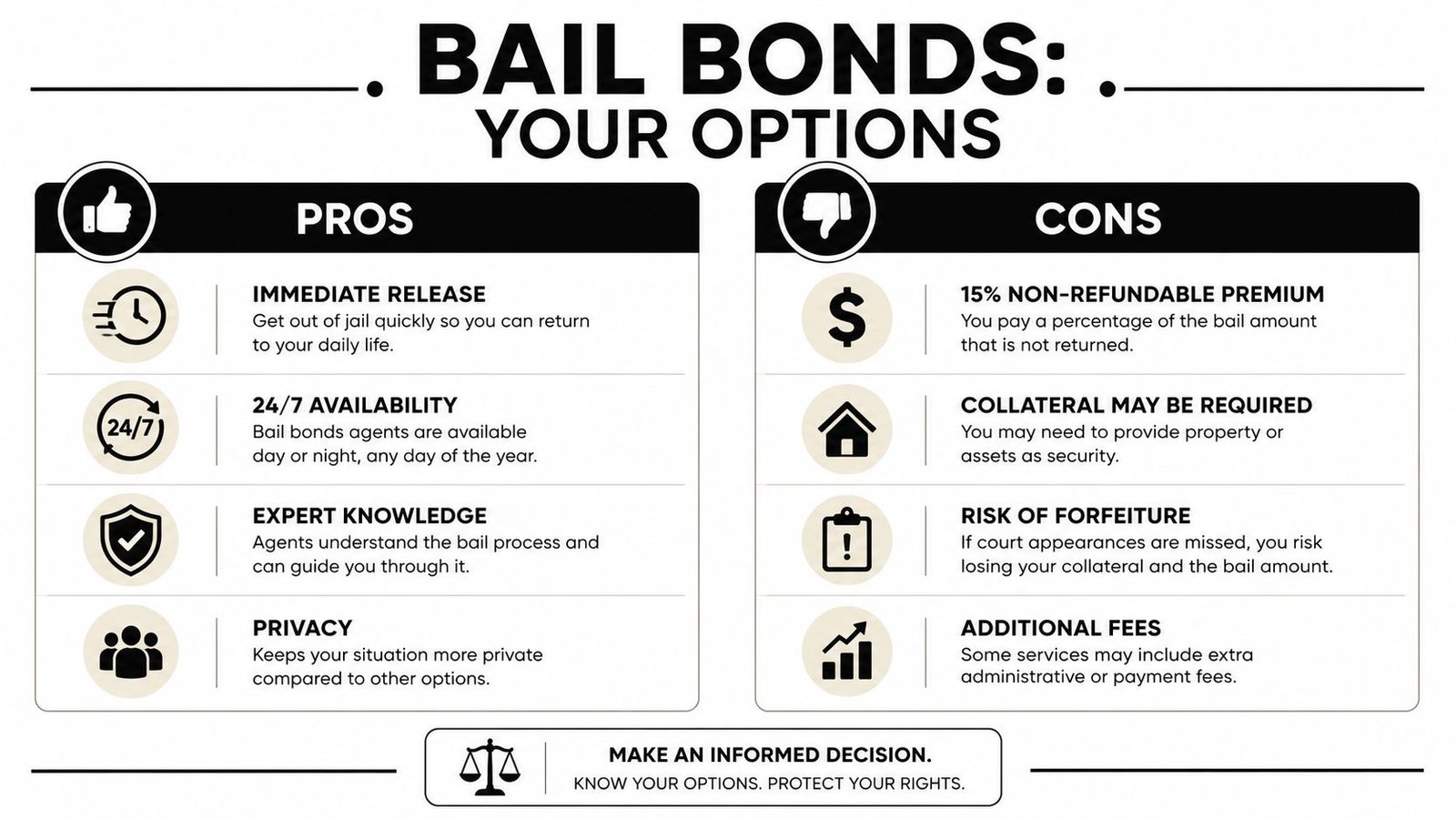
A cash bond means the full amount is posted directly. A surety bond uses a licensed bond agent to guarantee the appearance, and that's the route most families use when they don't want to tie up the full amount in cash. Property bonds exist too, but they add paperwork and usually aren't the fastest answer when everyone's trying to get someone out the same day.
Colorado's standard premium is 15 percent, and for bonds over $5,000, an approved cosigner can sometimes qualify for a 10 percent rate. Those are the kinds of numbers families ask about first because they decide whether a release plan is realistic. If the case is cash-only, a bondsman can't fix that, but when a surety bond is an option, the process is usually much faster than trying to arrange a full cash payment.
Why the right agent matters
A good bail agent does more than collect payment. They explain the bond type, coordinate with the jail, and make sure the paperwork lines up with the court case. That's especially important in a county like Gunnison, where statewide detention pressure can slow down local workflows even when the jail itself is functioning normally.
For a plain-English overview of what a bail bond agent does, the guide at what is a bail bond agent is worth reading before you decide how to move.
Posting Bail Step by Step with Express Bail Bonds
Driving to Gunnison first is usually the slowest move. If you already know a bond is on the table, the smarter path is to get the paperwork started before anyone burns hours on the road. That matters even more when relatives are out of county, because the process can be handled remotely and still move quickly once the jail is ready to accept posting.
The fast sequence
The process is straightforward.
- Call or text 720-984-2245. That gets the case started without waiting for office hours to line up.
- Complete the application electronically. If a cosigner is needed, the paperwork can move through the same remote channel.
- Review the contract remotely. That keeps everyone on the same page before payment is authorized.
- Authorize payment. The bond can't post until the financial side is clear.
- Let the licensed agent coordinate the jail posting. That avoids a second trip if the facility needs a specific timing window.
That approach is especially useful for families who live far from Gunnison, because it keeps the release process moving even when nobody is nearby. It also helps out-of-state relatives who can't show up in person but still need to be part of the cosigner or payment conversation.
What to expect from the bond side
For bonds over $5,000, Express Bail Bonds often secures 10 percent with an approved cosigner. That's a real-world option families ask about when they're trying to make a release workable without posting the full amount. The agency is available 24/7 by call, text, or email, which matters when arrests happen late at night or over a weekend.
If you want to see how the bonding process works in a broader Colorado context, the explainer at how to bail out of jail is a useful next read. For another external comparison on bond types, find Ventura County bond options can help you compare how other agencies frame the same choices.
From Court Date to Release and When to Call for Help
After release, the case still moves through court. In Gunnison, that means keeping track of the separate court building at 200 E. Virginia Ave., Gunnison, CO 81230.[^3] The address matters less than the court routine behind it, because missed check-ins, a bad mailing address, or a skipped appearance can turn a clean release into a new warrant problem fast.
Keep the bond moving in the right direction
The first post-release job is simple, keep the defendant reachable. A bail agent needs a working phone number, a current mailing address, and someone who will open court notices instead of letting them pile up. In rural cases, families are often split across different towns, and one missed message can create confusion about the next court date or a release condition.
Court calendar procedures matter here too. Gunnison County cases do not always move on a pace that feels predictable to families, so it helps to verify the next appearance date as soon as the jail release is complete and then check for any later notices from the court clerk. If a defendant moves, changes numbers, or switches email accounts, that information should be passed along right away so the bondholder and the attorney are not working with stale contact details.
The practical trade-off is plain. A faster release only helps if the case stays compliant afterward. Once the defendant is out, the bond is no longer about getting someone through the jail door, it is about keeping them on the court schedule and making sure every notice reaches the right person.
If you are dealing with a Gunnison arrest right now, call 720-984-2245 or text the same number to start the bond process. You can also reach out by email through the agency's main site, and the team can handle applications, contracts, and payment steps electronically without forcing a long drive into Gunnison.
If you need help with a Gunnison County booking, reach out to Express Bail Bonds and get the paperwork moving before the delay gets longer. The team handles Colorado jail bonds statewide, including remote processing for families who cannot get to the jail right away. If your case is coming through another Colorado county too, you can also review their local guidance for Jefferson County Golden Colorado and Centennial bail bonds.