
You're probably reading this because the phone rang at a bad hour, somebody you love is sitting in a Colorado jail, and the first person who answered the intake line couldn't give you a straight answer. That's the moment people start saying “get out of jail free”, even though real life is never a Monopoly card. In Colorado, the fast move is picking the right release path, calling the right jail, and getting paperwork moving before the window closes.
The Call That Brings You Here
The scene is usually the same. It's late, the house is quiet, and then the call comes in from a detention center, a police booking desk, or the defendant themselves if they've been allowed a phone call. You're trying to piece together where they are, what they're charged with, and whether anyone can get them home tonight. That's not panic, that's the normal first hour.
The phrase get out of jail free sounds like a shortcut, but Colorado doesn't work that way. There are release paths, and each one has a different gatekeeper. A cash bond means money goes to the court. A surety bond means a licensed bail agent posts the bond for a premium. Own recognizance means the court releases the person on a promise to return. Pretrial release can mean supervision or conditions the court sets before trial.
Practical rule: the first right answer is not “How do I beat the system?” It's “Which release option does this jail, this court, and this case actually allow?”
If you're staring at your phone and guessing, stop guessing. Find the facility, confirm the booking, and then match the release route to the bond amount and the court's conditions. Colorado families waste hours trying to talk about solutions before they even know which jail is holding the person. That delay costs time, and time matters at 2 a.m. just as much as it does at 2 p.m.
For a quick visual of how people usually search for the right county jail contact, keep this directory handy: county jail phone numbers directory.

Finding Your Loved One in a Colorado Detention Facility
Start with the full legal name and date of birth. If you have a booking number, use it, but don't wait on it. County rosters can lag, especially when someone was arrested by a municipal agency and then moved, or when the arrest started with one department and the booking landed in another facility. If the name doesn't appear right away, keep checking and widen the search to the county level, not just the city.
The most useful public checks are the county jail rosters for Denver, Arapahoe, Jefferson, Douglas, Weld, and El Paso, plus the state locator when someone is held under a Department of Corrections case. A municipal arrest may show up under a city agency first, then appear later in the county system. Families get tripped up when they search the wrong agency and assume the person is unfindable.
| Colorado County Jail Lookup Resources | Lookup Type | Notes for Families |
|---|---|---|
| Denver | County jail roster | Good first check when the arrest happened in Denver or the person was transferred locally |
| Arapahoe | County jail roster | Use the legal name, not nicknames |
| Jefferson | County jail roster | Check again if the person was recently moved |
| Douglas | County jail roster | County search is better than guessing by city |
| Weld | County jail roster | Useful when the arrest began outside a city department |
| El Paso | County jail roster | County and municipal cases can look different |
| Colorado DOC | State offender locator | Use this when the person may be under a DOC hold |
The point is simple. Confirm the facility, confirm the booking, and confirm the custody type before you start talking release. If you can't find them, that usually means the intake system hasn't fully updated yet, not that you've hit a dead end. Keep the search disciplined and move on only when you know where the person is being held.
For a county search example families often use while they're on the phone, see this guide to the Pueblo County jail inmate search.
Four Release Options Every Family Should Understand
A late-night call to a Colorado jail usually leads to one of four release paths. The judge may set a cash bond, allow a surety bond, release the person on own recognizance, or order pretrial release with conditions. Each option puts the burden somewhere different, and families need to know which lane they are in before they start guessing.
Cash bond and surety bond
A cash bond sends the full bond amount to the court. If the case ends and the court returns that money, that is separate from the bond premium paid to a bail agent. A surety bond works differently, because a licensed bail agent posts the bond for the defendant after collecting the premium and the required paperwork.
That difference matters at 2 a.m. If the family can put together the full court amount, a cash bond may be the direct route. If tying up that much money is impossible, a surety bond is usually the practical choice. A family that wants the basic rules laid out in plain terms can also use this Georgia bail process explained guide to see how another state handles the same split between paying the court and working with an agent.
Own recognizance and pretrial release
Own recognizance means the court is letting the person go home on a written promise to return. It is not a free pass. It is a judge deciding the person can be trusted to come back without money posted at the jail.
Pretrial release adds conditions. That can mean check-ins, supervision, or other requirements that come with the release order, which makes it different from walking out with nothing hanging over the person. Families should read the release order carefully and follow it exactly, because missing a condition can turn a simple release into another jail call later.
| Comparing Colorado Release Options | Who Pays | Refundable | Best Fit |
|---|---|---|---|
| Cash bond | The family or defendant pays the court | Usually tied to court rules and case outcome | Families who can cover the full bond amount |
| Surety bond | The family pays a premium to the agent | No, the premium is not refunded | Families who need a posted bond without paying the full amount |
| Own recognizance | No upfront bond payment | Not a bond refund issue | Lower-risk cases the court trusts |
| Pretrial release | The court sets conditions, often with supervision | Not a bond refund issue | Cases where the court wants oversight instead of money |
For a visual breakdown of how signature bonds work, see this define-signature-bond-financial-concept image.

Use the chart to match the court's order to the family's actual options. If the jail in Colorado is holding someone on a bond that needs immediate action, the wrong choice wastes time and keeps the person inside longer than necessary.
Working With a Bail Bond Agent From Anywhere in Colorado
The cleanest route for many families is a surety bond, because the agent handles the posting process once the paperwork is right. If you're dealing with a late-night release, call or text 720-984-2245 and be ready with the defendant's full name, date of birth, charges if you know them, the facility, and the bond amount. That lets the agent tell you whether the case can move now or whether something still needs to be confirmed.
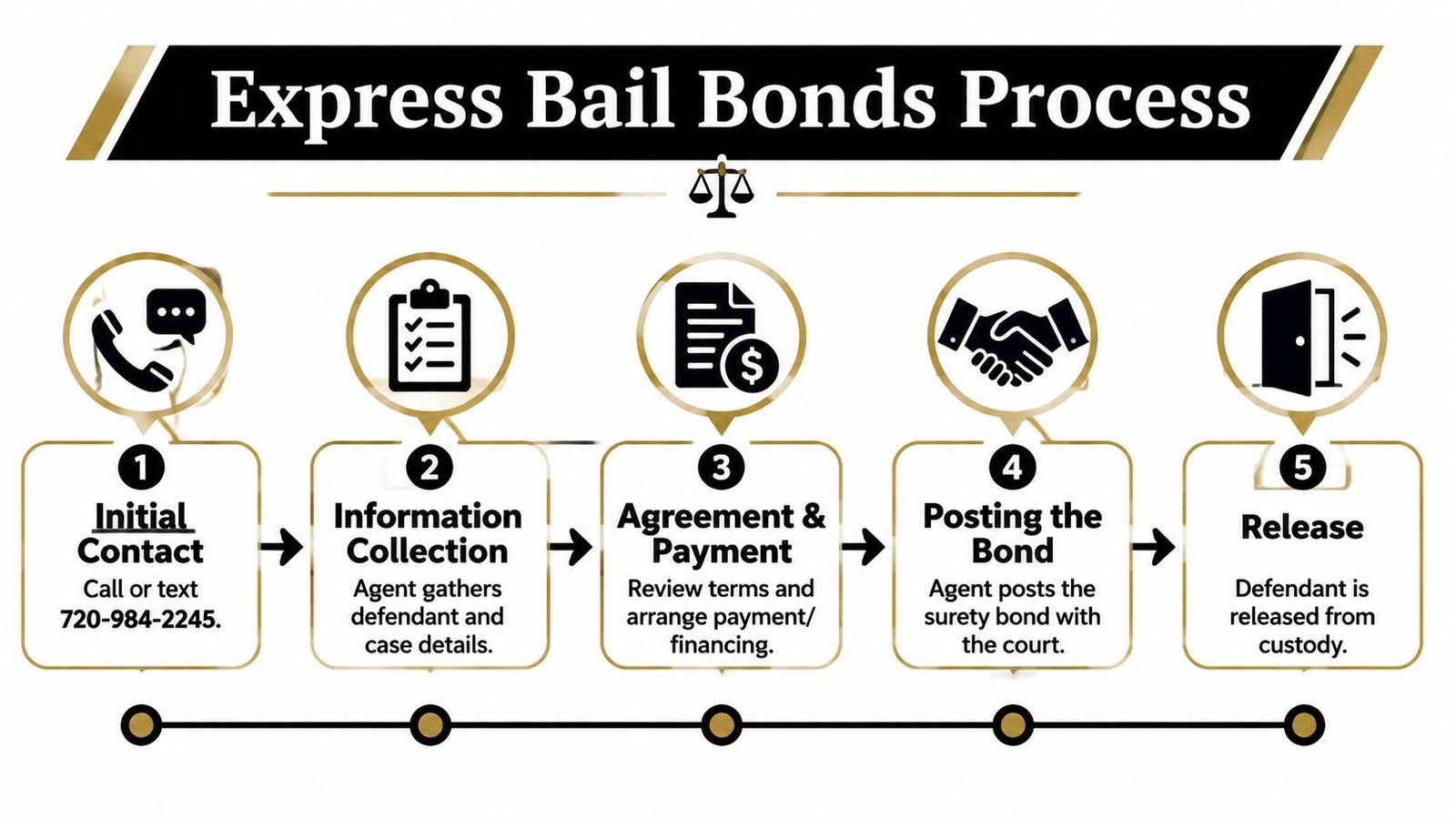
A cosigner helps when the bond needs extra backing. The agent will usually want the cosigner's information, and the contract can be handled electronically, which matters if the helper lives in another Colorado town or out of state. That remote setup keeps families from driving all night just to sign a packet at a kitchen table.
The electronic flow is straightforward. The agent collects the details, sends the contract, takes payment or financing arrangements where allowed, posts the bond with the jail or court, and waits for release processing. The person inside still has to clear the facility's release steps, so posting the bond isn't the final minute, but it's the move that starts the clock.
If you've ever wondered what happens to bond money in another state after a case wraps up, the when Florida bail money is refunded article is a helpful comparison because it shows how refunds and premiums aren't the same thing.
For a statewide visual reference while you're coordinating paperwork, use this Lake County bail bonds guide.

Costs, Premiums, and Fees You Should Expect
Colorado's standard bail bond premium is 15%, and Express Bail Bonds can often secure a 10% rate for bonds over $5,000 when an approved cosigner is in place. That premium is the agent's fee, not the bond amount itself, so don't confuse the two. The bond amount is what the court sets. The premium is what you pay to get the bond posted.
For families, that's the part that stings, because the premium is usually non-refundable. You're paying for the service of getting the defendant out, not buying the bond amount from the court. That's why people who call too late often end up making hurried decisions they could've avoided with a clearer cost picture.
Expect the invoice to reflect more than just the premium if the case needs extra handling. Some files involve notarization, electronic signature processing, or collateral review. If collateral is required, the agent should explain exactly what's being held and why before anything moves forward.
Bottom line: the cheapest-looking option on paper can cost more in stress if it delays release, and the fastest option can still be the wrong one if you don't understand the premium structure.
For a closer look at the financial side of the bond itself, this surety bond bank bail bonds visual is a useful reminder that the court amount and the fee are not the same thing.

What Happens After Release
The door opens, the panic drops, and the obligations start. The defendant comes home with a packet from the agent and a set of court conditions that do not care how tired everybody is. Court dates matter. Check-ins matter. No-contact orders matter. If travel is restricted, that matters too.

The cosigner needs to stay alert as well. If the defendant misses court, the cosigner may be dealing with the fallout, because the bond does not erase responsibility. That is the part people forget once the immediate crisis is over.
Keep every date, call, and document in one place. The family member who helped post bond should know the court schedule too, not just the defendant. If the agent says to keep in touch, do it.
The premium bought time. It did not buy forgiveness, and it did not end the case.
Common Questions From Colorado Families
How long does release take after the bond is posted? It depends on the jail's release queue, not on how badly you want them home. Once the bond is in motion, the facility still has to process the paperwork and clear the person out.
Can an out-of-state cosigner finish everything electronically? Yes, that's often the point of using a modern surety workflow. If the paperwork is complete and the agent accepts the file, the cosigner doesn't need to sit in a Colorado office to sign.
What happens to the premium if charges are dropped? The premium is still the fee for posting the bond. Don't confuse the case outcome with the service fee.
What can a bail agent not do? A bail agent can't guarantee the case result, and can't change the bond amount the court already set.
If you need a straight answer tonight, call a team that knows Colorado jail systems and can handle the paperwork fast. Express Bail Bonds posts surety bonds statewide, works electronically with families, and keeps the process moving when the situation can't wait. Visit Express Bail Bonds now, then use the county pages for Jefferson County, Golden, Colorado and bail bonds in Centennial if that's where your loved one is being held.