
Yes. In Colorado, most county jails accept bonds 24 hours a day, 7 days a week, so weekend bail posting is generally possible. What varies is how quickly the jail completes release processing after the bond is accepted.
It's Saturday night, the phone rings, and someone you care about is sitting in a Colorado detention facility. You may be wondering whether the jail will make the family wait until Monday, whether a bondsman can do anything after hours, and whether posting bail means the person walks out immediately.
Usually, the answer to the first question is no. Weekend posting is commonly available, but posting time and release time are different events. The jail may still need to verify the bond, complete paperwork, clear holds, and move the person through its release queue.
The Short Answer on Weekend Bail
A Friday-night arrest doesn't automatically become a Monday problem. Colorado detention facilities continue operating through weekends, and some expressly accept bonds around the clock. Jefferson County's detention facility states that bond may be posted 24 hours a day, 7 days a week. Its jail lobby is open Sunday through Saturday from 8:00 AM to 9:00 PM, which shows how a facility can accept weekend bonds while maintaining different hours for lobby or administrative services. You can review the facility's current information on the Jefferson County jail page.
That doesn't mean every courthouse payment window stays open. It also doesn't guarantee immediate release. The practical question is which facility has custody, what kind of bond the charge requires, and whether the jail has everything needed to authorize release.
If you're trying to help someone right now, start by confirming three details:
- Facility: Find the exact Colorado county jail holding the person.
- Bond status: Ask whether the amount is already set and whether it's a scheduled or judge-set bond.
- Posting channel: Confirm whether payment must go through the jail, a kiosk, an online system, a court window, or a licensed surety agent.
Practical rule: Don't drive to a courthouse first. Confirm the jail's weekend process and payment location before leaving home.
A clear understanding of the process can prevent a wasted trip. Colorado facilities may use online inmate searches, release windows, kiosks, phone payments, or bond agents, depending on the county. For a visual overview of bond types and how they differ, see this Colorado bail bond reference image.

The rest comes down to timing. A preset bond may allow release processing to begin once booking and bond entry are complete. A bond requiring judicial action may wait for an available magistrate or judge, and the release queue begins only after that requirement is satisfied.
Why Jails Take Bonds on Weekends but Courts Do Not
The jail and the courthouse perform different jobs. The detention facility keeps custody, records bond payments, and processes releases. The courthouse handles hearings, judicial orders, and some payment functions. Those operations don't follow the same weekend schedule.
A jail can't close on Saturday because people still need to be booked, housed, supervised, and released. Court clerks and courthouse bail windows, however, may operate on a weekday schedule. That creates the structural gap that confuses families: the person can be eligible for release, but the usual court payment counter may not be available.
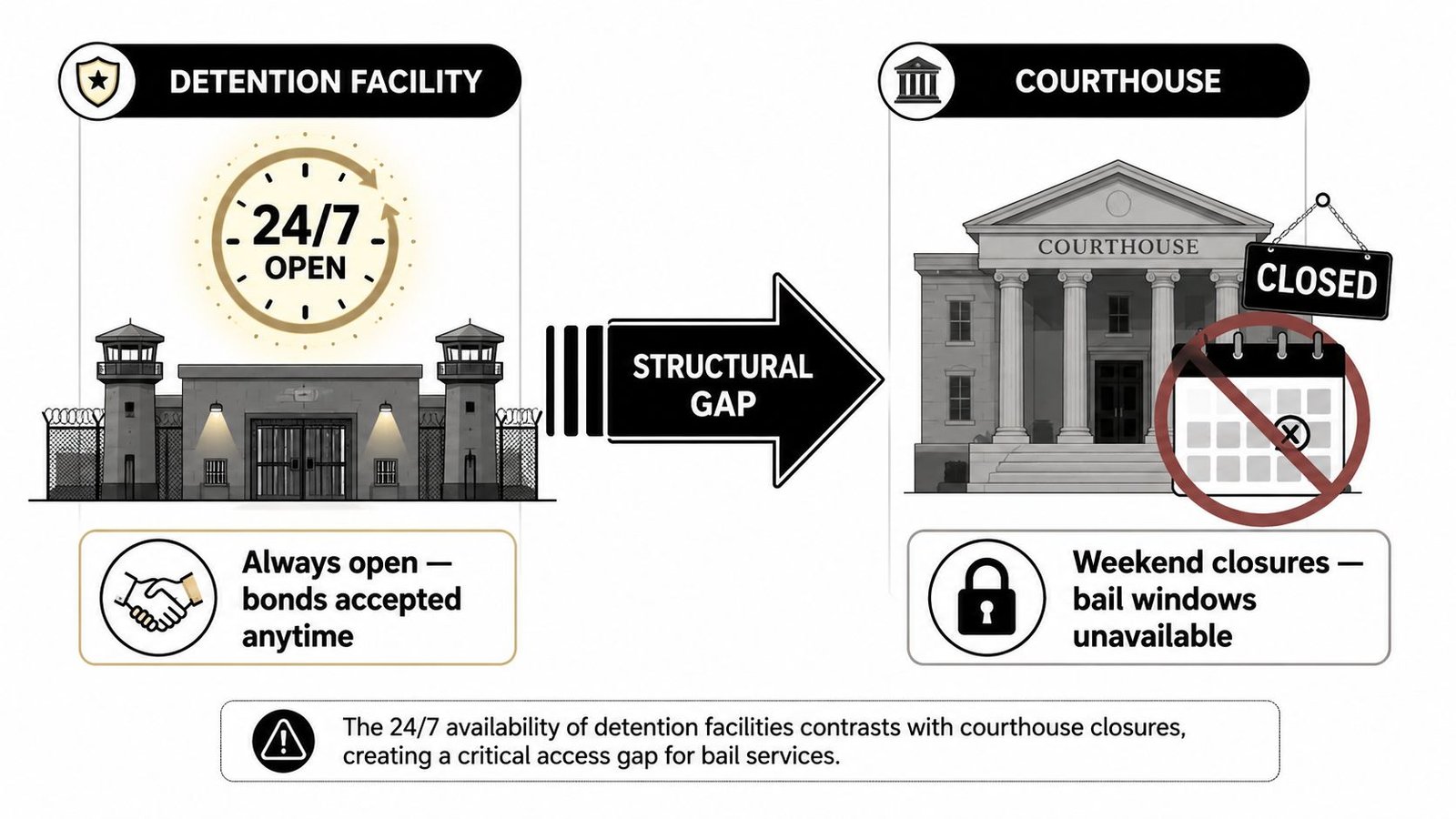
New York City provides a useful example of why location matters. The city's Department of Correction says the Bronx Criminal Court bail window is closed on Saturday and Sunday, while other locations, including Brooklyn Courts, have extended seven-day hours. The New York City Department of Correction bail instructions demonstrate that weekend access depends on both the facility and the payment channel.
The jail channel
When a county jail accepts bonds directly, the family or agent deals with the detention facility rather than waiting for a courthouse counter to reopen. The jail may accept cash, a surety bond, or another approved payment method, depending on the bond terms and local rules.
A bondsman can often handle the surety-bond paperwork remotely, then deliver or submit the bond through the jail's approved process. That matters when the family is at home, the courthouse is closed, or the person posting bond lives outside Colorado.
The courthouse channel
A court window may be the wrong destination on a weekend. Even if the court remains responsible for setting conditions or approving a bond, its public payment counter may have limited hours. Calling the jail's booking or bond desk, checking the county's official detention page, or contacting a licensed Colorado bond agency can identify the correct route.
The practical distinction is simple. Courts decide or record judicial matters. Jails execute the release process. On weekends, the jail is often the door that remains open. This court process visual guide can help organize the different stages.
The Two Paths to Weekend Release in Colorado
Weekend release usually follows one of two tracks. The first uses a preset bail schedule, where the amount or bond type is already established for the charge. The second requires a judge or magistrate to set the bond before the person can qualify for release.
With a scheduled bond, the jail can generally begin the release process after booking is complete and the required bond is submitted. That doesn't eliminate verification or waiting, but it removes one major dependency: the family isn't waiting for a judicial officer to decide the amount.
A judge-set bond works differently. The person may need a hearing before the amount, conditions, or release type becomes clear. Weekend release then depends on whether the county has an on-call or duty judge, magistrate, or other authorized judicial officer available. Some jurisdictions may move the hearing to the next business day.
Colorado has a weekend bond-hearing structure in which magistrates appointed as bond hearing officers conduct weekend hearings, allowing citizens to be heard on bond within 48 hours of arrest, as described in Colorado General Assembly materials on weekend bond hearings. That system can keep a judge-dependent matter moving, but it doesn't mean every case receives the same treatment or release speed.
Find the path before arranging payment
Ask the jail or bond agency:
- Has booking finished?
- Is the bond amount already listed?
- Does the charge require a judge or magistrate?
- Are there additional holds or release conditions?
The answers matter more than the day on the calendar. Paying a bond before the jail can legally accept it may leave the family waiting for the missing court action.
| Situation | Who Sets the Amount | Weekend Timeline |
|---|---|---|
| Charge covered by a preset schedule | The applicable bond schedule | Posting can begin after booking and bond entry, followed by jail processing |
| Charge requiring judicial review | A judge, magistrate, or authorized bond-hearing officer | Depends on weekend judicial availability and hearing completion |
| Bond with additional conditions or holds | Court and relevant agencies | Release waits for every required clearance |
A useful call doesn't need to produce a perfect prediction. It needs to identify the path, the documents still missing, and the next person responsible for moving the case forward.
How to Post Bail on a Weekend Step by Step
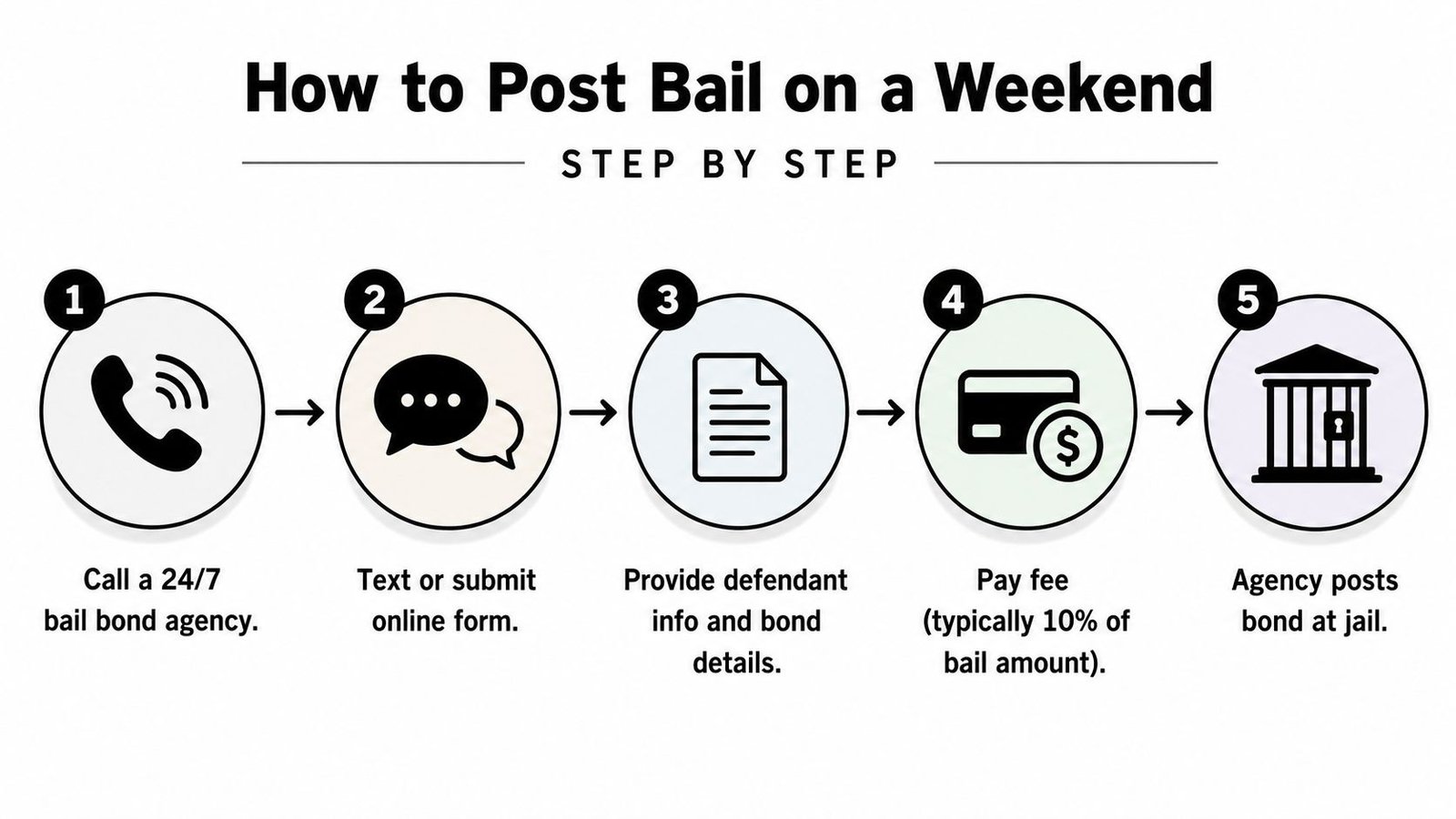
A weekend arrest can turn into a long night if the family starts with the wrong question. Call the detention facility or a 24/7 Colorado bail bond agency and give the person's full name, date of birth, and jail location. Add the charge, booking number, or bond amount if available. Missing one detail should not delay the call.
A county inmate search may provide the information needed to locate the record. Larimer County Jail says bonds can be posted 24 hours a day and explains that users can find the inmate number and Jail ID online when the bond type is unknown. Its Larimer County Jail bond information also lists cash-bond options through a kiosk, online, over the phone, or at the release window.
The working sequence
1. Confirm custody. Verify that the person is housed at that facility. The person may still be in transport, completing booking, or held by another agency.
2. Confirm the bond. Ask whether the amount is preset, whether a hearing is required, and whether any hold would prevent release after payment.
3. Choose the payment route. Cash may require the full amount through an approved jail channel. A surety bond uses a licensed agent and a contract with the indemnitor or cosigner.
4. Complete identification and paperwork. The bondsman will typically need identification, defendant information, cosigner details, and signed contract documents. Electronic applications and signatures can let the family complete the process from home, which matters when the jail is across the county or the bond window is busy.
5. Submit payment and authorize posting. Express Bail Bonds describes a remote process in which clients complete applications, payment, and contract documents electronically. A Colorado bail bondsman can then post a surety bond through the jail's accepted procedure, without requiring the family to travel to the detention center before the paperwork is ready.
Colorado's standard premium is 15%, according to the publisher's service information. For bonds over $5,000, the agency often secures 10% with an approved cosigner. Confirm the terms before signing. The bond amount, payment arrangement, collateral, and cosigner obligations depend on the individual transaction.
What to have ready
- Defendant details: Full legal name and date of birth.
- Custody details: Jail name, booking information, and inmate number if available.
- Cosigner information: Identification, contact information, and employment or residence details if requested.
- Payment method: The funds or payment method needed for the premium and any agreed collateral.
- Release plan: A reliable phone number and a place where the defendant can receive instructions after release.
Review the cosigner's financial duties before signing, using this cosigner responsibilities guide as a practical reference. The paperwork should also explain the defendant's court obligations. Families comparing systems in other countries may find Badesha Law Brampton bail useful for seeing why bail procedures differ by jurisdiction.

The following video provides another general visual explanation of the process:
After the agency posts the bond, obtain the receipt or confirmation number. Ask when the jail received it and what information it can provide about the release queue. A signed contract shows that the paperwork was completed. It does not by itself show that the jail has accepted and entered the bond.
Why Posting Bail Does Not Mean Instant Release
The most common misunderstanding is also the one that causes the most frustration: bond posting starts release processing, but it doesn't complete it. The jail still has to verify the bond, match it to the correct booking record, prepare release documents, check required authorizations, and move the person through its queue.
Published facility guidance shows that release can take up to 8 hours after bail is posted. County and regional conditions can produce longer weekend backlogs, reaching 12 to 24 or more hours in slower facilities, as described in the Washoe County detention release procedures. Those figures aren't a promise for any Colorado jail. They're a warning not to treat the posting receipt as a release appointment.
Where the delay usually occurs
Weekend staffing can be lighter, intake volume can be higher, and release personnel may have to process people in order. A judge-dependent charge may add another delay if the court authorization isn't complete. A separate hold, warrant, immigration issue, or another agency's request can also prevent release, though only the responsible authority can explain that status.
Waiting in the jail parking lot rarely speeds up the queue. Keep the phone available, arrange a safe pickup, and ask the bond agency or jail for a status update rather than repeatedly arriving at the release window.
Verify before you leave
- Bond acceptance: Confirm the jail has accepted the bond, not merely that paperwork was sent.
- Release status: Ask whether processing has started and whether a hold remains.
- Pickup instructions: Confirm the release entrance, identification requirements, and whether the facility will call the defendant.
- Court information: Obtain the next appearance date and all written conditions.
A defendant may leave with conditions that affect contact, travel, employment, or future court appearances. Review those instructions carefully, and keep the paperwork. This Colorado conditions of bond guide provides a useful reference for organizing the obligations that follow release.

For people held in Jefferson County or Arapahoe County, local service pages for Jefferson County and Golden bail bonds and Centennial bail bonds can help identify the appropriate contact route. The key is to keep asking the right question: not “Did we pay?” but “What exact step is still preventing release?”
Court Dates, Next Steps, and Getting Help Fast
Release is only the first responsibility. The defendant must follow every condition, keep contact information current, and attend the required court appearance. Colorado judicial bond paperwork states that when a return date falls on a legal holiday or weekend, the return date becomes a mandatory appearance on the first business day afterward, according to the Colorado Judicial Branch bond form.
That rule can create a serious weekend trap. Someone released on Saturday may still need to prepare for a Monday appearance if the paperwork identifies the first business day as the required return date. Don't rely on memory or a verbal estimate. Read the bond paperwork and have the defendant or attorney confirm the obligation.
A remote administrative resource, such as a virtual legal assistant, may help an attorney or family organize documents and reminders, but it can't replace legal advice or the court's written orders.
The weekend playbook
- Locate the correct jail: Confirm custody and booking status.
- Identify the bond path: Determine whether the amount is scheduled or requires a judicial hearing.
- Use the correct channel: Ask whether the jail, kiosk, online system, phone, court, or surety agent should receive the bond.
- Track processing: Get confirmation that the jail accepted the bond and ask what remains.
- Protect the next court date: Read the paperwork, follow conditions, and confirm the first required appearance.
Don't confuse a weekend release with the end of the case. Bail secures a person's release under stated obligations. It doesn't dismiss charges, change conditions, or excuse a missed appearance. Keep every receipt, contract, court document, and jail instruction in one place. This guide to getting bail conditions lifted can serve as a general organizational reference, but changes to conditions must come through the proper legal process.
If someone is in custody now, call or text Express Bail Bonds 24/7 at 720-984-2245. The agency handles Colorado surety bonds through electronic applications, payment, and contract documents, so families can begin from home while the jail's weekend process continues.
If someone you care about is in a Colorado jail this weekend, contact Express Bail Bonds at 720-984-2245 by call or text for help confirming the bond route, completing electronic paperwork, and starting the surety-bond posting process. Have the person's full name, date of birth, and detention facility ready, and ask specifically what could delay release after the bond is accepted.