You're half-asleep, the phone rings, and someone says a family member missed court. Before you can even process that, there's a knock at the door and a man in dark gear is showing a bounty hunter badge and asking questions. That moment is confusing on purpose, because the badge is meant to pressure people into talking fast and opening up.
Don't panic, and don't assume that badge gives him police power. In the United States, the modern meaning of bounty hunter is relatively recent, and the image is more Hollywood than history. The practical question for families is simple, who is this person really, what can he legally do, and what should you refuse to do?
When Someone Shows Up Flashing a Badge
A woman opens her front door at 11:30 p.m. because someone is pounding on it. The visitor says he's there for her son, he's waving a badge, and he wants to know where the son is staying. That's the kind of scene that makes people hand over information they never should've given.
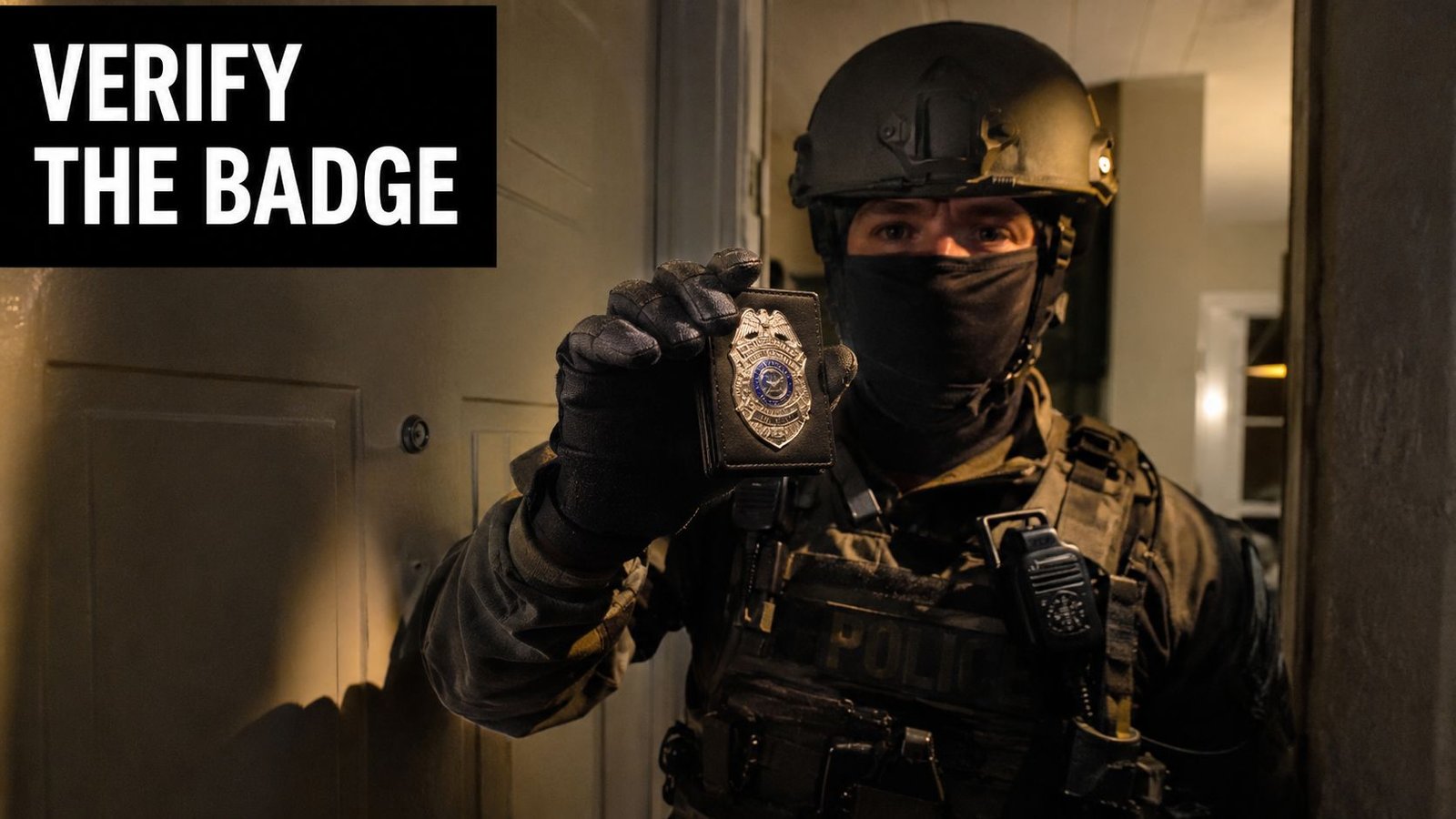
A bounty hunter badge is not a sheriff's star, and it doesn't turn a private person into government law enforcement. Merriam-Webster places the modern sense of the term in the early 1950s and notes that the popular Old West image is a later construction, not the historical norm. That matters because a private recovery agent can look intimidating without having police authority.
Practical rule: if the person can't calmly identify himself, explain who hired him, and show paperwork tied to the bond, don't treat him like an officer.
Families often feel pressured to help “just in case” the person is legitimate. That's the wrong instinct. If the person is acting under a bail bond arrangement, his authority is narrow and contract-based, not a blank check to enter your home, interrogate your family, or demand that you assist him.
The safest response is also the most boring one. Stay behind the door if you can, ask for names, and slow the interaction down enough to verify it. Fear makes people talk too much, and that's usually where rights get lost.
What a Bounty Hunter Badge Actually Represents
A bounty hunter badge is a professional identifier, not a government commission. In the modern bail system, the person wearing it is usually a private agent working for a bail bondsman who captures fugitives for a commission or bounty, and Mental Floss notes that the work is often better described as bail enforcement or fugitive recovery. That vocabulary matters because it keeps the role in the private-contract world where it belongs.
The badge exists to show who the person is and what system he works in. In states that allow bail enforcement, the badge should clearly say bail enforcement agent or fugitive recovery agent, and it must not look like police, sheriff, or federal insignia. The legal point is simple, if the badge imitates a police credential, it's a red flag.
What the badge tells you
- It proves association, not state authority. The badge can show that the person claims a role in bail recovery, but it doesn't make him an officer.
- It should match the paperwork. A real recovery agent should be able to name the bail bondsman or company tied to the bond.
- It should be clearly private. If the insignia is designed to look like law enforcement, that's not transparency, that's confusion.
Wikipedia's summary of the occupation says bounty hunters are typically paid about 10% of the total bail amount, though the commission can vary by case depending on difficulty and method. That fits the business model, private recovery work is tied to the bond, not the state payroll. Once you understand that, the badge stops looking like proof of police power and starts looking like what it is, a label inside a private system.
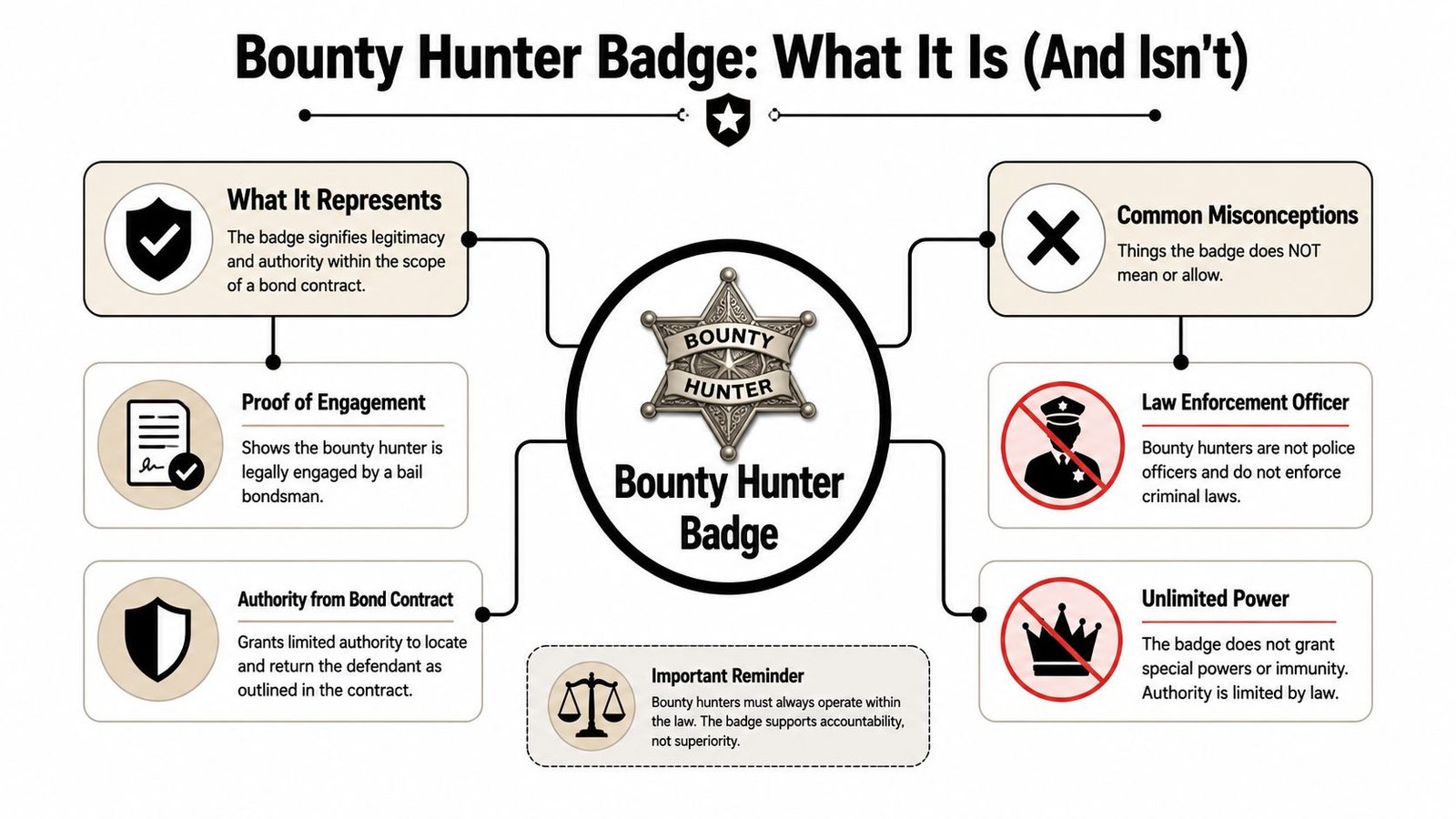
If your family member signed a bond, the badge is a clue that someone is enforcing that contract. It is not a reason to hand over your phone, waive your questions, or let anyone into the house on command.
Colorado Legal Boundaries for Bail Enforcement Agents
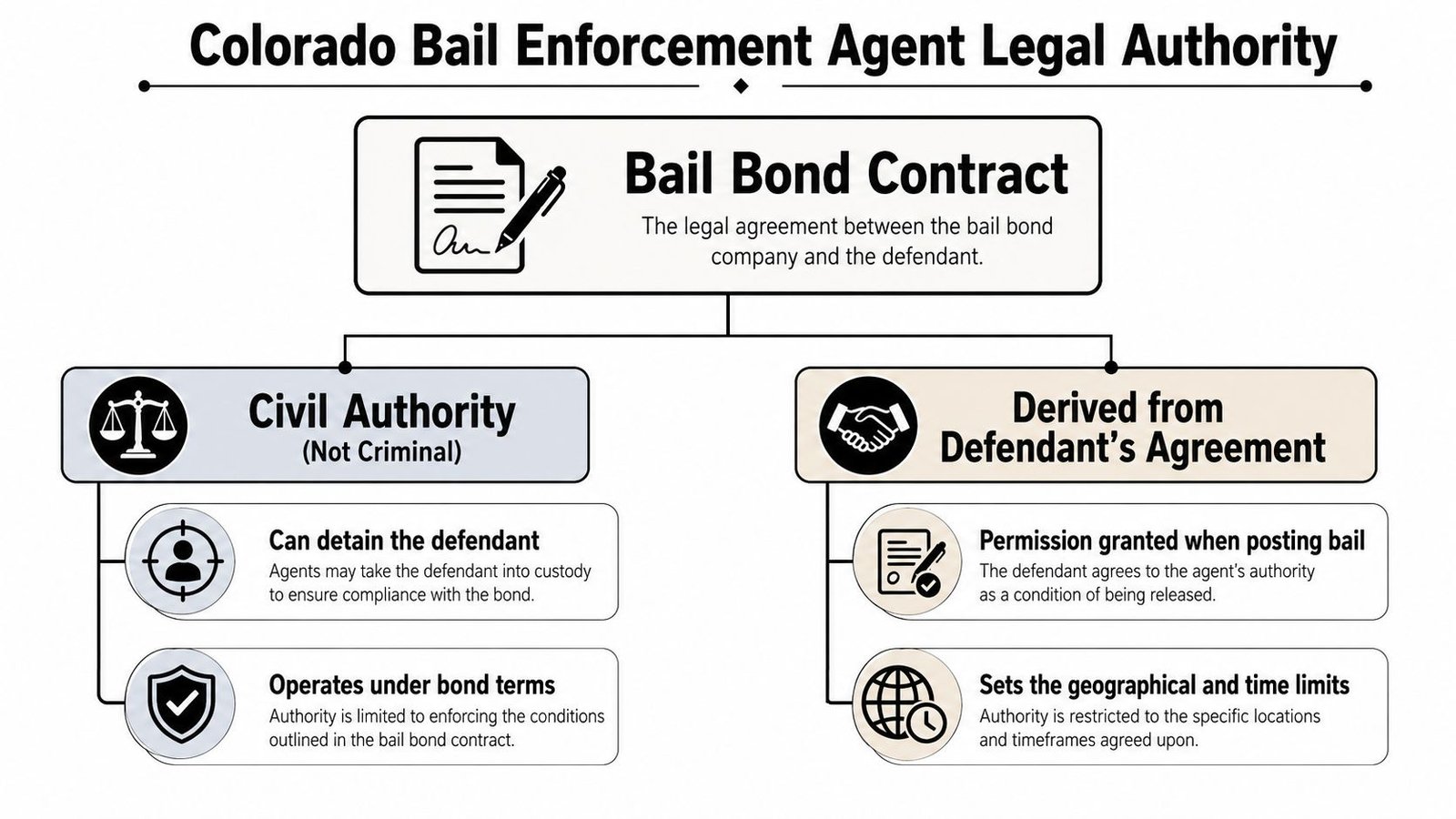
Colorado families should focus on boundaries, not bravado. A bail enforcement agent acts under civil authority from the bond contract, not under a police commission. That line matters. A private recovery agent may pursue a defendant tied to a bond, but a badge does not turn him into law enforcement.
Colorado law expects the badge to stay clearly private. A proper bounty hunter badge should identify the holder as a bail enforcement or fugitive recovery agent and should not resemble police insignia. That keeps the public from being misled and makes the legal limit visible.
What that means in real life
If someone says he is recovering a defendant, he should be able to connect himself to the bond and to the person named in it. His authority comes from the defendant's agreement when bail was posted, not from the government giving him police powers. Families should ask for the bail company's name, the defendant's name, and the bond details before handing over anything.
Colorado sits inside a larger enforcement reality. Mental Floss quotes Chuck Jordan of the National Association of Fugitive Recovery Agents as saying a realistic estimate is “90-percent-plus” of defendants released on bail bond who fail to appear are captured and returned to custody before final forfeiture. That shows this is active private enforcement, not costume drama. The work can move quickly because the system is built around the bond.
Practical warning: if a person shows a badge but will not explain the bond connection, acts like you are under arrest, or becomes aggressive, call 911 and let police sort out whether the claim is real.
Families also need to remember that a civil recovery agent still has legal limits. He cannot become police by acting like one, and he cannot cancel your rights by speaking loudly. If the conduct crosses the line, document it and contact an attorney or law enforcement right away.
Keep the Colorado point simple. A private badge can signal a bail-recovery role, but it does not equal state authority. Treat it as a verification issue, not a surrender order.
How to Tell a Bail Enforcement Agent from Law Enforcement
A person can flash a badge and still not be police. If a family member or defendant is trying to figure out who is standing at the door, look at the badge, the language used, and whether the person can connect the contact to a real bond file. Keep the conversation calm and slow. Confusion helps the wrong person.
| Feature | Bail Enforcement Agent | Law Enforcement Officer |
|---|---|---|
| Badge | Should clearly identify the holder as private, often as a bail enforcement agent or fugitive recovery agent | Official government insignia tied to an agency |
| Authority | Comes from a bond contract and civil bail enforcement | Comes from state or local government power |
| Identity | Usually names the bail bondsman or recovery company | Identifies as police, sheriff, or another agency |
| Uniform | Should not mimic police insignia or create confusion | Standard law-enforcement uniform and markings |
| Scope | Focuses on the named defendant tied to the bond | Can act under broader criminal-law authority |
| Entry | Cannot claim unlimited access just because he has a badge | Entry rules depend on law and agency authority |
A private recovery agent can still look tactical, and that is why families should judge the badge carefully. If the badge is vague, flashy, or designed to borrow authority from police, treat it as a warning sign. In states with this kind of framework, the badge is supposed to be a professional identifier, not a prop that blurs the line between private recovery and law enforcement.
A real agent should be able to name who hired him. He should know the bail bondsman, the defendant, and the bond he is working under. If he cannot give that information, do not help him fill in the blanks. Families get themselves in trouble when they try to make sense of a stranger's story on his behalf.
For a visual example of how the paperwork trail ties a bond file together, look at bail bond agent jobs and career guide. The image is not the point. The connection between the claim, the bond, and the paperwork is the point.
If the badge makes him look like police, that is not a small detail. It is the detail that controls how you respond.
What to Do If a Bounty Hunter Contacts You or Your Family
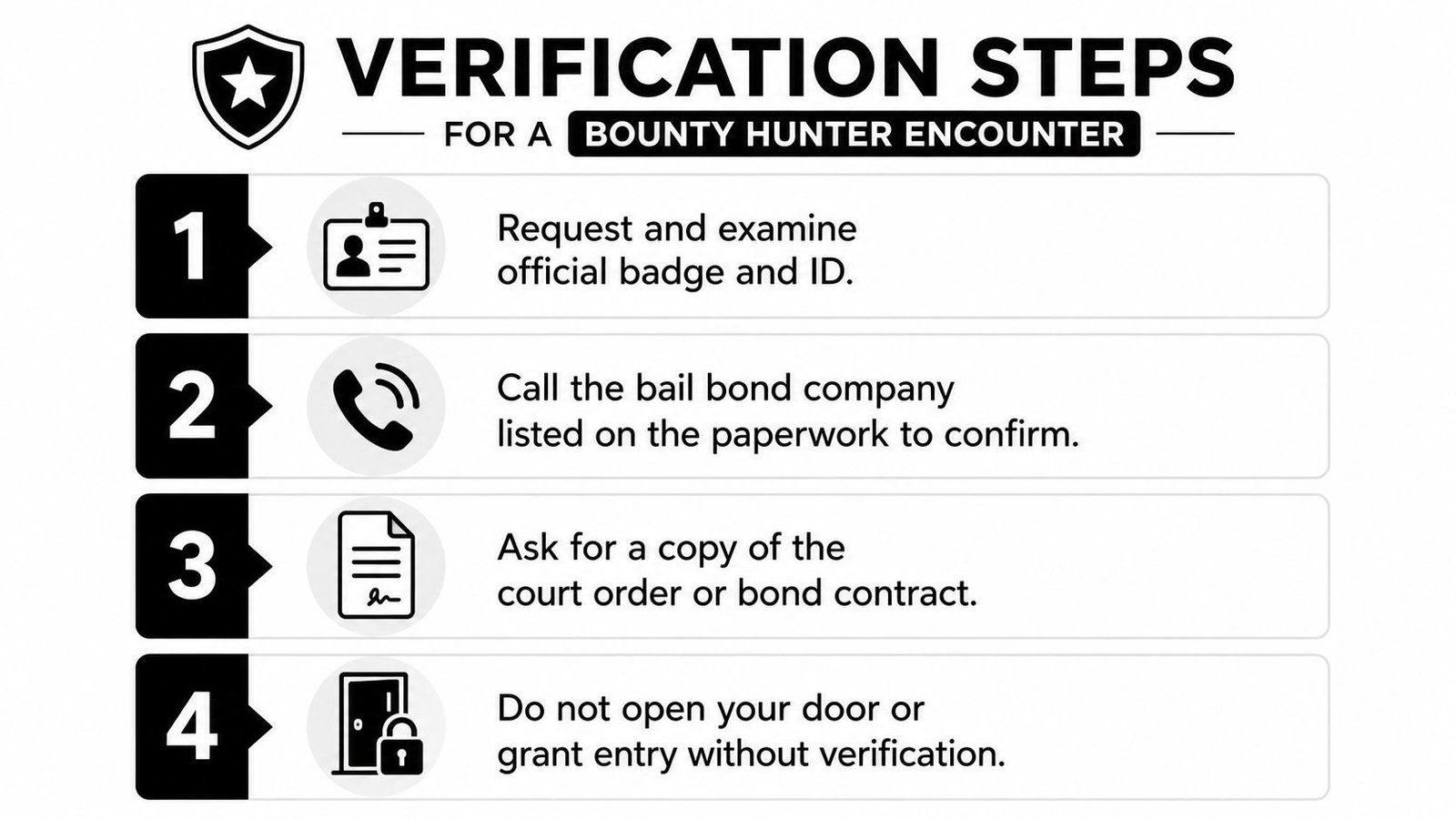
Start with identity, not argument. Ask the person to hold up the badge, give the full name of the company or bail bondsman, and identify the defendant by name. If he is legitimate, those answers should come easily. If he stalls, gets angry, or tries to rush you, stop treating the encounter like a normal conversation.
Use this order and don't skip steps
- Check the ID and badge first. Ask for both, and compare the names.
- Confirm the bail connection. Make him name the bondsman, not just say he's “working a case.”
- Ask for the bond paperwork. You're looking for a real link to a court release, not a vague claim.
- Keep the door closed until verification is done. No badge gives you a reason to open up early.
If you're the cosigner, you can ask more questions because your name may be on the bond paperwork. If you're not the cosigner, stay careful and don't volunteer the defendant's location, schedule, or habits. Families accidentally create problems by trying to be helpful to the wrong person.
For discreet verification techniques, the private-investigator approach in PI techniques for discreet verification is worth reading because it reinforces the same basic habit, verify before you disclose. Use that mindset when the encounter feels off.
Don't hand over answers just because the person sounds confident. Confidence is cheap. Verification is what protects you.
If the person cannot produce proper identification or starts acting aggressively, call 911. If the defendant is present and wants to avoid escalation, contact the bail bondsman immediately and deal with the problem before it becomes a recovery effort. There's a lot less drama when people respond early instead of hiding and hoping the issue disappears.
For Colorado jail and detention-related guidance, keep this practical reference handy, Pueblo County jail phone number and bail assistance guidance. If you need more local context, the bond process itself is easier to manage when you can confirm the exact case and facility.
Avoiding Fugitive Recovery by Working with a Licensed Bondsman
The cleanest way to avoid a fugitive recovery visit is to treat court dates as mandatory and stay in contact with the bond company from the start. A licensed bail bondsman keeps the release process organized, explains what the defendant owes the court, and helps families fix problems before they turn into a recovery call. That is the practical value of working with a professional early.
Express Bail Bonds has served Colorado since 1988, with fast electronic processing and statewide posting at many Colorado jails. Colorado's standard premium is 15%, and for bonds over $5,000 they often secure 10% with an approved cosigner. Those numbers matter because they affect how fast a family can act without making rushed choices. The company also offers remote applications, payments, and contract documents, which helps stressed families avoid missed steps and keeps the bond paperwork moving.
If you are comparing options, use the bond process itself as the filter. A solid bondsman explains court requirements clearly, stays reachable, and helps the defendant avoid the silence that invites a recovery effort. That beats waiting for someone with a badge to show up at the door.
The paperwork matters too. The indemnity and surety-side structure behind a bond binds the family into the process, so do not treat release as a casual favor. A responsible provider explains the obligations directly instead of brushing past them. For a closer look at how that structure fits into release decisions, review this surety bonds and no-credit-check title bond information.

If you need help in Jefferson County, Centennial, or anywhere else in Colorado, keep the local service pages close, Jefferson County, Golden Colorado bail bond support and Centennial bail bonds service. Colorado release problems get ugly fast when people wait too long to ask for help.
Frequently Asked Questions About Bounty Hunter Badges
Can a bounty hunter enter my home without permission? Not just because he has a badge. If someone claims bail-enforcement authority, you still verify identity and legal basis first, and if he's pushing past your boundaries, call 911.
What if I'm the cosigner and the defendant skipped court? Expect contact from the bail side, because your agreement matters. Don't hide, don't invent stories, and call the bondsman immediately to reduce the chance of a recovery visit.
Do bounty hunters carry guns in Colorado? Some may be armed, but a weapon doesn't give them police power. The safer question is whether they're properly identified and operating within legal limits.
How do I complain if an agent oversteps? Document the encounter, save names and badges, and contact local law enforcement or an attorney. If you need help understanding the bond side of the situation, reach out to a licensed Colorado bondsman for guidance.
If you're facing a missed court date, a confusing badge at the door, or a family member who needs release help now, contact Express Bail Bonds. They handle Colorado surety bonds, explain the process plainly, and help families deal with the situation before it escalates into a recovery problem.