
A bail enforcement agent job is a high-stakes, investigative role centered on one specific task: finding and arresting defendants who skip court after being released on a bail bond. These agents, often called bounty hunters, are the last line of defense for a bail bond agency when a client disappears. If you need help with a bond, Express Bail Bonds is ready to assist 24/7.
What a Bail Enforcement Agent Actually Does
When you think about the bail industry, the first person who comes to mind is probably the bail bondsman—the one who arranges the paperwork and posts the money to get someone out of jail. But there’s another key player who works in the shadows: the bail enforcement agent. Their role is just as important, but it's a world apart from the administrative work of a bondsman.

Think of a bail bond as a safety net. The bail bond agent sets up that net, allowing a defendant to get out of jail and return to their life with the promise they'll show up for court. As long as they make their court dates, everything is fine.
But what happens when the defendant doesn't show up? That's when a bail enforcement agent job kicks in. They are the specialists called to find the fugitive, patch the hole in the net, and return the defendant to custody. Their work ensures the bail bond company doesn't forfeit the full bond amount to the court.
Bail Bond Agent vs Enforcement Agent
To really get a feel for this career, it helps to see how it stacks up against the more familiar role of a bail bond agent. While they're two sides of the same coin, their day-to-day responsibilities couldn't be more different.
This table provides a quick comparison of their distinct roles and primary duties.
Bail Enforcement Agent vs Bail Bond Agent At a Glance
| Aspect | Bail Enforcement Agent (Bounty Hunter) | Bail Bond Agent (Bondsman) |
|---|---|---|
| Primary Role | Locate and apprehend fugitives who have skipped bail. An investigative and operational field role. | Assess risk, process paperwork, and provide financial guarantees (bonds) for a defendant's release. An administrative and financial role. |
| When They Get Involved | After a defendant fails to appear in court and a warrant is issued for their arrest. | At the beginning of the process, when an individual is first arrested and seeking pretrial release. |
| Core Skills | Surveillance, skip tracing (locating people), investigation, communication, and tactical proficiency. | Risk assessment, customer service, contract law, financial management, and administrative expertise. |
| Work Environment | A mix of office-based research and extensive fieldwork, which can be unpredictable and high-risk. | Primarily office-based, involving client meetings, phone calls, and court filings. |
Ultimately, the bondsman makes the initial deal, and the enforcement agent is the insurance policy that backs it up.
A solid grasp of the system is essential, including understanding bail and the types of bonds used. This legal knowledge is the foundation for operating effectively and lawfully. You can learn more about the specifics of the job in our guide on what bounty hunters are and how they work. For assistance in Jefferson County, don't hesitate to reach out.
The Investigative Nature of the Job
Forget the wild, chaotic scenes you see in the movies. The reality of bail enforcement is a methodical, intelligence-driven profession that demands patience, sharp strategy, and a deep respect for the law.
These agents are responsible for apprehending more than 30,000 fugitives across the United States every year, playing a huge part in making sure defendants face their charges.
The core of the job isn't about brute force; it’s about piecing together a puzzle. Agents have to think like detectives, following digital footprints and real-world leads to figure out where a fugitive might go next.
This is high-stakes work. One day might be spent digging through case files and public records in the office, while the next involves conducting surveillance on a quiet street. It’s this unique blend of detective work and tactical skill that defines the profession. If you need professional bail services in Centennial, our team is here to help.
Navigating the Legal Maze to Become an Agent
So, you're thinking about a career as a bail enforcement agent? The first thing you need to get straight is that there’s no single, nationwide path to follow. This isn't a job where you get one certification and you're good to go anywhere. It’s a completely different world from one state line to the next.
What's legal and required in one state could get you arrested in another. There's no federal law governing this profession, which means every state makes its own rules. This patchwork of regulations is the single most important thing to understand before you even think about training or looking for work. Your first job is to become an expert on your local laws.
Colorado's Specific Requirements
To make this real, let's zoom in on how it works right here in Colorado. If you plan on operating in places like Jefferson County or Centennial, you have to play by a very specific set of rules. Colorado isn't the Wild West; the state has built a framework to keep the public safe and ensure agents are true professionals.
Here, a bail enforcement agent must either be a pre-licensure bail bonding agent or a fully licensed one. This is a critical point. It directly ties the enforcement role to the established, regulated bail bond industry. You have to be part of an accountable system, often working with an established company like Express Bail Bonds.
Here’s the bottom line for Colorado: you can't just be a "bounty hunter" in the pop culture sense. You are a professional who must be credentialed through the state's Division of Insurance, the very same agency that regulates the entire bail bond industry. It’s all about vetting, accountability, and operating within a strict legal framework.
The Licensing and Training Pathway
Getting properly licensed as a bail enforcement agent in Colorado involves a clear, structured process. The state has put these steps in place to make sure only qualified and trustworthy individuals are out in the field.
The core requirements you’ll have to meet include:
- Pre-Licensing Education: You’ll need to complete a mandatory course covering Colorado's bail bonding laws and practices. This is where you learn what you can—and absolutely cannot—do.
- Written Examination: After the course, you have to prove you know your stuff by passing a state-administered exam on all the relevant laws and procedures.
- Criminal Background Check: A clean record is non-negotiable. The state runs a thorough background check, and any felonies will automatically disqualify you.
- Bonding Agency Affiliation: You can't be a lone wolf. You must be officially employed or contracted by a licensed bail bonding agent or agency.
These aren't just hoops to jump through; they’re what makes this a legitimate profession. You can dive deeper into the specifics by reading up on Colorado's bounty hunter regulations to get a full picture of your legal duties.
For anyone serious about this career, it's also smart to see how the industry works on the ground. Check out what clients say about agencies in Golden or read reviews for companies in Aurora. This inside look helps you understand the kind of professional standards that families and attorneys have come to expect.
What It Really Takes to Succeed in Fugitive Recovery
Getting your state license is just the ticket to the dance; it’s not what teaches you the moves. The skills you develop after you’re licensed are what will keep you safe, successful, and respected in this line of work. Your real professional toolkit isn't a certificate—it's a constantly expanding set of abilities that separates the pros from the reckless amateurs.
Forget what you’ve seen in the movies. Modern fugitive recovery isn’t about kicking down doors and brute force. The best agents out there are smart, strategic, and meticulous. They blend old-school detective work with modern digital investigation to get the job done safely and within the bounds of the law. This isn't a job you can just coast in; it demands a real commitment to always be learning. Contact Express Bail Bonds for professional and reliable service.
The Essential Skills Every Agent Needs
Think of these as the absolute fundamentals. If you're serious about building a long-term career in bail enforcement, especially with professional outfits that value competence, these skills are non-negotiable.
Here’s what you need to master:
- Skip Tracing and Investigation: This is the core of what we do. You’ll learn to piece together a puzzle, using databases, public records, and digital breadcrumbs to find someone who doesn’t want to be found. If you need a primer on the kind of information involved, our article on how to check if someone has a warrant is a great starting point.
- Surveillance Techniques: You have to become an expert at watching without being seen. This means both old-fashioned physical surveillance and knowing how to legally use technology to keep tabs on a subject.
- Conflict De-escalation: The primary goal is always a peaceful surrender. The ability to talk someone down, using a calm and authoritative presence, can prevent a volatile situation from spiraling out of control. It protects you, the fugitive, and the public.
- Self-Defense and Tactical Training: While talking is always plan A, you have to be ready for plan B. You absolutely must have formal training in self-defense and safe apprehension techniques. This is for your own safety and to limit your liability when things get physical.
As this chart shows, becoming a qualified agent in Colorado is a structured journey. It starts with research and moves through formal training before you can even get to the background check.
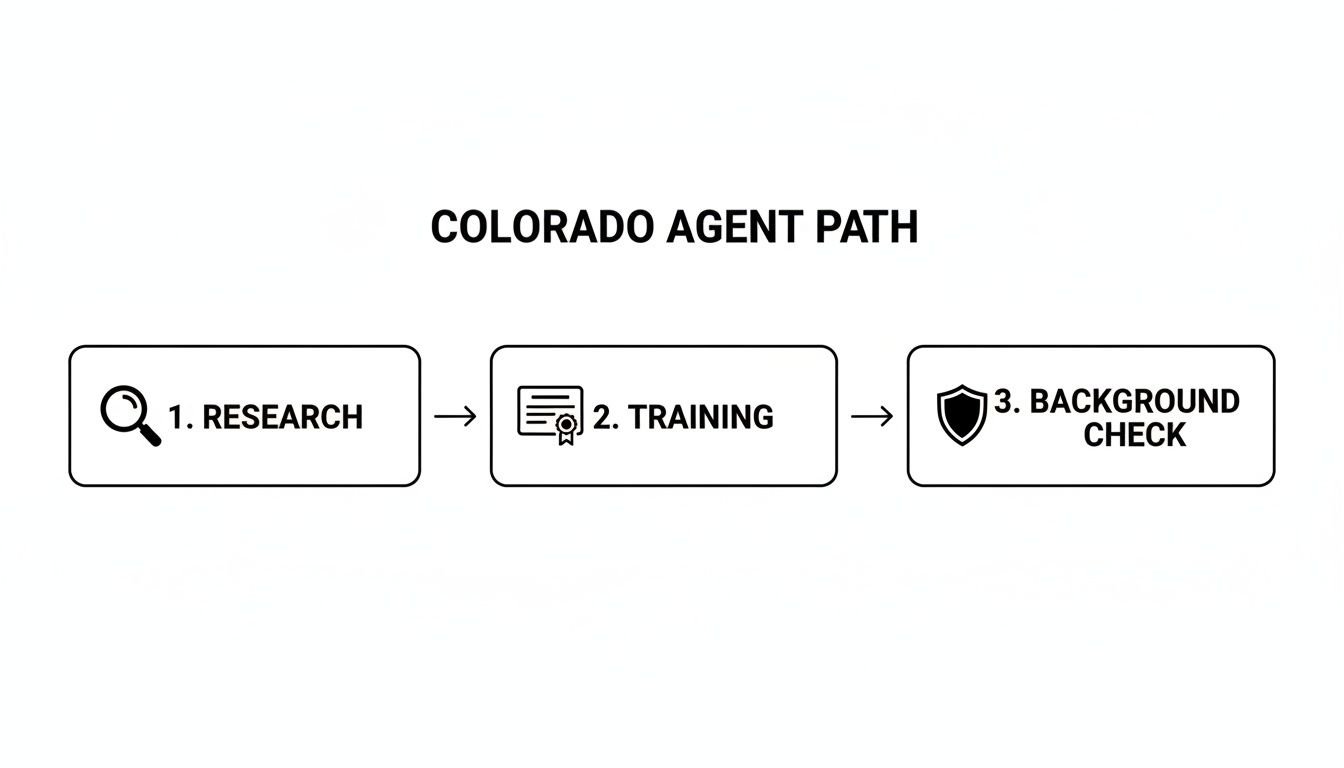
It’s a clear process that requires due diligence, education, and passing legal vetting—it's not something you can just jump into. For bond services in Jefferson County, we are the experts.
Why You Can Never Stop Learning
The techniques that work today might be obsolete by next year. Fugitives get smarter, technology evolves, and laws are always changing. That’s why ongoing training isn’t just a nice-to-have; it’s essential for survival and success in this field.
An agent's greatest weapon isn't their strength—it's their mind. Staying current on legal updates, new investigative tech, and advanced tactics is what keeps you effective and, more importantly, safe.
This is especially critical since you’ll often find yourself working alone in unpredictable situations. A big part of your professional toolkit should be dedicated to personal safety. Checking out a practical guide to lone worker safety is just as important as learning how to track someone. Knowing how to assess risk and protect yourself is paramount. Need help in Centennial? Call us now.
Do You Have the Right Background?
While you can come into this field from many walks of life, some backgrounds give you a serious leg up. Experience in these areas provides a strong foundation for the work we do.
- Criminal Justice or Criminology: A degree here gives you a deep understanding of the legal system, criminal psychology, and proper procedure.
- Private Investigation: PIs are masters of the core skills: skip tracing, surveillance, and digging up information. Their experience is directly transferable.
- Military or Law Enforcement: The discipline, tactical skills, and experience managing high-stress scenarios are incredibly valuable on the job.
If you’re looking at this career path, building experience in these areas will make you a far more attractive candidate. Reputable agencies want to work with agents who aren't just licensed, but are true professionals—strategic, well-trained, and reliable. We have great reviews for our work in Golden and Aurora.
Understanding Your Earning Potential and Job Outlook in 2026
Let's get down to brass tacks: money and job security. If you're seriously considering becoming a bail enforcement agent, you’re probably wondering what you can realistically earn and whether this career has a future. Before diving into such a demanding line of work, you have to know what the financial reality looks like.
First things first, this isn't your typical 9-to-5 paycheck. Most agents are paid on commission only, which means your income is a direct result of your success in the field. If you don't find and apprehend fugitives who have skipped bail, you don't get paid. Simple as that.
An agent's earning potential is a direct reflection of their skill, hustle, and ability to close cases. It's a true high-risk, high-reward profession where your performance dictates your income, offering a degree of freedom and financial upside that a standard hourly wage just can't touch.
So how does it work? When you successfully return a fugitive to custody, you earn a percentage of the original bail bond—typically somewhere between 10% to 20%. On a $50,000 bond, that could translate to a $5,000 to $10,000 payday for one case. That sounds great on paper, but remember all the upfront work and out-of-pocket expenses that go into a successful recovery. For a deeper dive into the numbers, you can learn more about how bondsmen make money in our related guide.
A Realistic Look at Salary Data
When you look up salary figures for bail enforcement, you'll see numbers all over the map. That’s a direct reflection of the commission-based pay and the huge differences from one region to another. Your location, your level of experience, and the sheer volume of cases you can handle all play a massive part in what you’ll take home.
For instance, recent data from Comparably pegs the average US salary for a bail enforcement agent at $61,672 per year. But in high-cost, high-activity areas like San Jose, California, top earners can pull in an impressive $121,764. It's crucial to explore more salary insights here and research your specific area to get a true feel for the local market.
The bottom line is your income isn't set in stone. A rookie agent starting out in a slower-paced county might earn less at first. But a seasoned pro who has built a solid reputation in a busy jurisdiction like those around Denver or Golden can absolutely build a six-figure income over time.
The Job Outlook for Skilled Agents
While the pay can fluctuate, the need for good bail enforcement agents is remarkably consistent. As long as we have a bail bond system, there will always be a demand for professionals who can track down defendants who fail to show up for court. That creates a stable job outlook for anyone with the right skills and a strong work ethic.
The criminal justice system never sleeps, and neither does the bail industry. Fugitives don't keep office hours, and the work of finding them is a 24/7/365 job. This constant activity means a steady flow of work for skilled agents.
Here’s why the demand never really dries up:
- Financial Risk: Bail bond agencies have a serious financial stake in making sure defendants appear in court. When someone skips, the agency has to act fast to avoid forfeiting the entire bond amount to the court.
- Legal Obligation: The whole system is built on accountability. Enforcement agents are the essential gear in the machine that makes sure that accountability happens.
- Constant Need: Every single day, people are arrested and need to post bond in every jurisdiction, from major metro areas to small towns.
This ongoing need means that reputable agencies like Express Bail Bonds are always looking for talented, professional agents to add to their network. Whether it’s serving clients in Jefferson County or posting a bond in Centennial, established companies rely on their network of dependable agents. As you build your career, connecting with respected local agencies is the single best way to find consistent, quality work and foster the kind of positive client relationships seen in reviews for services in Aurora.
A Day in the Life: The Realities and Demographics
If you're picturing a bail enforcement agent’s job as non-stop car chases and kicking down doors, you’ve probably been watching too much TV. The truth is, the work is a lot more about being a detective than a commando. It's a field that demands incredible patience, sharp research skills, and the mental grit to handle long, unpredictable hours.

Most days don't start with a stakeout—they start behind a desk. This is the "skip tracing" phase, and it’s where the real work happens. An agent digs through online databases, public records, and social media, piecing together a fugitive's patterns, habits, and likely whereabouts. This patient, behind-the-scenes investigation is the foundation for every safe and successful apprehension.
Only after building a solid intelligence profile does the fieldwork kick in. This could mean hours of quiet surveillance, verifying an address, or talking to a defendant’s friends and family. It’s a classic "hurry up and wait" scenario, where long stretches of monotony can be shattered by a sudden need for quick, decisive action.
A Look at Who Does This Work
It’s time to toss out the old-school stereotypes. The modern bail enforcement industry is far more diverse than movies would have you believe, drawing skilled professionals from every background imaginable. Understanding who these agents are helps paint a clearer picture of the people you might work with at a company like Express Bail Bonds.
People often assume this is a man's world, but the data simply doesn't back that up. Success in this field comes down to skill, professionalism, and temperament—not gender or physical size.
In fact, recent industry data reveals that 56.6% of bail bond professionals are female, a statistic that directly challenges outdated perceptions. That same data, however, also points to ongoing salary disparities, with women earning roughly 84 cents for every dollar men make. For a closer look at these trends, you can explore the full demographic breakdown on Zippia.com.
Types of Employers in the Industry
Not all bail enforcement jobs are the same. Who you work for has a huge impact on your day-to-day experience, from the cases you get to the kind of support you have in the field.
- Independent Contractors: Many agents work for themselves, contracting their services out to different bail bond agencies. This path offers a lot of freedom but demands serious business discipline and a strong network to keep the work flowing.
- Small, Local Agencies: These are your "mom-and-pop" shops, often with deep roots in their communities, like in Jefferson County. Working here usually means getting a ton of hands-on experience with a close-knit team.
- Established Statewide Companies: Larger, well-known agencies like Express Bail Bonds provide a more structured career path. They offer a steady stream of cases, a strong support system, and the resources to operate across multiple areas, from Denver to Centennial.
For anyone just starting out, joining a reputable agency is almost always the best move. An established firm offers the mentorship, legal cover, and consistent work needed to build a career. That's why checking local reviews for agencies in Golden or reading what clients in Aurora have to say is a smart first step—it gives you real insight into a company's reputation and professionalism.
Your Action Plan to Start a Career in Bail Enforcement in 2026
So, you're serious about pursuing a bail enforcement agent job. That's great, but ambition alone won't get you there. This line of work demands a methodical approach. We've talked about the duties, the skills, and the money—now it's time to build your personal roadmap.
Think of this as building a house. You can't start hanging drywall without a solid foundation. Following these steps will help you lay that foundation correctly, ensuring you're operating legally, safely, and effectively right from the start.
Step 1: Research Your State’s Legal Requirements
First things first: know the law. It sounds obvious, but you’d be surprised how many people jump the gun. Bail enforcement is not governed by a single federal standard; it’s a patchwork of state-specific rules. Your primary task is to become an expert on the regulations in your own backyard.
If you're in Colorado, for example, your path is dictated by the Division of Insurance. This means your ability to work in enforcement is directly tied to being a licensed bail bonding agent. Don't just skim the rules for places like Jefferson County or Centennial. A deep, practical understanding of the legal landscape is what separates a professional from a major liability.
Step 2: Pursue Necessary Training and Certification
Once you know the rules of the game, you need to get the credentials to play. For aspiring agents in Colorado, that means completing the state-mandated pre-licensing course and passing the exam. This training covers everything from the fine print of legal statutes to the critical ethical lines you can't cross.
Think of this training as your professional playbook. It’s not just about passing a test; it’s about learning the specific rules of engagement that will protect you, the public, and your clients in the field.
This isn't an optional step—it's a non-negotiable part of the process that proves you're committed to the profession. To get an even broader perspective on the industry, our guide on how to become a bail bondsman provides some excellent, complementary insights.
Step 3: Build Relevant Experience and Skills
A license might get you in the door, but it's your skills that will keep you in the game. If you don't have a background in the military or law enforcement, you'll need to be strategic about building relevant experience.
Look for opportunities in adjacent fields to hone the skills you'll use every day:
- Private Investigation: This is where you’ll learn the art of skip tracing, surveillance, and writing reports that stand up to scrutiny.
- Security: Working a security detail teaches you situational awareness, conflict de-escalation, and how to stay calm when things get tense.
- Interviewing and Interrogation: Any job that requires you to gather information from people is invaluable. It builds the communication and psychological assessment skills that are crucial for locating and dealing with defendants.
This kind of hands-on experience makes you a far more compelling candidate when you start knocking on doors.
Step 4: Network with Local Bail Bond Agencies
This is a business built on relationships. You can't be a lone wolf and expect to succeed. Your next move is to start connecting with the very people who do the hiring: local bail bond agencies. Make a list of respected firms in your area, like Express Bail Bonds, and reach out.
Introduce yourself, be professional, and ask smart questions about their business and what they look for in an enforcement agent. Do your homework by checking reviews for agencies in cities like Golden or Aurora to see who the reputable players are. Building these connections before you even need a job can make all the difference in landing your first bail enforcement agent job.
A Few Common Questions About Bail Enforcement
When you're dealing with the world of bail bonds, whether as a potential agent or a family member, a lot of questions come up. Let's clear the air on some of the most common ones with straightforward, practical answers from our years of experience.
What Are the Biggest Risks of This Job?
Make no mistake, this job has its share of risks. The most obvious ones are physical confrontations, but the legal and financial risks can be just as serious. Apprehending someone who doesn't want to be found is unpredictable, which is why solid training in de-escalation and self-defense is non-negotiable.
On the legal side, you have to follow state law to the letter. One wrong move during an apprehension can lead to serious charges. Financially, most agents work on commission, so your income can swing wildly. That's why partnering with a reputable agency like Express Bail Bonds, one that provides clear contracts and solid operational support, is one of the smartest moves you can make to protect yourself.
Do I Need a Military or Law Enforcement Background?
It certainly helps, but it's not always a deal-breaker. While a background in the military, law enforcement, or private security gives you a huge head start, many states, Colorado included, have clear training and licensing paths for civilians.
What truly matters are proven skills in investigation, surveillance, and professional communication. A spotless criminal record is an absolute must. Building a strong network with established businesses in places like Jefferson County can also open doors that experience alone might not.
How Do Bail Enforcement Agents Find Fugitives?
It’s less about high-speed chases and more about meticulous, behind-the-scenes detective work. The process is called "skip tracing," and it’s a methodical hunt for information. This typically involves:
- Digging through public records and specialized private databases.
- Conducting surveillance on places the person might go and people they might see.
- Interviewing family, friends, employers, and anyone who co-signed the bond.
This is why, for families in areas like Centennial who've co-signed a bond, providing complete and honest information is so important. The more clues an agent has, the faster and more smoothly they can resolve the situation.
What Happens if an Agent Is Looking for My Loved One?
If you co-signed for someone and they miss their court date, the bail bond company has a legal right to find them and return them to jail. This is done to prevent the bond from being forfeited, which would leave you responsible for the full amount. Cooperating with the enforcement agent is crucial.
Attempting to hide a fugitive is a serious crime and can land you in legal trouble. The best thing you can do is contact your bail bond agent immediately. They can explain your obligations under the agreement you signed and guide you on the right steps to take.
Navigating the complexities of the bail process requires a partner you can trust. For expert guidance and professional bail services across Colorado, contact Express Bail Bonds today. Our experienced team is available 24/7 to provide fast, reliable support in areas from Golden to Aurora and beyond.