The phone rings after dark. A loved one has been arrested, and your family needs answers fast. If they were taken to the adams county colorado detention facility, stay calm and work in order. That is how you cut through panic and get them home sooner.
Start with the facts. Confirm the jail. Give booking time to finish. Find out whether a bond amount has been set. Those three answers shape every smart decision that comes next, and they keep you from wasting hours on wrong turns, bad information, and unnecessary trips.
Families make this harder on themselves when everyone starts guessing. One person drives to the jail too early. Another keeps calling the wrong agency. Someone assumes release will happen within the hour. It usually will not. Jail runs on its own schedule, so the best move is a steady, informed one. If you need a plain-English walkthrough of the bigger arrest process, start with this guide on what happens after you get arrested.
Navigating a Loved One's Arrest in Adams County
The hardest part is usually the first call. A loved one says they were arrested, everyone starts talking at once, and the family loses time chasing rumors instead of answers.
Get control of the situation fast. Your job in the first hour is simple. Confirm where they are, whether booking is finished, and whether a bond amount has been set. Those answers tell you what can happen now and what has to wait. For a plain-English overview of the full arrest process, read our guide on what happens after you get arrested.
Start with these three questions:
- Where are they being held
- Have they been booked yet
- Has a bond amount been set
Write down every answer.
Practical rule: Verify first. Then act.
At the adams county colorado detention facility, there is often a gap between the arrest and the moment an inmate record shows up. Families panic during that gap and assume something is wrong. Usually, booking is still in progress, and the delay is part of the process.
Stay organized because stress makes people sloppy. Keep the person’s full legal name ready. Save any case number, booking number, or arrest details you receive. If several relatives are involved, assign one person to make calls and one person to handle payment decisions. That keeps the process clean and avoids conflicting information.
Here’s the best way to think about the next few hours. First, confirm custody. Next, wait for booking to catch up. Then find out the bond amount and decide how to post it without wasting time or tying up more cash than you need to. That is the point where a bail bond usually becomes the smartest move. It reduces pressure, gives the family a clear plan, and turns a chaotic night into a process you can handle.
Adams County Detention Facility Location and Contact Information
When you're under pressure, you need one place to look. Keep this section open on your phone.

The Adams County Detention Facility is located at 150 N 19th Ave, Brighton, CO 80601, and the main phone number for inmate information and jail records is (303) 654-1850, according to this Adams County Detention Facility reference.
Adams County Jail Quick Reference
| Resource | Detail / Link |
|---|---|
| Facility name | Adams County Detention Facility |
| Street address | 150 N 19th Ave, Brighton, CO 80601 |
| Main inmate information line | (303) 654-1850 |
| Alternate booking contact | (303) 655-3494 |
| Map | Open Adams County Detention Facility in Google Maps |
| Best use of the main line | Inmate status, jail records, basic detention questions |
Use the phone before you get in the car
A lot of families waste an hour driving to Brighton before confirming the person has even cleared booking. Don’t do that.
Call first. Ask whether the person is in custody, whether they’ve been booked into the jail system, and whether bond information is available yet. If the answer is “not yet,” that’s frustrating, but it gives you a real next step.
Bring this information into every call:
- Full legal name: Spelling matters.
- Date of birth: It helps separate people with similar names.
- Arrest date or approximate time: Even a rough estimate helps staff narrow it down.
If you do need to go to the facility later, use the map link above and keep your ID with you. People get turned around when they show up rushed and unprepared.
How to Use the Adams County Inmate Search
The inmate search is your first checkpoint. It tells you whether your loved one is in the system yet, and whether the jail has enough information posted for you to make decisions.
Start with the basics
Use the person’s legal first and last name. If they have a common name, use the date of birth when available. Nicknames won’t help. Misspellings create false dead ends.
When the search result appears, focus on the fields that matter most:
- Booking number: This is the jail’s internal identifier for that custody event.
- Charges: These tell you why the person is being held.
- Bond amount: This tells you whether release is possible and what type of action comes next.
- Custody status: This gives you the current detention status, but it may update later than you expect.
What the results mean in plain English
A listed inmate with a booking number usually means the person has made it through intake far enough to appear in the system. That’s a good sign for families because now you're working with real jail records, not guesswork.
If charges appear but no bond is listed yet, don’t panic. That usually means the process is still moving. A judge may not have set bail yet, or the jail may still be updating the record.
If a bond amount appears, you’ve reached the point where release planning becomes practical.
Search results are a snapshot, not a promise. Jail systems update in stages.
If the inmate search shows nothing
This is common right after arrest.
Take these steps in order:
- Wait a bit and check again. If the arrest was recent, the record may not be live yet.
- Call the jail records line. Have the full legal name and date of birth ready.
- Ask direct questions. Don’t tell a long story. Ask if the person is in custody, booked, and bondable yet.
- Confirm the facility. Some people are arrested in Adams County but temporarily processed elsewhere before appearing in the final housing location.
What to say on the phone
Keep it short and respectful:
“I’m trying to verify whether this person is currently booked in your facility. I have the full name and date of birth.”
That wording works because it’s specific. It tells staff what you need without adding drama.
If you’re helping from out of state, the same rule applies. Stay factual. Get the booking information first. Everything after that gets easier.
The Intake and Booking Process Explained
Families hate the booking window because it feels like nothing is happening. In reality, the jail is doing a lot, and none of it moves at the speed you want.
The adams county colorado detention facility has a reported capacity of 1,600 beds, and overcrowding has at times pushed housing from the standard two inmates per cell to up to four, which creates bottlenecks in booking and delays how quickly someone appears in the system and becomes bail-eligible, as noted in the earlier verified jail reference.
If you want a broader breakdown of timing, this article on how long does booking take in jail is useful.
What happens after the arrest
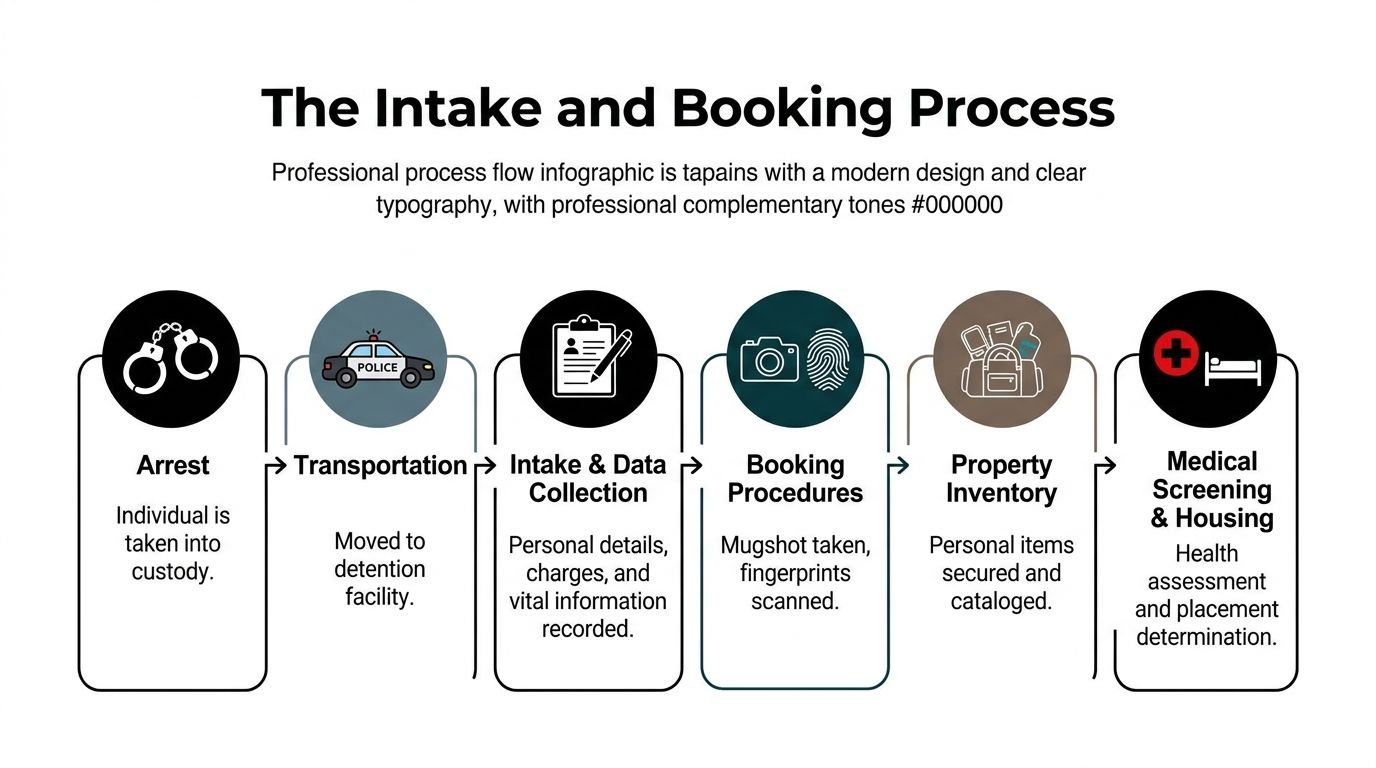
A typical path looks like this:
- Transportation to the jail
- Initial intake
- Identity checks
- Photographs and fingerprints
- Property inventory
- Health screening
- Housing assignment
That doesn’t mean each stage takes a fixed amount of time. It means the person can’t skip ahead just because family is waiting outside.
Why families can’t find them right away
A lot of people assume the moment someone enters the building, they should be searchable online. That’s not how it works.
Staff have to process paperwork, enter data, collect property, complete screening steps, and place the person in the correct custody setting. Until those steps are far enough along, the inmate search may show nothing.
What your loved one is dealing with inside
From the arrested person’s side, booking is a series of stops, waits, and instructions. They’re answering questions, surrendering personal belongings, getting photographed, and waiting for placement. If they have medical issues, that can add another layer of review before housing.
That delay is stressful for them too. Families sometimes interpret silence as a sign of danger or neglect. Usually, it’s a sign that the person is still moving through intake.
The quiet stretch after arrest is often the hardest part for families. It’s also normal.
What you should do during booking
Use the waiting time well.
- Gather ID information: Full name, date of birth, and any case details you have.
- Prepare money decisions: Decide whether the family can post cash or will need a surety bond.
- Keep your phone on: Once the inmate appears in the system, things can move quickly.
Don’t flood the jail with repeated calls every few minutes. Check, wait, and check again. You need accurate timing, not constant motion.
Understanding and Posting Bail at Adams County
Once bond is set, you have a decision to make. Families then either solve the problem cleanly or make it harder on themselves.
At Adams County, the Sheriff’s Office Detention Facility Division manages bonding operations, and those processes are designed to work efficiently with licensed surety agents who know how to coordinate electronic submissions and pre-verify inmate records to reduce delay, according to the Adams County Sheriff detention division information.
Colorado's standard surety premium involves a percentage of the total bond amount, and lower percentage options may be available for larger bonds with an approved cosigner, based on the verified data provided above.
Cash bond versus surety bond
Here’s the practical comparison:
| Option | How it works | Main drawback | Best fit |
|---|---|---|---|
| Cash bond | You pay the full bond amount directly | Your full cash amount is tied up while the case is pending | People with immediate access to the entire amount |
| Surety bond | You pay a premium and a licensed bond agent guarantees the full bond | The premium is a service fee and is not refunded | Most families who need release without locking up large cash reserves |
If someone’s bond is high, cash can become a bad financial decision fast. You may be able to pay it, but that doesn’t mean you should.
Why surety usually makes more sense
Most families aren’t trying to invest thousands of dollars into the jail system for an unknown length of time. They’re trying to get someone home, keep rent paid, keep the car running, and keep life from falling apart while the criminal case moves forward.
That’s why surety is usually the logical choice. You preserve cash, you move faster, and you work through a system the jail already handles every day.
If the arrest involved impaired driving, this page on bail for DUI can help you understand the extra pressure these cases create.
What you need before posting
Have these items ready:
- The inmate’s booking details
- The bond amount
- Your identification
- A realistic financial plan
Don’t assume bond means immediate release. Bond approval and physical release are separate stages. Families mix those up all the time.
If bond is set, your job is no longer guessing. Your job is choosing the fastest workable payment route.
One mistake to avoid
Don’t empty your account to post full cash just because you feel guilty or rushed. Fear makes people do expensive things. Use the option that gets the person out without creating a second crisis at home.
The Express Bail Bonds Solution for Adams County Jail
When you need help with Adams County, speed matters. So does simplicity.

A good bail process should keep you off the road, out of the jail lobby, and focused on getting your person released. That’s why many families use a remote surety process instead of trying to handle everything in person.
What a strong bail agent should do
A competent agent should:
- Verify the inmate record first: No guessing, no acting on rumors.
- Explain the bond clearly: You should know what you’re paying and why.
- Handle paperwork electronically: You shouldn’t have to drive across the metro in the middle of the night.
- Stay reachable: Arrests don’t happen on office hours.
If you’re new to this, learn the basics of what is a bail bond agent before you sign anything.
Why remote processing is the smart move
Driving to Brighton sounds productive. Sometimes it isn’t.
A remote process usually works better because you can complete the application, review documents, and handle payment from your phone or computer while the jail processes its side. That cuts out wasted travel and keeps the timeline cleaner.
It also helps out-of-state families. If your brother was arrested in Adams County and you live in Arizona, Texas, or Kansas, you still need the same thing every Colorado family needs. Fast verification and clean paperwork.
This short video gives a useful overview of how the process works in practice.
What to expect from Express Bail Bonds
Express Bail Bonds serves Colorado statewide through Express Bail Bonds, with electronic applications, electronic signatures, and remote payment options built for urgent situations. The company also provides county-specific resources like Jefferson County Golden Colorado bail bond help and Centennial bail bonds support, which is useful if your family deals with more than one jurisdiction.
For recent customer feedback, you can review this public rating profile and this additional review listing.
The right service doesn’t add drama. It removes it.
Adams County Jail Visitation Rules and Procedures
If your loved one isn’t getting out right away, contact matters. It helps morale, helps families stay informed, and gives the person inside a reminder that they’re not alone.

The mistake families make here is assuming jail visitation works like visiting someone in a hospital. It doesn’t. Every detention facility runs on strict procedures, and if you ignore them, you get turned away.
For a general overview of what to expect, this article on can you visit someone in jail is a good primer.
Before you schedule anything
Check the jail’s current visitation rules directly before making plans. Policies can shift, and the jail controls the schedule, not the family.
Be ready for these common requirements:
- Valid identification: Bring current government-issued ID.
- Approved scheduling: Don’t assume you can walk in.
- Behavior rules: Loud arguments, recording attempts, and disorderly conduct can end the visit.
- Dress expectations: If your clothing is too revealing or disruptive, staff may deny entry.
On-site and remote options
Many families prefer remote video because it avoids travel and scheduling headaches. Others want the structure of an on-site visit because it feels more reliable. Either way, follow the jail’s instructions exactly.
What matters most is consistency. A short, calm visit often helps more than a long emotional one.
Keep visits steady and focused. Your loved one needs reassurance, not a blow-by-blow crisis report from home.
How to make the visit count
Use the time for useful support.
- Confirm practical needs: Ask about court dates, medications, and property questions.
- Avoid case arguments: Jail calls and visits are not the place to debate facts of the case.
- Stay calm: If they’re frustrated, you don’t have to match that energy.
If a visit gets denied, don’t spin out. Find out why, fix the issue, and reschedule. Most problems come from identification, timing, dress code, or approval status.
Managing Inmate Accounts and Personal Property
Once someone is housed, the next family question is usually practical. How do I make sure they have what they need?
The answer starts with understanding the difference between money on the books and property in storage.
Inmate money
Inmates often need funds for commissary purchases such as basic toiletries, snacks, and writing materials. The jail controls how deposits are accepted, and those methods can change, so always verify the current process before sending money.
Typical options at many facilities include:
- Online deposits
- Lobby kiosk deposits
- Approved mail procedures
Use only the jail’s approved method. If you improvise, the money may be delayed or rejected.
Personal property taken at booking
During booking, staff inventory and store personal belongings. That usually includes clothing, wallets, keys, and other property the person had at the time of arrest.
Don’t assume you can walk in and retrieve or swap items on demand. Release of property follows jail rules, and those rules are tighter than most families expect.
What families should ask first
Before dropping anything off, call and ask:
| Question | Why it matters |
|---|---|
| Can this item be accepted at all | Many items are refused outright |
| Does the inmate need to request it | Some releases or deliveries require inmate authorization |
| Are there medical exceptions | Items like glasses or devices may follow different rules |
If your loved one needs medication-related support, document the issue carefully and keep your communication direct. The jail, not the family, decides what can come in.
The best approach is simple. Confirm the rule first, then act.
The Release Process from Adams County Detention Facility
Families often think posting bond is the finish line. It isn’t. It’s the point where the release process begins.
The facility’s older infrastructure, much of it tied to a 1980s podular design, creates operational challenges, and a 2018-2019 needs assessment identified antiquated layouts and high inmate transport costs as factors that affect efficiency. Those internal logistics are why release can take several hours even after bond approval, according to the needs assessment reference.
What happens after bond is posted
The jail still has work to do.
Staff have to receive and clear the paperwork, confirm identity, check for any holds or restrictions, and return stored property before the person walks out. If the facility is busy, that queue moves slower.
That delay is one reason families get angry too early. They hear “bond posted” and expect a release in minutes. The jail doesn’t work that way.
How to handle pickup the smart way
Use a simple plan:
- Stay reachable: Keep your phone on and charged.
- Don’t crowd the entrance too early: You may wait longer than expected.
- Bring essentials: Wallet, phone charger, simple clothing layers if weather is bad.
- Keep the reunion calm: The person being released is often tired, hungry, embarrassed, or overwhelmed.
What the released person usually needs first
They usually don’t need a lecture in the parking lot.
They need a few basic things:
- Food
- Quiet
- A ride
- A clear reminder of the next court obligation
The first ride home should lower stress, not restart the argument that got everyone here.
If there’s any confusion about release timing, be patient and keep communication focused. Delays after bond approval are frustrating, but they’re common in a busy facility with older internal logistics.
Frequently Asked Questions About Adams County Jail
These are the questions families ask when the first wave of panic starts to wear off.
What if my loved one has a medical or mental health condition
Tell the jail what you know, and keep it factual. Name the diagnosis if you know it, list medications if you know them, and don’t assume staff can guess how serious the issue is.
Adams County partnered with CorrHealth in March 2024 to provide jail-based behavioral health services designed to support a more integrated continuum of care during and after detention, according to CorrHealth’s Adams County announcement.
That matters for families because continuity of care affects both safety inside the jail and stability after release.
What happens to the bail money after the case is over
It depends on the type of bail used.
If someone pays the full cash bond directly, that money is generally handled through the court process and may be returned at the end of the case, subject to court rules and obligations. If someone uses a surety bond, the premium paid to the bail company is the fee for the service and isn’t refunded.
That’s why families should understand the payment method before acting. Cash and surety are not the same thing.
Can someone help from another state
Yes. In many cases, that’s one of the easiest parts now.
Out-of-state family members can often complete documents, review terms, and handle payment remotely. The key is getting accurate booking information first and then working with a licensed Colorado bond professional who can process the paperwork without requiring travel.
What should I do right after they get out
Keep the first day simple.
- Get them home safely
- Confirm court dates
- Secure medications if needed
- Avoid alcohol or chaos
- Save every piece of paperwork
The release itself is only one step. Missing court is how people end up right back in custody.
If your family needs fast help with an Adams County release, contact Express Bail Bonds. They serve Colorado statewide, handle remote paperwork, and help families move from panic to a practical release plan without wasting hours at the jail.