
The Adams County Jail Colorado phone number is (303) 654-1850, and the facility is located at 150 N 19th Avenue, Brighton, CO 80601. If you're trying to find someone, check bail information, or figure out what to do next after an arrest, that is the first number to call.
When that late-night call comes in, most families are dealing with the same three problems at once. They don't know where their person is, they don't know whether bond has been set, and they don't want to make a mistake that slows release down. The fastest way to settle the first layer of confusion is to start with the jail directly, then work from confirmed information instead of rumors, screenshots, or secondhand details.
Your First Call When Someone is Arrested in Adams County
A late-night arrest usually creates the same problem fast. You need confirmed information before you can help with release, property, or the next call to a bondsman. The first job is to verify where your person is, whether booking is complete, and whether bond details are available through the jail at (303) 654-1850.
Keep that first conversation focused. Jail staff can usually tell you the custody status, whether the inmate has been fully booked, and whether bond has been entered into the system yet. If booking is still in process, ask when you should call back. That answer alone can save you an hour of guessing and repeated trips.
What to ask first
Use a short checklist and write the answers down as you hear them:
- Is the person currently in custody at Adams County?
- Has booking been completed?
- Has bond been set yet?
- What type of bond applies, such as cash or surety?
- Are there any holds or release conditions that could slow discharge?
Practical rule: The first call is for verified facts you can use right away.
I tell families the same thing every day. Calm, organized callers usually get better information than callers who try to solve the whole case in one conversation. Ask direct questions, confirm spellings, and repeat back any amount or condition before you hang up.
If you need a local overview of how the facility operates while you work through release, this Adams County detention facility guide can help you line up the next step without wasting time.
Adams County Jail Quick Reference Contact Details
A bad call wastes time. The right call gets you booking status, bond details, or a clear answer on where to go next.
Adams County Jail Contact Information
| Service | Contact Information |
|---|---|
| Primary jail line | (303) 654-1850 |
| Facility address | 150 N 19th Avenue, Brighton, CO 80601 |
| Warrants Section | (720) 322-1325 |
| Dispatch for real-time status | (303) 288-1535 |
| Mailing address for inmates | PO Box 5001, Brighton, CO 80601 |
| Online inmate search | Adams County inmate search portal |
| Local facility guide | Adams County detention facility resource |
Why this list matters
Families often call the main jail line first, and that is usually the right move. It handles general custody questions, booking status, and bond-related information. If the arrest is fresh, though, one call may not answer everything because booking information can still be processing.
Use the numbers based on the problem in front of you. Call the primary line for inmate status, bond type, or release basics. Call the warrants section if you are trying to confirm whether a warrant issue is affecting release. Use dispatch when you need current status and you have been told the jail system has not updated yet.
Keep this section handy while you make calls. In my experience, families who use the right number first get answers faster and make fewer costly mistakes, especially before sending money or heading to the facility.
Common Reasons for Calling the Jail
Most callers aren't just searching for the adams county jail colorado phone number. They're trying to solve a problem under pressure. The reason for your call affects the kind of answer you'll get.
Confirming whether someone is there
This is the most common reason. Ask whether the person is in custody and whether booking is complete. If the arrest just happened, the online system may not reflect it yet, so a phone confirmation can be more useful in the first phase.
Asking about bond
Families often expect the jail to walk them through every bond option. Usually, what you can get is narrower and more practical: whether bond has been set, what type it is, and whether there are any restrictions that affect release.
What doesn't work is asking broad questions like, "How do we get him out tonight?" Start smaller. Ask for the bond amount and bond type first, then make decisions from there.
Callers get better results when they ask for facts, not predictions.
Checking on warrants or hold issues
Sometimes a person appears releasable at first glance, but a warrant, hold, or status issue changes everything. That's why experienced bond agents verify details before moving money or paperwork. A quick extra check can prevent a bad assumption.
Visitation, property, and basic inmate support
The jail also gets calls about remote visits, mail, property after release, and general inmate procedures. Those calls are still important, but they don't move as quickly as bond verification calls. If release is your top priority, handle status and bond first. Then deal with communication, clothing, property, and scheduling questions.
What staff may not tell you
Jail staff generally focus on operational information. They may not give long explanations, legal advice, or strategic guidance about what your best next move should be. That's normal. Their role is to provide jail information, not personal case planning.
What Information to Have Ready Before You Call
The fastest calls usually start before you pick up the phone. A family member is upset, the jail line is busy, and every missing detail adds another round of hold time. A few minutes of prep can save you a lot of frustration and help you get usable answers on the first call.

Your call checklist
Set these items in front of you before you dial:
- Full legal name. Use the name that would appear on a driver's license or court record.
- Date of birth. This helps staff sort out similar names quickly.
- Booking number, if you have it. It speeds up the search and cuts down on mistakes.
- A place to take notes. Write down the bond amount, bond type, housing status, and the name of the person you spoke with if they give it.
- A short list of priorities. Decide whether you are calling about custody status, bond, release timing, property, or visitation.
If you are still trying to confirm where someone was taken after an arrest, this guide on how to find someone arrested can help you collect the right details before you call.
Why preparation changes the call
Jail staff can usually answer direct identification questions quickly. They cannot do much with "my cousin got picked up last night" or a nickname that may not match the booking record.
That is why I tell families to slow down and lead with the legal name and date of birth first. Once the jail locates the right person, the rest of the call gets more productive.
A practical way to ask your questions
Keep your questions short. Ask one at a time. Write the answer down exactly as you hear it.
A good sequence looks like this:
- "I'm calling to confirm whether this person is in custody."
- "Has booking been completed?"
- "Has bond been set?"
- "What is the bond type?"
- "Is there any hold or restriction that could delay release?"
That approach keeps the conversation clear and gives you facts you can act on.
Calls tend to go sideways when people tell the whole story first, ask several questions in one breath, or guess at the spelling of the inmate's name. If you are unsure about the spelling, spell it slowly and have the date of birth ready right after.
Using the Adams County Inmate Search Tool
The online inmate search is useful when you need a starting point and don't want to wait on hold. It won't replace a phone call in every situation, but it can help you gather enough information to make the next move.
A simple way to use it
- Go to the guide on how to find someone arrested.
- Follow the path to the official Adams County inmate search portal.
- Search using the person's legal name.
- Review the booking details that appear.
- Save the exact spelling and any listed identifiers before calling the jail.
Where the tool helps and where it doesn't
The search portal is good for basic verification and reference. It can help you avoid spelling errors and gives you a cleaner way to confirm you're asking about the right person.
Its weakness is timing. A person who was just arrested may not appear right away, and details can change during booking. That's why families should treat the search tool as a cross-check, not the final word. If the listing isn't there yet, or if the bond details look unclear, call the jail directly and verify.
Understanding the Adams County Bail Process
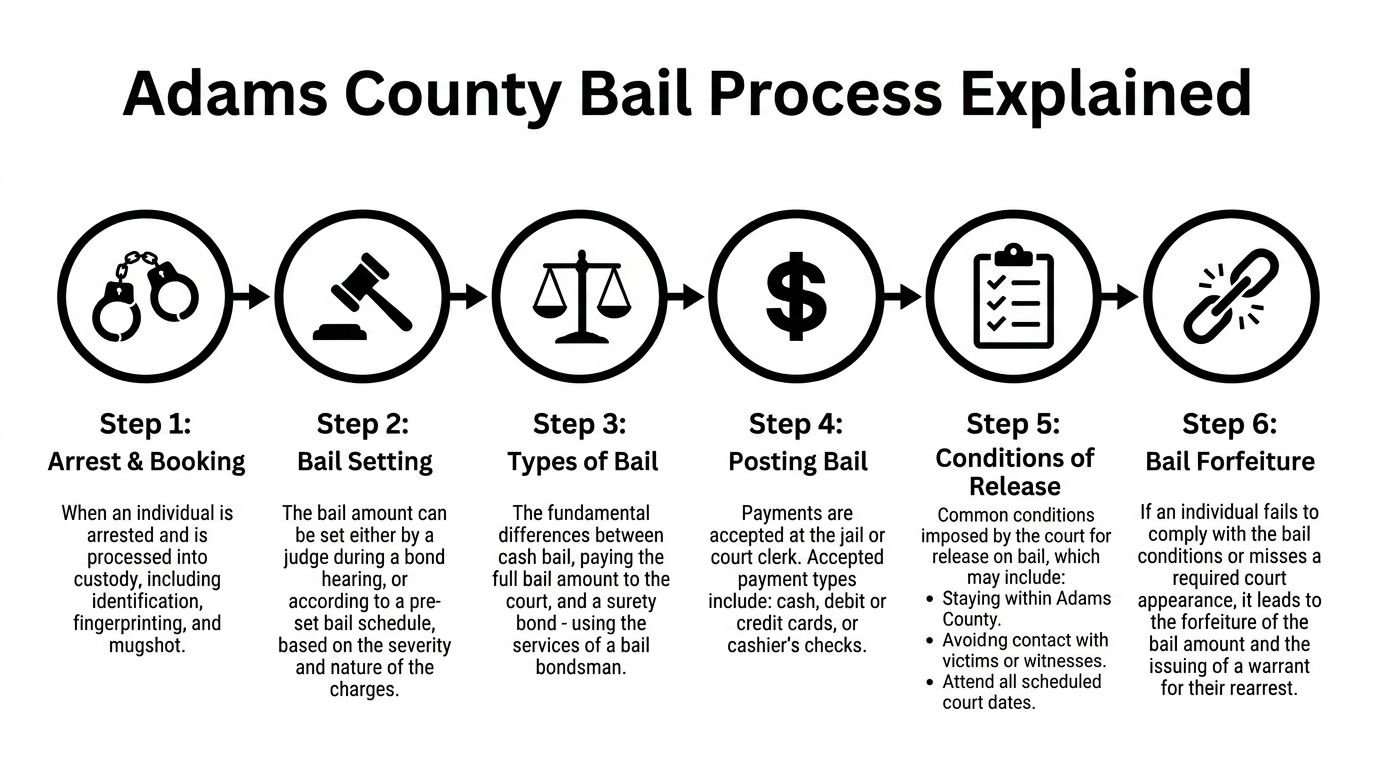
If you get the call late at night that a family member is in Adams County, the first question is usually, "How do we get them out?" The answer depends on the bond type, the amount set, and how quickly you can act on the right information.
The two main paths families consider
In practical terms, families usually look at two options. A cash bond means paying the full amount required for release. A surety bond means hiring a licensed bail bond company to post the bond on the defendant's behalf.
The trade-off is straightforward. Cash can work well if the amount is manageable and you want to avoid working through a bondsman. A surety bond is often the better fit when coming up with the full amount on short notice would strain the household budget or tie up money you need for rent, bills, or childcare.
How the release process usually unfolds
The process tends to follow this order:
- Arrest and booking
- Bond is set or confirmed
- The bond type and release conditions are verified
- Payment or surety paperwork is completed
- The jail finishes internal release processing
- The person is released
That sounds simple on paper. In real cases, delays usually happen in step 3 or step 5. Families lose time when they assume the bond can be posted one way, then find out the court listed a different condition. Release can also take time after payment is handled because jail staff still have to complete their internal process.
For a clearer explanation of bond categories, this guide to the different types of bail in Colorado helps break down what each one means.
A short video can make the flow easier to follow.
One mistake that slows release
Verify the bond type before anyone sends money, signs forms, or starts driving to the jail.
I have seen families lose hours because someone assumed "bond set" meant any payment method would work. It does not always work that way. Some holds, conditions, or court instructions change what can be done and when.
A clean release starts with the right bond type, not with the fastest guess.
How Express Bail Bonds Streamlines Your Release
When families are trying to arrange release from a distance, the biggest obstacle usually isn't willingness. It's logistics. Someone may be working, caring for children, living out of state, or trying to coordinate everything after normal business hours.
That is where a remote process helps. Express Bail Bonds allows applications, signatures, and payments to be handled electronically, which means people don't have to spend hours driving around just to move the file forward. For many families, that's the difference between making progress tonight and waiting until tomorrow.
Why remote processing matters
A good bond process removes avoidable delays:
- Electronic paperwork keeps documents moving when cosigners aren't local.
- Call or text availability helps when the arrest happens outside a normal office schedule.
- Statewide familiarity matters if the family is comparing facilities or trying to coordinate with another county.
If your case involves another part of the metro area, these local resources can help you compare procedures and service areas: Jefferson County in Golden and Centennial bail bond help.
What people usually value most
Families under stress usually want three things. They want a straight answer, a clear next step, and a way to complete the process without unnecessary travel. The comments reflected in these client reviews on Google and these additional customer reviews give a sense of what responsive service looks like when time matters.
Inmate Visitation and Mail Rules
Communication becomes the next priority if release is taking longer than expected. Adams County uses Homewav for remote video visitation, with current setup details and rates listed on the Adams County visitation page.
Remote video visits
Families usually hit problems before the visit starts. The common trouble spots are account setup, adding funds, device issues, and trying to schedule while the inmate is still in Intake. Intake housing can limit availability, so check status before you spend time troubleshooting the app.
Use a simple order:
- Create the Homewav account first so you are not scrambling at the last minute.
- Verify the inmate can receive visits because housing location can affect access.
- Test your phone, tablet, or camera early since older devices cause a lot of failed connections.
- Keep the visit short if release may happen soon so you do not put more money into the account than you need.
If you want a broader explanation of how jail visits usually work, this guide on how to visit someone in jail covers the basics.
Mail rules that prevent rejection
Mail problems are usually preventable. The biggest mistakes are leaving off the booking ID, misspelling the inmate's name, or sending items the jail has not approved.
For regular mail, keep it plain and follow the jail's addressing instructions exactly, including the inmate's full name and booking information. As noted earlier in the article, Adams County also requires pre-approval for certain packages, and mail disputes or rejected-mail questions are handled through the jail's listed contact channels.
A practical rule is simple. If you would hesitate to send it through a government office, do not put it in the envelope until you confirm the jail will accept it. That quick check can save several days of delay and a lot of frustration for the inmate and the family.
Frequently Asked Questions About Adams County Jail Procedures
How soon will someone show up in the inmate search
Sometimes fast, sometimes not. Booking and system updates don't always happen at the same moment. If the arrest was recent and the person doesn't appear online yet, call the jail and verify by name and date of birth.
Can I call an inmate directly
Don't assume you can reach an inmate the way you'd call a private phone. Jail communication systems are controlled by facility procedures, and direct access is limited. In practice, families usually do better by focusing on approved communication methods such as the jail's visitation system and following the jail's mail rules.
Should I trust the online information by itself
No. Use it as a starting point. If you're making a decision about release, verify status and bond details directly with the jail before anyone pays or signs anything.
What if I think there may be an active warrant
Handle that carefully. If the issue is specifically a warrant question, use the designated warrants contact rather than guessing from an inmate listing or from what someone said during arrest. Warrant status can change what happens next.
What's the most common mistake families make
Rushing into the second step before they've confirmed the first one. People often start trying to arrange bond before they know whether booking is complete or what kind of bond has been set. A calm, verified sequence usually moves faster than a panicked one.
If you feel overwhelmed, slow the process down enough to confirm names, status, and bond type. That one pause prevents most avoidable errors.
If you need professional bail help anywhere in Colorado, Express Bail Bonds can walk you through the next step, explain your options clearly, and help you move the release process forward without unnecessary delay.