
A late-night call from an unknown number can change the whole room. You answer, hear your loved one’s voice, and catch only a few clear words: “I’ve been arrested.” After that, everything feels scrambled. Which jail? What happens next? Can they get out tonight? What are you supposed to do first?
If you are in this situation right now, take a breath. The system feels harsh because it moves on its own schedule and uses language most families never deal with until a crisis hits. The good news is the process is not random. There is a sequence. Once you understand that sequence, the next decisions become much clearer.
People often panic because they cannot see what is happening behind the walls of a jail. They picture interrogation rooms, endless waiting, and paperwork with no end in sight. Some of that waiting is real, but much of what happens after an arrest is routine processing, court review, and release planning.
A helpful first step is to steady yourself before making calls. If you need something practical to help you focus, these anxiety coping guides and tools can help you slow the spiral and think clearly.
Families usually need the same basic roadmap. Where is the person being held? Have they been booked yet? Has bail been set? Is release possible tonight, tomorrow, or later? If you need a simple starting point right away, this overview on what to do when someone gets arrested can help: https://expressbailbonds.com/what-to-do-when-someone-gets-arrested/
Introduction A Guide for a Stressful Time
When people search what happens after you get arrested, they are usually not doing research for fun. They are trying to solve a problem in real time. A spouse is waiting at home. A parent is calling hospitals and jails. A friend is trying to find out whether they should bring money, call a lawyer, or do both.
The first thing to know is simple. An arrest does not mean the process is over. It means the legal process has started.
That process usually moves through a few major stages. The person is taken into custody. Law enforcement completes booking. Charges may be reviewed. A court appearance follows. Bail may be set. Then the family decides how to secure release, if release is available.
The confusion comes from the gaps between those stages. Families call the jail and hear, “They’re still being processed.” That can sound vague or evasive. In reality, booking often involves identity checks, fingerprints, photos, property inventory, paperwork, and placement in a holding area.
Tip: Write down every detail you get during each phone call, including the jail name, booking number, charges if known, and the name of the person you spoke with. Stress makes people forget important details fast.
This guide stays focused on the questions families ask most. What is booking? How long can it take? When is bail set? What are the release options in Colorado? What responsibilities start after release? Those are the points that matter most in the first hours.
Just as important, this guide treats the experience the way families live it. Not as a legal textbook, but as a practical problem that needs calm, accurate steps.
The First 24 Hours From Arrest to Booking
The first stretch after an arrest is the part most families understand the least. They know the person was taken into custody, but after that everything disappears into a black box. Booking initiates this process.
Think of booking like an intake process. It is not the trial, and it is not the final decision on guilt or innocence. It is the administrative step that formally places someone into the criminal legal system.
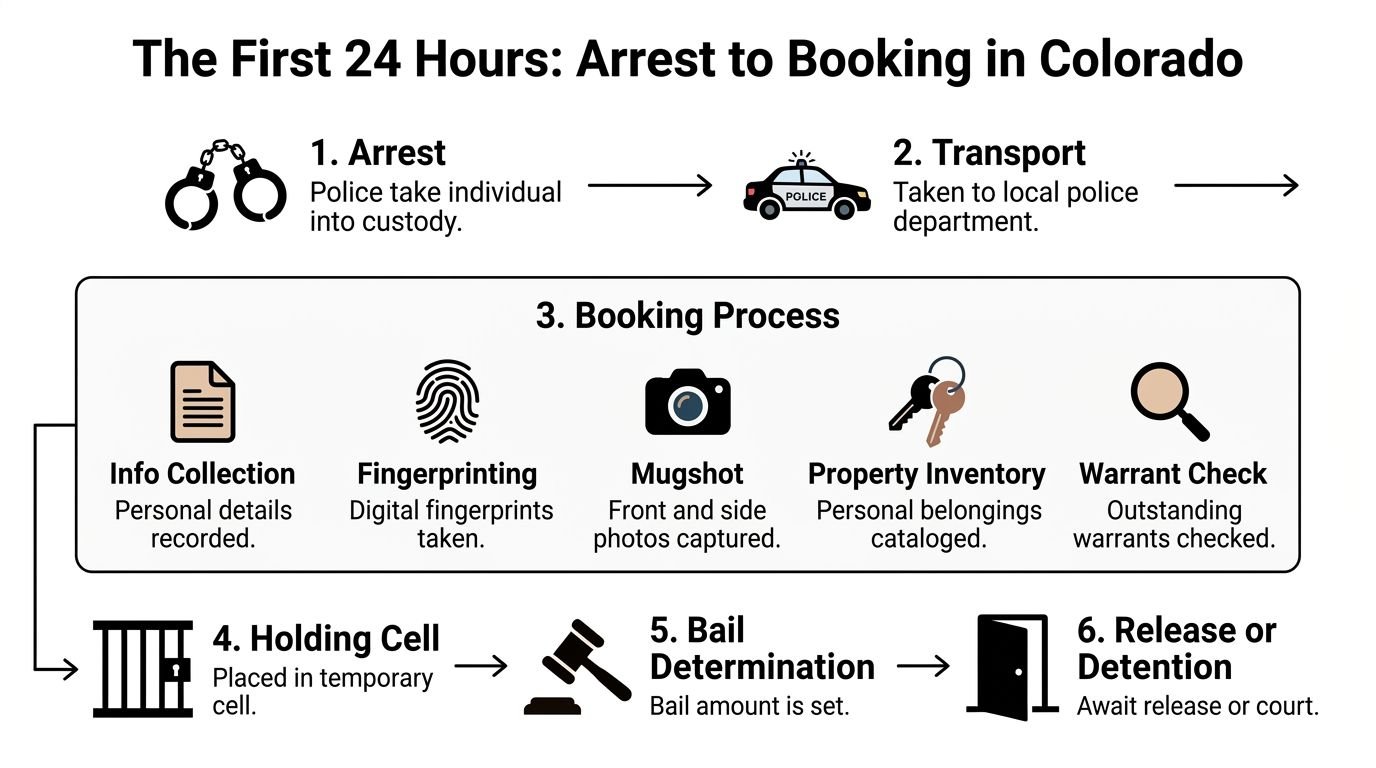
What booking usually includes
After arrest, law enforcement records personal identifiers such as fingerprints, photographs, and biographical information, then submits that information to systems like the FBI’s National Crime Information Center for record-keeping and criminal history checks. That booking process can take 2 to 12 hours, depending on the jurisdiction, according to this explanation of the post-arrest process in Pennsylvania: https://www.coovandassoc.com/blog/what-happen…
A family member might hear several terms during this period. Here is what they usually mean in plain language:
- Personal information collection: Officers record the person’s name, address, date of birth, and other identifying details.
- Fingerprinting and photographs: These create an official record tied to the arrest.
- Property inventory: Items like keys, wallet, phone, and jewelry are logged and stored.
- Database checks: Law enforcement checks for warrants or criminal history.
- Holding cell placement: The person waits there until the next step in the process.
If the jail says the person is “still in booking,” it often means one or more of those tasks is still in progress.
Why families often wait longer than expected
The waiting is hard because it does not follow the family’s timeline. A jail may be processing many people at once. Staff may need to verify identity, sort property, run checks, and move people between units before anyone is ready for release or court.
That is why one of the most common mistakes is assuming that no phone update means nothing is happening. In most cases, things are happening. They are just happening inside a system that shares information slowly.
In New York, the Vera Institute explains that after police arrest someone, they are brought to a local precinct, processed through paperwork, mugshots, and fingerprinting, and then held pending prosecutor review and the first court appearance. Vera also notes that state law generally requires a first court appearance within a specific timeframe after arrest, though in practice that timeline is often violated. If no charges are filed, the person must be released: https://www.vera.org/news/what-happen…
What usually comes after booking
Once booking is complete, the person may remain in a holding area until a judge or magistrate addresses release conditions. Some low-level cases can result in a summons rather than continued detention. Other cases move toward arraignment or a preliminary hearing.
A judge’s release decision may consider factors such as criminal history, community ties, and risk of missing court. Some jurisdictions use validated pretrial risk assessments during this stage. The same Pennsylvania source notes that these tools can reduce unnecessary detention by 20 to 40 percent: https://expressbailbonds.com/24-hour-booking-and-release/
For families, the practical takeaway is this: the first hours are about processing, records, and placement. They feel chaotic from the outside, but there is an order to them.
Understanding Bail and Your Options for Release
Once the person has been booked and brought before the court process for an initial release decision, the next question is usually blunt and immediate. How do we get them out?
Bail is a financial guarantee tied to future court appearances. The court uses it to create an incentive for the defendant to return. If the person appears as required, the case continues through the normal process. If the person does not appear, the court can take action against the bond.
When bail becomes part of the process
The key moment comes early. Vera explains that after booking and before or at the first appearance, a prosecutor decides on charges and a judge determines bail. If no charges are filed, the person must be released. If charges are filed, that first hearing is when release options become urgent: https://www.vera.org/news/what-happen…
That is why families often feel like everything speeds up at once. For several hours they hear little. Then suddenly they need to decide which release path makes sense.
Comparing the main release options
In Colorado, families usually hear about three common release paths. The names sound technical, but the key question is who pays, how much, and under what conditions.
| Release Option | What You Pay | Who It's For | Key Consideration |
|---|---|---|---|
| Personal Recognizance bond | No upfront bail payment to a bondsman | People the court believes can return without a financial guarantee | The judge must approve it |
| Cash bond | The full bail amount paid directly to the court | Families who can afford the entire amount | Ties up a large amount of money |
| Surety bond | A premium paid to a licensed bail bond agency | Families who need help covering a larger bail amount | Requires a contract and compliance with bond terms |
You can read a plain-language breakdown of these options here: https://expressbailbonds.com/types-of-bail/
How families usually decide
A Personal Recognizance bond, often called a PR bond, means the court releases the person based on their promise to return. This is the least expensive option because there is no surety premium involved. But it is not something a family can demand. It depends on the court’s decision.
A cash bond means the court requires the full amount to be paid directly. If bail is set at a level the family can handle, this may be straightforward. The problem is that many families do not have immediate access to the full amount, especially on short notice.
A surety bond involves a bail bond agency guaranteeing the full bail amount to the court. The family or cosigner pays a premium for that service instead of posting the entire amount themselves. For many households, this is the only realistic path when bail is more than they can produce quickly.
Key takeaway: The best release option is not the one that sounds simplest. It is the one the court allows and the family can carry through without creating a second crisis.
The question families ask most
The most common misunderstanding is this: families think the bail amount is what they must personally bring in cash. Sometimes that is true with a cash-only bond. Many times, though, it depends on the type of bond the court sets.
That is why the exact bond type matters just as much as the amount.
If the bond is surety-eligible, a licensed bail bond agent can step in. If the bond is cash-only, a bail bond company cannot convert it into a surety bond. Families need to know which kind of bond they are dealing with before they start scrambling for money.
How a Colorado Surety Bond Works Step by Step
A Colorado surety bond works a lot like a promise backed by a licensed company. The court sets the bond amount. The bail bond agency guarantees that amount to the court. The cosigner pays a premium for that guarantee instead of bringing the full bond amount in cash.
For families under pressure, that can turn a problem that feels impossible into one with clear steps. If you want a plain-language overview first, you can read what a surety bail bond is and how it works.
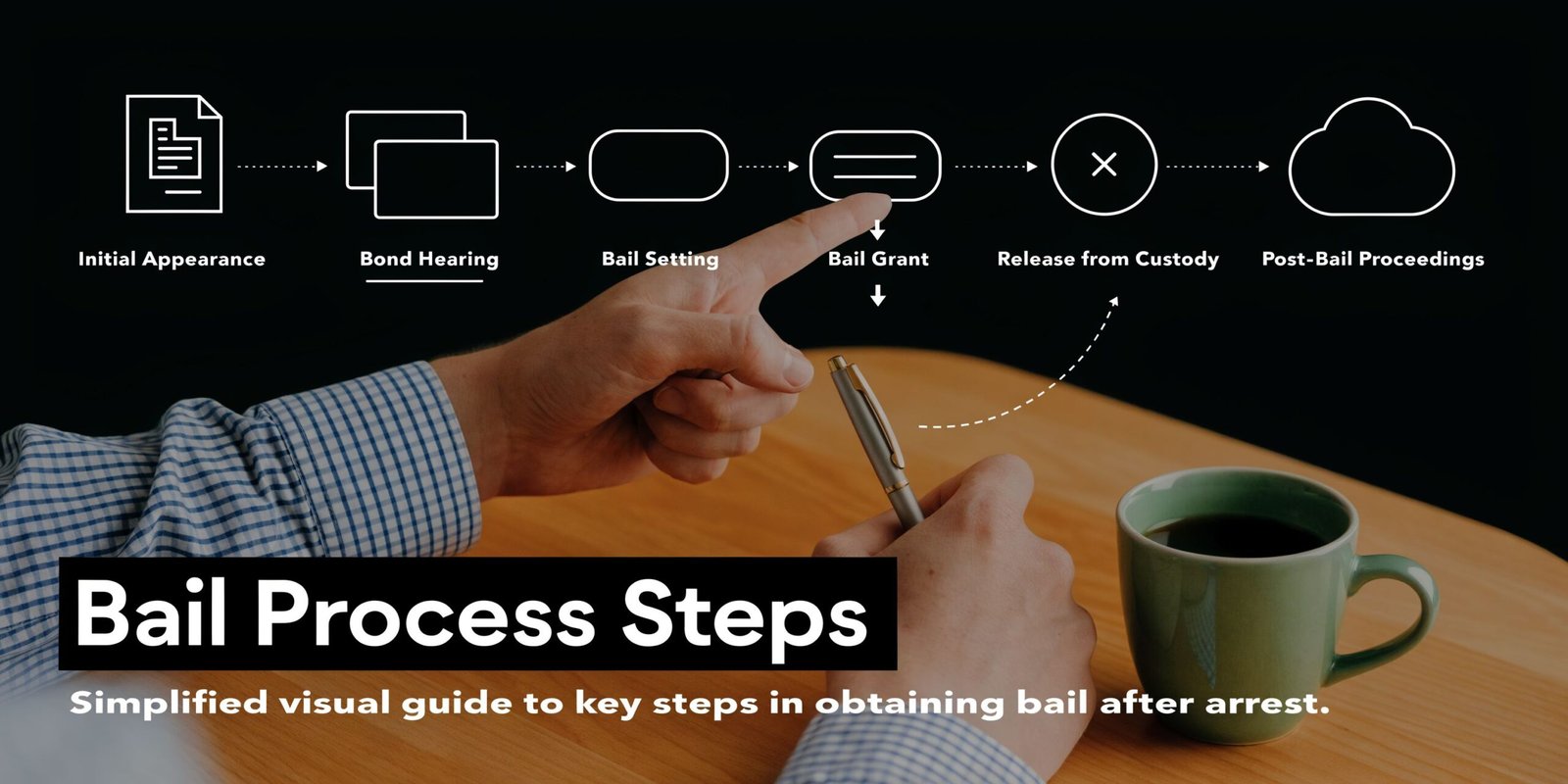
Here is the usual sequence after the court says the bond can be posted through a surety company.
First, the family confirms the bond amount, the bond type, and where the person is being held. That sounds simple, but errors often begin here. If the bond is not surety-eligible, a bail bond company cannot post it.
Next, a licensed bail bond agency gathers the information needed for the bond application. That usually includes the defendant's full name, date of birth, booking details, charges if available, and basic information about the cosigner.
Then the cosigner reviews and signs the bond paperwork. The cosigner is agreeing to financial and practical responsibilities, so this step should never feel rushed. A good agent should explain what the contract requires in plain language.
After that, the premium is paid according to the terms offered by the agency. Once the paperwork and payment are complete, the bond can be posted with the jail.
The jail then processes the release. That final part is often the slowest, and families should be ready for some waiting even after the bond is posted.
Express Bail Bonds serves detention facilities across Colorado and handles electronic applications, payments, and documents for people who need remote processing. This is a major help when the cosigner is out of state.
Why remote cosigning matters
Remote cosigning solves a common family problem. The person ready to help is often not the person standing near the jail. A parent may be in Texas. A spouse may be at home with children in Aurora. A sibling may be trying to help from work in another county.
Colorado families often need to act fast across long distances. Electronic documents and remote payment options can keep the release process moving without forcing everyone into the same room.
That can matter in places like Jefferson County in Golden or Centennial and the surrounding area, where families may also need location-specific information while they are trying to get someone released.
Here is a short visual walkthrough of the process families often find helpful after the bond is set.
What the cosigner and defendant are agreeing to
Posting the bond is only the first half of the job. After release, the defendant must follow every court date and every bond condition. The cosigner also has ongoing responsibilities under the bond contract.
A simple way to understand it is this: the bond opens the jail door, but good follow-through keeps it from swinging shut again.
Families should pay close attention to four areas:
- Court dates: The defendant must appear as ordered.
- Payments: If the premium is financed, payments must stay current under the agreement.
- Check-ins: Any reporting requirement from the bond company must be followed.
- Contact information: Changes to phone number or address should be reported quickly.
Confusion usually causes trouble faster than bad intent. Ask questions before signing, save copies of the paperwork, and make sure both the defendant and cosigner know exactly what is expected.
Navigating The Court Process After Release
Release feels like coming up for air. But the case keeps moving, and the first few court dates set the rhythm for everything that follows.
For many people in Colorado, the first big stop is the arraignment. That is the hearing where the court states the charges, confirms the defendant’s rights, and asks for a plea. If you want a clearer picture of that step, review this guide on what happens at an arraignment hearing.

A simple way to understand the court process is to picture train stops. Getting out on bond is only the ride home from jail. Arraignment, later hearings, deadlines from the court, and meetings with a lawyer are the stops that follow. Missing one can cause the court to issue a warrant and create bond problems fast.
That is why families should shift from release mode to organization mode right away. Put every court date on a phone calendar. Keep paper copies and photos of bond documents. Save the case number, courthouse name, and attorney contact information in one place that both the defendant and cosigner can access.
Evidence also needs careful handling after release. Text messages, call logs, photos, and social media posts can matter in a criminal case. If a lawyer asks you to preserve phone evidence, use a method that creates legally admissible iPhone text messages for court rather than relying on screenshots that are incomplete or hard to verify.
What follow-through looks like after release
Good follow-through usually comes down to a few steady habits, not legal expertise.
- Show up early: Arriving late to court creates avoidable stress and can still count as a missed appearance in some situations.
- Stay in contact with counsel: The attorney needs accurate updates, especially if the defendant changes jobs, moves, or has trouble making a hearing.
- Follow every bond condition: That can include no-contact orders, drug testing, travel limits, or check-ins.
- Keep the story off the phone and off social media: Court cases are not improved by public explanations or arguments online.
One point causes a lot of confusion. Talking openly with a defense lawyer helps the defense. Talking about the facts of the case with friends, family, witnesses, or on recorded lines can create new problems.
The court process after release is less about doing something dramatic and more about staying steady. One missed date, one broken condition, or one careless message can reopen the jail door. Careful follow-through gives the defendant the best chance to stay out, stay prepared, and deal with the case from a stronger position.
Protecting Your Rights and Planning Next Steps
Families need a short list they can act on. Not theory. Not legal jargon. Just the next right moves.
For the person who was arrested, two rights matter immediately. The right to remain silent and the right to an attorney. In practical terms, that means they should give basic identifying information when required, avoid discussing the facts of the case with police, and ask for a lawyer.
For the family, the job is support and organization.
A calm checklist for the next few hours
- Stay steady: Panic leads to missed details. Write things down and speak slowly during calls.
- Gather the core information: Full legal name, jail location, booking number if available, and the listed charges.
- Ask about bond status: Find out whether bond has been set and whether it is surety-eligible or cash-only.
- Contact a defense attorney: Bail gets someone out. A lawyer handles the case itself.
- Keep communication clean: Do not encourage the defendant to explain the incident over recorded jail calls.
What not to do
Some families accidentally make the situation harder. They argue with staff, post details on social media, contact witnesses directly, or pressure the defendant to “clear it all up” on the phone.
That usually creates more problems, not fewer.
A better approach is simple. Get accurate information. Secure release if possible. Retain legal counsel. Then follow instructions carefully.
One practical note about timing
Quick action helps, but rushed decisions can backfire. Before anyone signs a bond agreement, they should understand the payment terms, the check-in requirements, and what happens if the defendant misses court.
If you are helping a loved one, your role is not to solve the criminal case in one night. Your role is to help them get through the first stage without adding avoidable damage.
Frequently Asked Questions About the Arrest and Bail Process
These are the questions families ask when the first wave of panic starts to settle.
What if the charges are dropped after we pay for a bail bond
The premium paid for a surety bond is generally the fee for the service of posting the bond. If charges are later reduced, dismissed, or dropped, that does not usually undo the work already performed by the bond agency.
Families often expect the outcome of the criminal case to determine whether the fee comes back. In most surety bond situations, those are separate issues.
What does cash-only bond mean
A cash-only bond means the court requires the full amount to be paid directly, rather than allowing a surety bond through a bail bond agency.
This distinction matters a lot. If the court labels the bond cash-only, a surety company cannot step in and replace it. The family must follow the court’s cash requirement unless the bond type changes through the legal process.
How long does it take to get released after the bond is posted
There is no single answer because the jail controls release processing. Even after a bond is posted, the jail may still need to complete internal checks, verify paperwork, and process property return.
Families get frustrated here because they think posting the bond means the person walks out immediately. It rarely works that way. Bond posting starts the release process. It does not guarantee the person is standing outside the door right away.
Can someone from out of state cosign
Often, yes. Many Colorado bond transactions can be handled remotely through electronic applications, signatures, and payments.
That can be a major help when the person best suited to cosign is a parent, spouse, or sibling who does not live nearby. The important part is that the cosigner understands the contract and can complete the required documentation.
What if the defendant misses a payment or stops checking in
That is serious. Bond agreements often require payment compliance and communication. If the defendant or cosigner ignores those obligations, the bond can be revoked and the defendant can be taken back into custody.
This is one reason families should not focus only on getting someone out. They should also ask, “Can we realistically manage the bond conditions after release?”
Should the defendant talk about the case on jail calls or text messages
No. Families should assume jail calls and jail messaging systems are not private. The safest approach is to keep conversations focused on logistics, release planning, and attorney contact.
If the facts of the case need to be discussed, that should happen with legal counsel.
Conclusion Your Fastest Path to Getting Back Home
An arrest turns ordinary people into emergency planners in a matter of minutes. One minute you are asleep, at dinner, or driving home from work. The next minute you are trying to understand booking, bail, bond types, court dates, and paperwork you never expected to see.
The process is stressful, but it does have an order. First comes custody and booking. Then charges are reviewed and release is considered. If bail is set, the family has to figure out which path fits the bond type and their finances. After release, the court process continues, and every condition matters.
That is the complete answer to what happens after you get arrested. Not one event, but a chain of decisions. Some belong to police, some to the court, and some to the family.
If you are helping someone right now, keep your next steps simple. Confirm where they are. Find out whether bond has been set. Learn what type of bond it is. Get legal counsel involved. If a surety bond is allowed, move quickly but read everything carefully.
For location details and reviews, families can also use these map listings for Golden and Denver area service.
If you need immediate help with a Colorado surety bond, contact Express Bail Bonds. They serve detention facilities statewide, handle remote applications and cosigning, and are available 24/7 by call or text at 720-984-2245 so families can start the release process without spending hours trying to decode it alone.