Walking into a courtroom can be an intimidating experience, but being thoroughly prepared can significantly reduce stress and improve your outcome. Knowing exactly what to bring to court is the first step toward navigating the legal process with confidence. This isn't just about having your case file; it's about presenting a complete and organized picture to the judge, from your identity and legal standing to your compliance with release conditions. For defendants in Colorado, especially in jurisdictions like Jefferson County and Centennial, having the right documentation on hand is critical for a smooth proceeding.
This guide breaks down the nine essential categories of items you must prepare before your court date. We provide actionable tips and real-world scenarios to ensure you arrive ready for anything. We'll cover everything from the non-negotiable government ID to the often-overlooked proof of compliance with bail conditions, which are details that can make a significant difference.
Whether you're dealing with a recent arrest or supporting a loved one through the bail process, this checklist is your roadmap. For those needing immediate assistance with bail bonds in the Denver area, the team at Express Bail Bonds offers expert guidance and support. See our reviews on Google and Google. Proper preparation demonstrates responsibility and respect for the court, setting a positive tone for your appearance.
1. Identification and Travel Documents
The first and most critical item on your checklist of what to bring to court is a valid, government-issued photo ID. Courthouses in Colorado, from the Denver City and County Building to the Jefferson County Courthouse in Golden, have security checkpoints at every public entrance. You will be required to present a current photo ID to a court marshal or sheriff's deputy simply to enter the building.
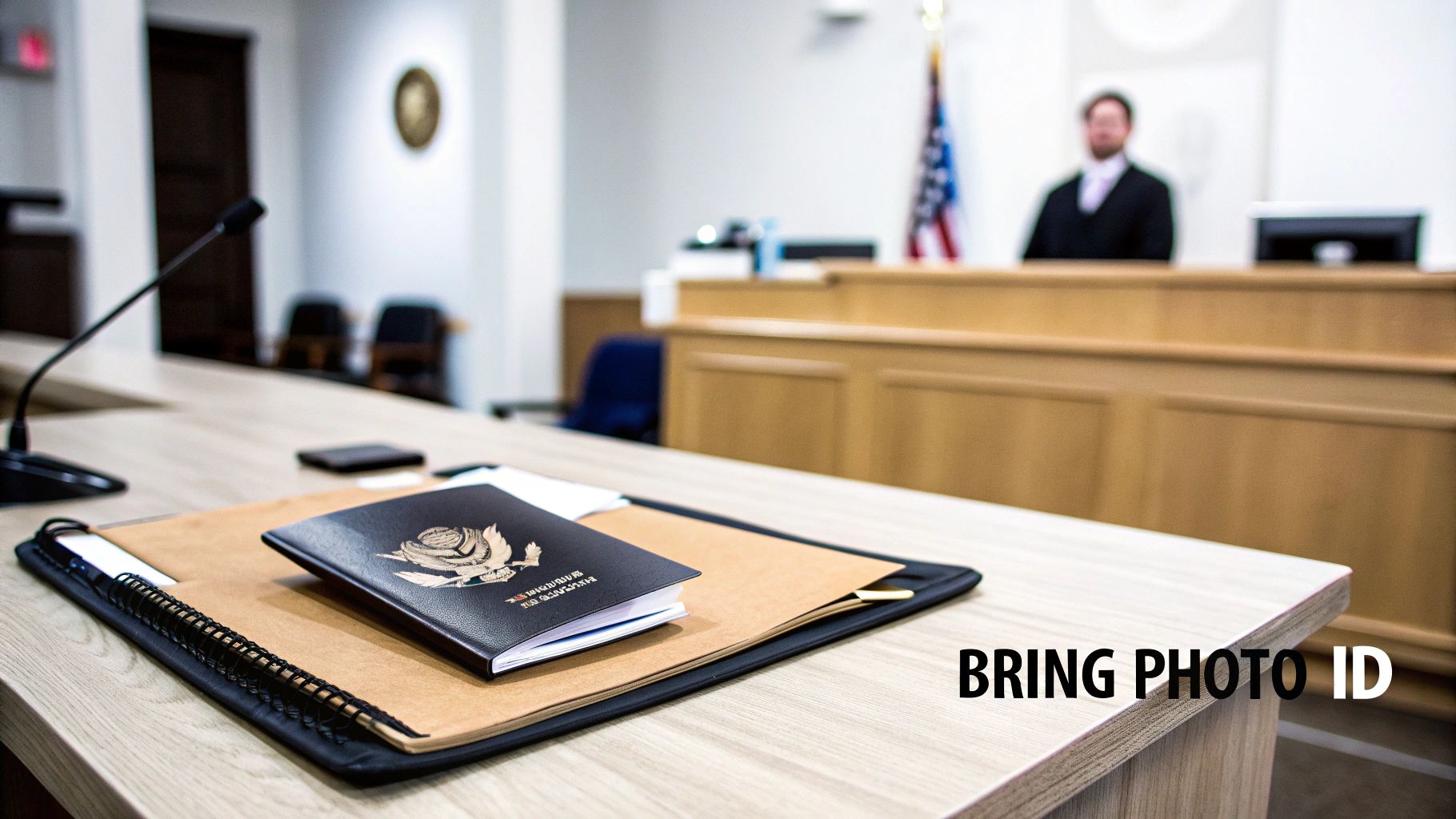
This requirement is not just for defendants; it applies to family, friends, and anyone attending a hearing. The ID serves to confirm your identity for court records and security protocols, ensuring that all parties present are properly identified. For defendants, this is non-negotiable, as the court must verify you are the correct person for the scheduled proceeding. Without proper identification, you risk being denied entry, which could lead to a failure to appear warrant. This step is a crucial part of navigating the legal system, especially in the early stages right after an arrest. If you need more information about the initial steps, you can learn more about what to do when someone gets arrested.
Accepted Forms of ID and Travel Documents
While a driver's license is most common, other forms of identification are also acceptable.
- Primary IDs: State-issued Driver's License or ID Card, U.S. Passport or Passport Card, Military ID, or a Permanent Resident Card.
- Travel Documents: If you have been granted written permission by the court to travel, bring copies of the court order, your approved itinerary, and flight or hotel confirmations. Do not travel out of state without explicit court approval, as this can violate your bond conditions.
Actionable Tips for ID Verification
To avoid last-minute complications, prepare your identification well in advance of your court date.
Key Insight: Check the expiration date on your ID at least one week before your court appearance. If it's expired, visit a Colorado DMV for an expedited replacement. Do not bring a photocopy unless specifically told to do so by the court or your attorney; always bring the original document.
If you or a loved one needs assistance navigating the court and bail process in Centennial or anywhere in the Denver metro area, our team at Express Bail Bonds is here to help. See our reviews from satisfied clients on Google and Google.
2. Bail Bond Agreement and Release Documents
Along with your ID, one of the most important items to bring to court is your complete set of bail bond paperwork. This includes the signed bail bond agreement and any release documents provided by the bail agent. This paperwork is your legal contract and proof of compliance, outlining your financial obligations and the specific conditions of your release from facilities like the Jefferson County Jail or the Denver Detention Center. Having it on hand allows you to immediately verify the terms of your release if any questions arise during your hearing.
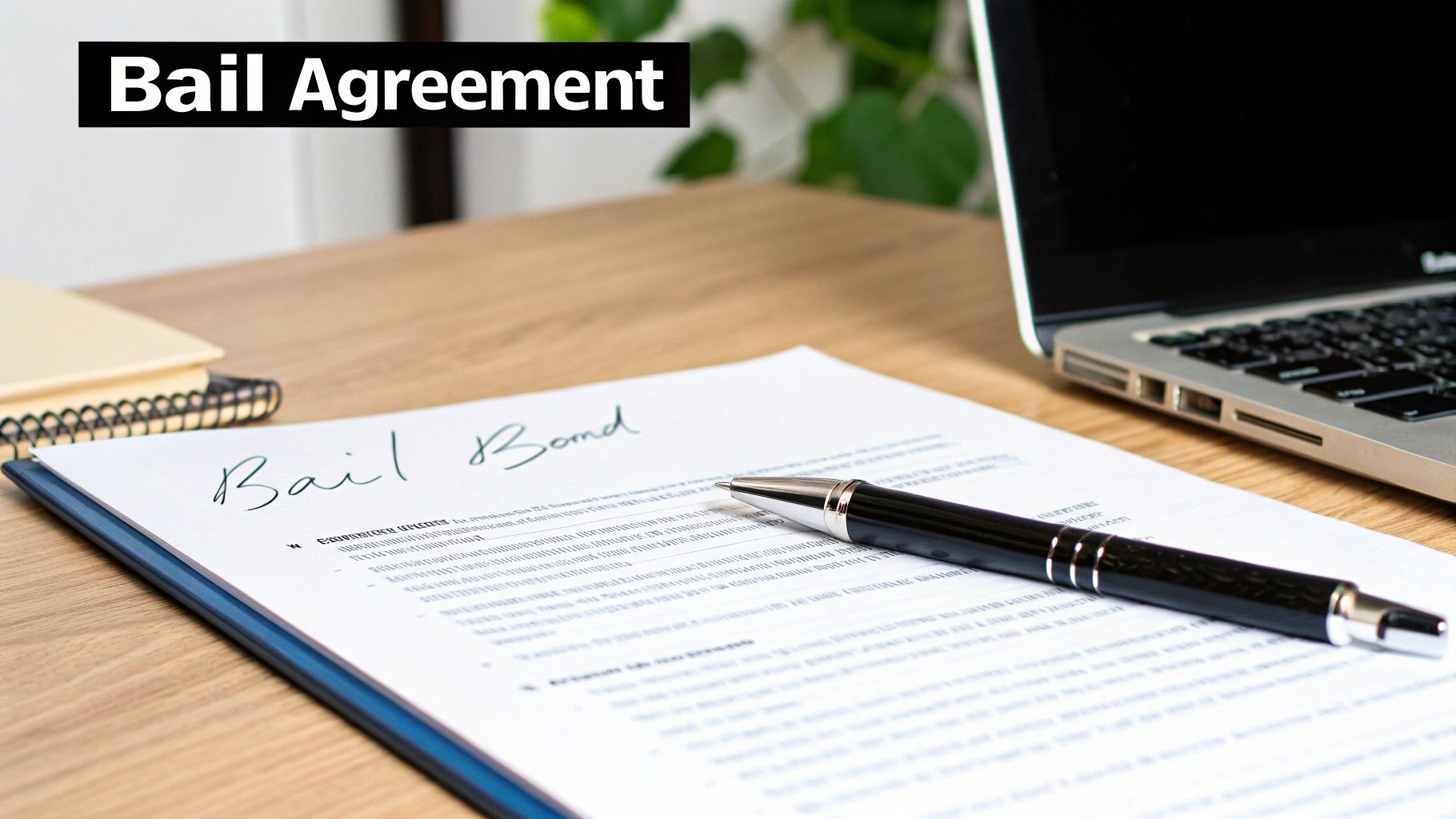
This contract is crucial because it confirms to the judge and prosecution that you have met the court's requirements for pretrial release through a licensed surety. Forgetting this document can cause unnecessary delays, as the court may need to verify your bond status with the clerk or the bonding agency. Presenting your paperwork demonstrates responsibility and preparedness, showing that you are taking the court process seriously. To understand the mechanics behind this agreement, you can get more details on how a surety bail bond works.
Key Bail Documents to Bring
Ensure you have the original or a clear copy of all documents provided by your bail bond agent.
- Bail Bond Agreement: The primary contract signed by you and any cosigners, detailing the premium paid and the terms of the bond.
- Receipt of Payment: Proof that you have paid the bail bond premium.
- Conditions of Release: A document listing specific rules you must follow while out on bond, such as check-ins or travel restrictions.
- Future Court Date Information: The initial document provided by the agent listing your next mandatory appearance.
Actionable Tips for Your Bail Documents
Properly managing your bail paperwork can prevent serious complications and ensure a smooth court appearance.
Key Insight: Request digital copies of all signed documents from your bail agent immediately after the bond is posted. Store these on your phone and in your email as a backup, but always bring the primary physical copies with you to every court date.
If you need help securing a bond or understanding your release documents in Centennial, Golden, or anywhere in the Denver metro area, our team at Express Bail Bonds provides clear, step-by-step guidance. Read reviews from our clients on Google and Google to see how we’ve helped others.
3. Court Summons and Case Documents
Next on the list of what to bring to court are all official documents related to your case. Your court summons, complaint, charging documents, or arrest warrant establishes the legal foundation for your appearance. These papers contain non-negotiable details like your case number, the specific charges filed against you, the exact court location (e.g., Denver District Court versus a county courthouse), and the precise date and time you must appear. Having these documents on hand is essential for verification and reference.

This paperwork is your roadmap to the correct proceeding. For example, a family member can use the documents to confirm the bail amount and ensure a bond is posted for the correct case number. Forgetting or misplacing these papers can lead to confusion, delays, or even appearing at the wrong courthouse, which can have severe consequences. Understanding the gravity of a court date is critical; you can find more information about what happens if you miss court.
Key Documents and Their Purpose
Bring the original and at least one copy of any document you have received concerning the case.
- Court Summons/Notice to Appear: This document officially commands your presence in court and provides the date, time, and location.
- Charging Documents/Complaint: This outlines the specific criminal charges you are facing.
- Bail Bond Paperwork: Keep copies of your bond agreement and receipts as proof of compliance with release conditions.
Actionable Tips for Document Management
Proper organization can prevent critical errors on your court date.
Key Insight: Immediately upon receiving any court document, make multiple copies. Highlight the case number, court date, time, and courtroom number. Use the case number in all communications with the court, your attorney, or your bail agent to ensure accuracy.
If you or a loved one needs help understanding court documents or navigating the bail process in Jefferson County or the greater Denver area, contact our team at Express Bail Bonds. See what our clients say about us on Google and Google.
4. Financial Records and Payment Proof
One of the most important things to bring to court after securing release is clear proof of all bail-related payments. Having your financial records, such as receipts and payment confirmations, readily available demonstrates your compliance with the bail bond agreement. In court settings like the Adams County Justice Center or the Douglas County Courthouse, having these documents can swiftly resolve any questions about your financial obligations and ensure the legal process proceeds smoothly.
This documentation serves as your official record that you have met the financial terms required for pretrial release. For both the defendant and any cosigners, these papers protect against potential disputes or misunderstandings regarding payments made to the bail bond agency. It confirms you have acted in good faith, which is a crucial aspect of navigating your court proceedings.
Accepted Forms of Payment Proof
Organizing your financial documents is key. Tangible proof is always better than a verbal claim.
- Primary Documents: Official receipts for the bail bond premium, credit card statements showing the charge, and printed email confirmations of electronic payments.
- Payment Plans: If you have an arrangement, bring records of each installment payment made, including dates and amounts. Many people wonder what receipts to keep for taxes, and applying a similar mindset to organizing bail payments can be very helpful.
- Collateral Records: If property was used as collateral, bring copies of the paperwork documenting what was pledged and its value.
Actionable Tips for Financial Documentation
Properly managing your payment records from the start prevents future headaches and provides peace of mind.
Key Insight: Always request a formal receipt immediately after paying the bail bond premium. For digital transactions, save the confirmation email to a secure folder and print a hard copy for your court file. This small step creates a vital paper trail.
If you have questions about our flexible bail bond payment options or need help with the bail process in Jefferson County, our team at Express Bail Bonds is ready to assist. Check out our client reviews on Google and Google to see how we've helped others.
5. Proof of Residence and Address Verification
Another essential item on your list of what to bring to court is documentation verifying your current address. Courts often require proof of residence to establish your community ties and stability, which can be a critical factor during bail hearings or other proceedings. This documentation helps the court assess your reliability and the likelihood that you will appear for future dates, potentially influencing bond amounts and release conditions.
This requirement isn't just for the defendant; a cosigner for a bail bond may also need to provide proof of their address to establish their own stability. For courts in counties like Jefferson County, having this documentation ready can streamline the process and demonstrate your commitment to meeting court obligations. Proving you have a stable residence shows the court you are not a flight risk and have a vested interest in the local community.
Accepted Forms of Address Verification
The court looks for official documents that clearly state your name and current address. Always aim for the most recent documents possible.
- Primary Documents: A recent utility bill (electric, gas, water) dated within the last 30-60 days, a current signed lease agreement or mortgage statement, or a property deed.
- Alternative Documents: A recent bank statement, a voter registration card, or an official letter from an employer on company letterhead confirming your address and employment.
Actionable Tips for Proving Your Residence
To avoid delays, gather these documents before your court date and ensure they are current and legible.
Key Insight: If you have recently moved, bring proof from both your old and new addresses. A mail forwarding confirmation from the post office can help explain any discrepancies. Always bring original documents or certified copies, as photocopies or handwritten notes are typically not accepted.
If you need help understanding which documents are best for your situation in Centennial or elsewhere in the Denver area, the team at Express Bail Bonds can provide guidance. Check out reviews from our clients on Google and Google.
6. Evidence of Compliance with Bail Conditions
When you are released on bond, your freedom often comes with specific court-ordered conditions you must follow. An essential item on your list of what to bring to court is documented proof that you are meeting these obligations. From the Adams County Justice Center to the Arapahoe County Courthouse, judges and prosecutors will verify your adherence to these rules. Failing to provide this proof can be seen as non-compliance, which could lead to your bond being revoked and you being sent back to jail.

Presenting organized evidence of your compliance demonstrates responsibility and good faith to the court. It shows you are taking the legal process seriously and respecting the terms of your release. This simple act can positively influence the judge's perception of your case and is a critical step in avoiding a potential bail forfeiture. Being proactive with this documentation is one of the most important things you can do to protect your freedom while your case is pending.
Accepted Forms of Compliance Documentation
The type of proof you need depends entirely on the conditions set by the court. Always bring original, signed documents.
- Drug/Alcohol Testing: Bring official, dated test results from a certified lab showing compliance with sobriety requirements.
- Counseling or Classes: Provide attendance records, progress reports, or a completion certificate from your therapist, counselor, or program director.
- Employment: A signed letter from your employer on company letterhead or recent pay stubs can verify you are maintaining required employment.
- Electronic Monitoring: Carry documentation from the monitoring company confirming the equipment is active and you have not had any violations.
Actionable Tips for Documenting Compliance
Stay ahead of your court dates by collecting documentation as you complete each requirement.
Key Insight: Do not wait until the day before court to gather your proof. Request official letters and reports from counselors, employers, or testing facilities immediately after completing a session or test. Organize everything chronologically in a dedicated folder to present clearly to the judge or your attorney.
If you have questions about documenting your bail conditions in Jefferson County or Centennial, the experts at Express Bail Bonds can offer guidance. See what our clients say about our professional service on Google and Google.
7. Character References and Community Ties Documentation
Another powerful item to bring to court, especially for bond hearings or sentencing, is a collection of character references and documents proving your community ties. These materials serve as tangible proof of your stability, reliability, and low flight risk. For a judge in Adams County or Douglas County, seeing evidence of your long-term employment, family responsibilities, and community involvement can significantly influence decisions regarding bail amounts and release conditions.
This documentation helps paint a picture of you as a whole person, not just a defendant defined by a pending charge. By demonstrating that you have strong reasons to remain in the community and see your case through, you directly address one of the court's primary concerns: whether you will return for future court dates. A well-organized packet of support letters and records can be a persuasive tool for your attorney to use during negotiations or arguments before the judge.
Types of Supporting Documents
Gather a variety of documents that showcase different aspects of your life and connections to the area.
- Character Reference Letters: Ask employers, community leaders, mentors, or long-time family friends to write letters on your behalf. These should speak to your character, work ethic, and reliability.
- Proof of Employment: A recent pay stub, a letter from your HR department confirming your position and length of employment, or a copy of your employment contract.
- Family and Community Ties: Documents like birth certificates of your children, school enrollment records, or letters from non-profit organizations where you volunteer.
Actionable Tips for Gathering References
To maximize the impact of your documentation, be strategic and organized in your approach.
Key Insight: Request letters on official letterhead whenever possible and ask writers to include their full name and contact information. This adds a layer of authenticity that the court will appreciate. Provide your writers with clear instructions on what to highlight, such as your responsibility or long-standing connection to them, but ensure the final letter is in their own words.
If you or a loved one needs help preparing for a bond hearing in Jefferson County, our experts at Express Bail Bonds can provide guidance. See our reviews from clients we’ve helped on Google and Google.
8. Legal Counsel Contact Information and Case Details
Knowing what to bring to court extends beyond personal documents; having your legal counsel's information readily available is crucial for smooth proceedings. This documentation ensures seamless communication between your legal team, the court, and other parties like your bail agent. It helps court clerks file your attorney’s appearance correctly and allows you to contact your lawyer immediately if any issues or questions arise during your hearing.
Whether you've hired a private attorney or have been assigned a public defender in Jefferson County, having their contact details and your case number on hand prevents delays and miscommunications. For instance, if the court has a question about your representation, you can provide the information instantly. This simple step demonstrates preparedness and helps ensure your legal matters are handled efficiently, especially when coordinating bail conditions.
Essential Legal Information to Bring
Keep a dedicated, easily accessible document with the following details.
- Attorney Information: Your attorney's full name, phone number, email address, and office address. A business card is perfect for this.
- Case Details: Your full case number, which is essential for court staff to locate your file quickly.
- Representation Confirmation: If you have a public defender, bring the assignment letter or any written confirmation of their representation.
Actionable Tips for Managing Legal Information
Proactive organization can significantly reduce stress on your court date.
Key Insight: The moment you secure legal representation, provide your attorney’s contact information to your bail agent. This ensures all parties are synchronized regarding your bond conditions, court dates, and legal obligations, preventing potential violations.
For expert assistance with the bail process in Centennial and throughout the Denver metro area, contact our team at Express Bail Bonds. We are committed to providing clear guidance, as shown in our client reviews on Google and Google.
9. Health and Insurance Documentation
Your health is paramount, and bringing relevant medical and insurance documentation to court is a critical step in protecting your well-being and legal rights. This documentation provides the court with verified information about any pre-existing conditions, treatment needs, or disabilities that may affect your case, bail conditions, or care while in custody. Presenting these documents ensures you receive necessary accommodations and continued treatment.
For individuals with medical or mental health needs, this paperwork is essential for what to bring to court. For instance, a defendant with a diagnosed anxiety disorder can provide treatment records to support a bail condition allowing continued therapy. Similarly, someone requiring specific prescription medication can bring a physician's letter, ensuring that the jail provides the necessary medication without interruption. This documentation formally communicates your needs to the judge and detention facility staff.
Key Health and Insurance Documents
Gather any documents that verify your health status, treatment plans, and insurance coverage.
- Medical Records: A letter from your physician detailing your diagnosis, prescribed medications, and treatment schedule.
- Mental Health Documentation: Records from a therapist or psychiatrist outlining your condition and ongoing treatment needs.
- Proof of Insurance: Your health insurance card or policy information.
- Disability Verification: Documentation supporting requests for accessibility accommodations, such as a wheelchair ramp or interpreter.
Actionable Tips for Health Documentation
Prepare these documents proactively to ensure your health needs are met throughout the legal process.
Key Insight: If you have privacy concerns, keep your health documents in a sealed envelope. Inform your attorney or the court clerk that they are available if needed. Always bring a current medication list and your doctor's contact information for verification.
Navigating the court system with a health condition can add stress. If you or a loved one needs help with the bail process in Jefferson County or Centennial, contact our team at Express Bail Bonds. See our client reviews on Google and Google to learn how we provide support.
9-Item Court Checklist Comparison
| Item | 🔄 Implementation complexity | ⚡ Resource requirements | ⭐ Effectiveness / quality | 📊 Expected outcomes / impact | 💡 Ideal use cases / key advantages |
|---|---|---|---|---|---|
| Identification and Travel Documents | Low — standard ID check, replace if lost | Minimal — government photo ID, passport if needed, court travel order for authorized travel | ⭐⭐⭐⭐⭐ | Admits entry, verifies identity, prevents fraud/delays | Required for all court appearances and authorized travel; first-step verification |
| Bail Bond Agreement and Release Documents | Medium — signing, agent involvement, possible collateral | Bail agent, signatures, payment records, possible collateral, electronic filing | ⭐⭐⭐⭐⭐ | Proves bail posting, defines obligations, prevents disputes | Essential to demonstrate release status and financial terms at hearings |
| Court Summons and Case Documents | Low — receive and verify; replacements may be time-consuming | Issuing agency documents, copies, case number | ⭐⭐⭐⭐⭐ | Ensures correct court/date, clarifies charges and jurisdiction | Critical for appearing in right court and for attorney/agent coordination |
| Financial Records and Payment Proof | Low — save/print receipts; request replacements if lost | Payment confirmations, bank/credit card statements, electronic receipts | ⭐⭐⭐⭐ | Verifies premium paid, protects against non-payment claims | Useful for resolving payment disputes and proving timely bail posting |
| Proof of Residence and Address Verification | Low–Medium — collect recent bills/leases; alternatives if transient | Utility bills, lease/deed, mortgage, bank statements, employment letters | ⭐⭐⭐⭐ | Demonstrates community ties and stability; affects release decisions | Important when judge assesses flight risk or when agents verify eligibility |
| Evidence of Compliance with Bail Conditions | Medium–High — coordinate tests/programs and obtain official records | Lab results, counseling attendance, monitoring confirmations, employer letters | ⭐⭐⭐⭐ | Shows compliance, reduces revocation risk, supports favorable rulings | Crucial when release depends on drug tests, treatment, employment, or monitoring |
| Character References and Community Ties Documentation | Medium — solicit and prepare quality letters | Letters on letterhead, employment records, volunteer documentation | ⭐⭐⭐ | Strengthens credibility and community support | Best used to supplement bail arguments and demonstrate local roots |
| Legal Counsel Contact Information and Case Details | Low — maintain up-to-date contact and filings | Attorney contact, notice of appearance, case number, fee agreement | ⭐⭐⭐⭐ | Ensures coordinated communications and correct filings | Valuable for avoiding administrative errors and enabling prompt legal action |
| Health and Insurance Documentation | Medium — obtain medical summaries and accommodation letters | Physician letters, medication lists, treatment records, insurance cards | ⭐⭐⭐ | Secures accommodations, documents needs; may affect detention care | Important for defendants with medical/mental health needs or accessibility requirements |
Your Next Steps: Partnering with an Expert for Peace of Mind
Navigating the court system can feel overwhelming, but preparation is your most powerful tool for regaining control. The difference between a stressful court appearance and a smooth one often comes down to what you have in your hands. This guide has detailed the critical items you need, from essential identification and court summons to proof of compliance with bail conditions and character references. Mastering this checklist isn't just about bringing the right papers; it's about presenting yourself as organized, responsible, and serious about resolving your legal matters.
By meticulously gathering each document, you build a foundation of credibility. A well-prepared folder containing your bail bond agreement, financial records, and legal counsel's contact information demonstrates to the court that you are actively participating in your defense. Remember, every piece of paper tells a part of your story and reinforces your commitment to the legal process.
From Checklist to Courtroom Confidence
The true value of knowing what to bring to court lies in the confidence it provides. Instead of scrambling for a forgotten document or fumbling for information, you can focus your energy on the proceedings. This preparedness allows you to listen attentively, communicate clearly with your legal team, and present your case effectively.
Key takeaways to remember:
- Organization is Non-Negotiable: Use a dedicated folder or binder with dividers for each category of documents. Bring both original documents and copies.
- Proactive Communication is Key: Review every item with your attorney and bail bond agent beforehand to ensure everything is in order and nothing is missing.
- Verification Matters: Double-check all dates, case numbers, and personal information on your court documents to avoid procedural delays.
Thinking ahead is crucial. While this guide focuses on documentation, your support system is equally important. Part of your preparation involves ensuring you have a strong legal advocate. Understanding how to choose an expert attorney is a vital step that can significantly influence the outcome of your case. An experienced lawyer can provide invaluable guidance on which documents are most critical for your specific situation.
Your Partner in the Process
The journey through the legal system often begins long before your court date, starting with the bail process. A reliable bail bond agent is your first line of support, offering clarity and efficiency during a confusing time. Whether you're in Centennial or need assistance near the Jefferson County courts, having an established, professional partner makes all the difference. An experienced agent not only secures a prompt release but also provides essential reminders about court appearances and compliance, ensuring you stay on track. This partnership is the first step in building a prepared and proactive defense, setting the stage for a successful court appearance.
Navigating the bail process is the first critical step toward a prepared court appearance. Express Bail Bonds provides fast, confidential, and professional services across Colorado, ensuring your loved one's quick release so you can focus on building your case. See our client reviews on Google and Google. Contact us 24/7 to get the expert support you need right away.