
You're probably reading this after a late-night call that didn't answer the only question that matters, where is the person right now, and what has to happen next so they can get out. Don't chase five different searches at once. First, confirm the custody location, then confirm the booking status and bond path. If the person is in a county jail, a state prison, or already transferred, the next move changes immediately.
Delta County gets confusing fast because a county name can show up in more than one correctional context. Colorado's own data shows the Delta Correctional Center is a real state facility tied to 11363 Lockhart Road in Delta, Colorado, and the department's public statistics page is the right place to check current population and capacity reporting for that facility. County-level prison data also show Delta County has held meaningful jail and prison populations, including 44 prisoners in the Delta County Jail and 474 in the Delta Correctional Center on the cited 2020-vintage survey dates, plus 240 inmates housed in the county in a 2021 state prison-placements table (Colorado DOC Delta Correctional Center, Colorado prison placement memo).
That means one mistake hurts you twice. If you assume a county address means local jail custody, you can call the wrong place, show up at the wrong place, or send paperwork to the wrong custodian. If you treat a prison listing like a jail listing, you can waste hours on a bond conversation that doesn't match the actual hold status. For release planning, the rule is simple, confirm the facility and booking status before you promise a visit, sign anything, or pay money.
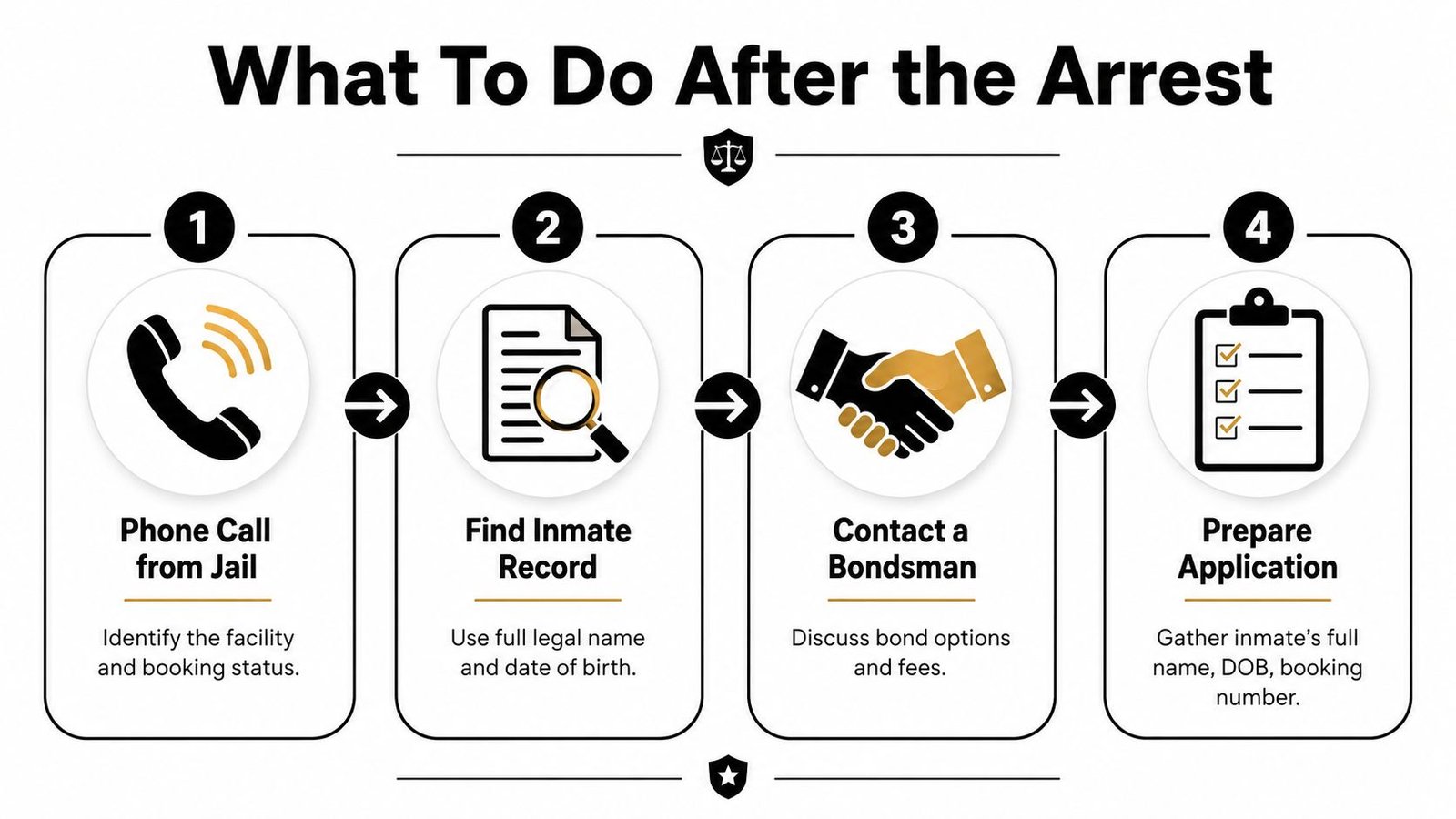
What To Do After the Arrest
A family member calls at 11:40 p.m. and says the arrest happened in or near Delta County, but nobody knows the exact facility, whether booking finished, or whether there's even a bond to post. That is normal. Do not build a plan on panic. Build it on identity, custody, and timing.
Start with the two facts that control everything
Write down the full legal name exactly as it appears on the arrest paperwork, plus the date of birth if you have it. Those two details decide whether you are looking at the right person, and they keep you from calling on a record that belongs to someone else. If you already have a booking number, state ID number, or facility name, keep it beside you.
Practical rule: don't send money or ask for a visit until you've confirmed the person is in the facility you're calling.
The next question is not “Can I post bond now?” It is “Who has custody?” If the person is still in booking, has not been assigned a record yet, or has already been moved, the answer changes. Colorado's jail reporting framework tracks current jail populations, admissions, capacity, turnover, and staffing, which is why a same-day lookup matters more than a stale summary (Colorado ORS jail data framework).
Use a short checklist before you make your first call:
- Full legal name. Match the arrest paperwork, not a nickname.
- Date of birth. This is the fastest way to separate similar names.
- Booking date. Helps you spot recent intake versus an older record.
- Facility name. County jail, state prison, or transfer destination.
- Any booking number. This is the cleanest identifier when you have it.
If the family only has a county name, stop there and verify the current official custody source before moving on. Delta County can point to a local detention setting, a state prison location, or a county-connected inmate placement record. The safest first step is to confirm the exact custodian, then decide whether you are dealing with a jail release or a state correctional hold. If you need a plain-language checklist for the first hours after an arrest, use this arrest guide and keep your notes in one place.
Finding the Correct Inmate Record
A name search is only the starting point. In Delta County, and anywhere else in Colorado, two people can share the same name, and an online roster can lag behind what just happened at booking. If you want the right record, use identifying details in order and confirm the current custodian before you act.
Use identifiers in the right order
Start with the full legal name, then add the date of birth. If that still leaves more than one match, use the booking date and any booking or inmate number you already have. A known facility helps too, because it filters out people housed somewhere else entirely. That sequence works because each detail narrows the search one layer at a time.
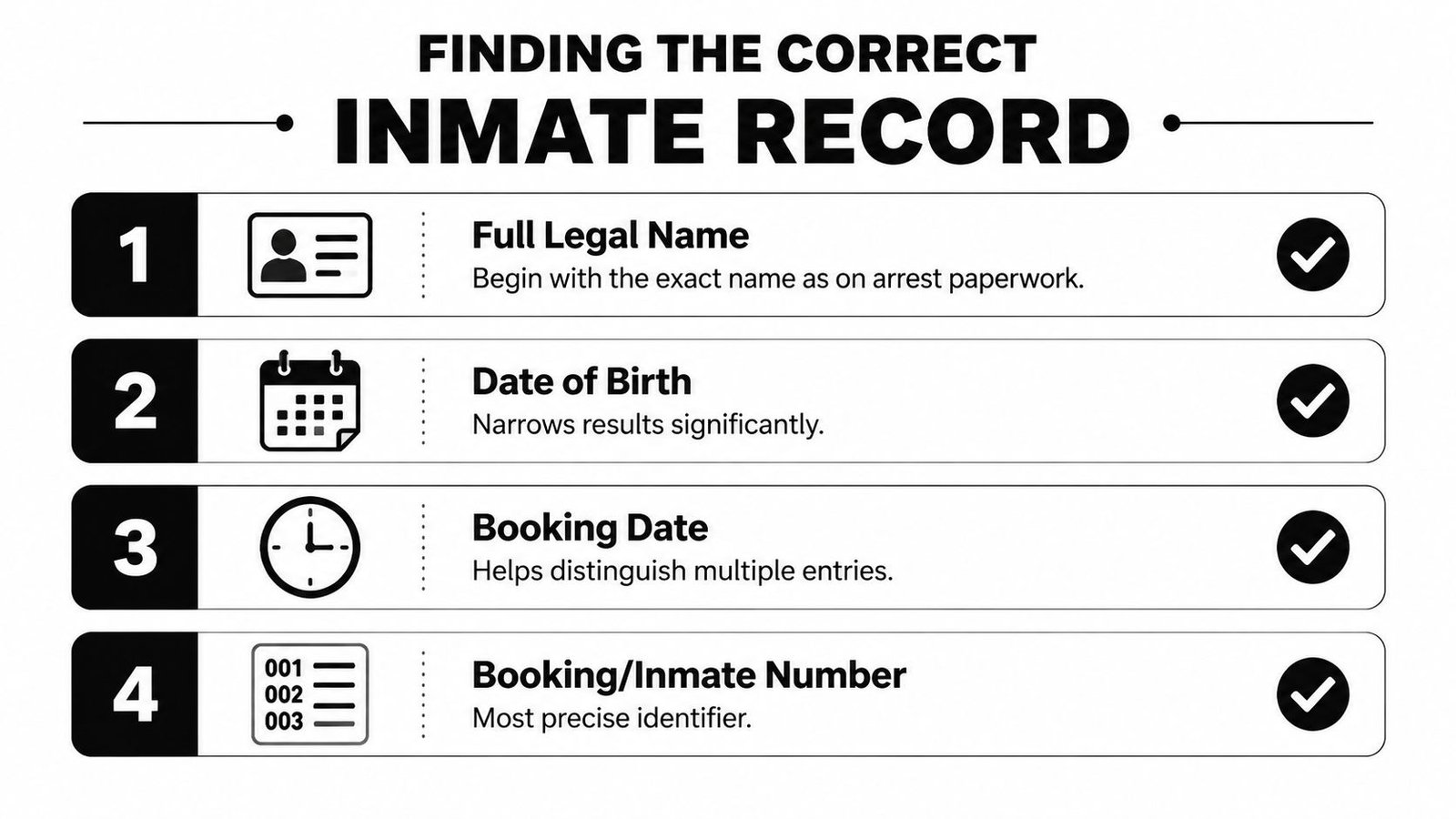
A clean lookup usually looks like this.
| Inmate Search Details and Their Purpose | |
|---|---|
| Detail | Why It Helps |
| Full legal name | Matches the arrest paperwork and starts the search. |
| Date of birth | Cuts down false matches fast. |
| Booking date | Separates a fresh intake from an older entry. |
| Booking or inmate number | Pinpoints the exact person with the least confusion. |
If you cannot find a Delta County record right away, do not guess. Check the current official county detention source, then call the facility, then confirm with the booking agency if needed. A person may have been transferred after intake, and that can make an online result look wrong even when the arrest was real. If the county site is unclear, use the inmate locator tool guidance as a reference point, then verify the live source before acting.
A missing name often means the record is not public yet, not that the arrest did not happen.
Colorado jail data is built to show more than a simple headcount. It tracks the prior quarter, the prior 365 days, and a same-day snapshot, plus incarceration rates, conviction status, offense severity, admissions, capacity, turnover, and staff counts. That is why one search result cannot tell the whole story. If the record does not line up, confirm the facility first, then ask whether the person was booked, transferred, or still processing. For a broader view of current jail numbers, the Colorado Sheriff's Conference posts jail data and population reports.
You can also use a basic verification loop. Start with the name, add the DOB, check the booking date, and note every facility reference you see. If the search turns messy, stop and document the mismatch instead of guessing your way into the wrong jail.
Reading Booking and Bail Details
Once you've found the right person, the record still needs interpretation. Families often see a bond amount, a hold, or a charge code and assume it means one thing when it really means another. Don't read an online record like a final answer. Read it like a live custody snapshot.
Separate arrest status from booking status
An arrest can happen before booking is finished. A booking means the facility has processed the person into custody, assigned a record, and started the release paperwork path. If the booking isn't complete, bond information may not be final yet. If the person disappeared from one search, that doesn't automatically mean release, it can also mean transfer or a record update.
The most important fields to write down are the facility name, booking number, charge description, bond amount, and any hold status. A hold matters because it can block release even when a bond is listed. A bond amount matters because it's the amount set for the case, not the fee you'll pay a bondsman. Those are not the same thing.
Colorado prison and jail systems work through a release-and-transfer ecosystem, so a county detention count and a state prison count can affect the pace of movement through custody. Colorado DOC materials also track inmate population profile, crime and imprisonment rates, and 1-, 2-, and 3-year recidivism return rates, which are the correct benchmarks for system performance rather than a single search result (Colorado DOC statistics). That's the right way to think about delay, as a process, not a headline number.
A family I'd advise would do this immediately:
- Copy the booking number. This prevents repeated identity errors.
- Save the facility name. County jail and prison are different pathways.
- Record the bond amount exactly. Don't estimate from memory.
- Note any hold or restriction. That can change what happens next.
- Flag whether the booking looks complete. If it doesn't, call back.
If you want a direct look at how records turn into next steps, use arrest record search guidance and keep every detail in the same note. I'd also point families to a surety-bond conversation only after the booking data are confirmed, because a stale amount or the wrong facility wastes time for everyone. Express Bail Bonds handles online applications, payments, and contract documents for surety posting, which makes that kind of verified record much easier to use in the release process.
Contacting Facilities and Planning Visits
Once the record is confirmed, call the facility and ask short, direct questions. Don't open with a story. Open with identifiers. The goal is to verify custody, not to negotiate the jail over the phone.
Ask the same core questions every time
Use this call script:
- Is the person physically housed there right now?
- Has booking been completed?
- Is there any hold on the case?
- What bond, if any, is active?
- What ID, application, or visiting rule applies?
- Is remote communication available?
Write down the date, time, staff member's name, and any confirmation number or reference they give you. If the answer conflicts with the record you found online, document the discrepancy instead of trying to resolve it by guesswork. That written trail matters if you need to call back, coordinate a release, or correct a transfer error later.
Keep the name of the person who gave you the information. If the story changes on the next call, you'll know exactly where the mismatch started.
Don't assume a Delta County location automatically means a local-jail visit is available. Custody status and facility policy control that, not the county name. A state prison listing, a county jail roster, and a detention-site inventory are different things, and the geolocation of a named facility doesn't tell you whether a family visit is permitted today (Colorado facility inventory entry for Delta County Detention Facility).
For visit prep, stay conservative. Bring only the identification the facility says it permits. Follow dress rules, property limits, and appointment requirements exactly as given on the call. If the facility says the person isn't there, don't make the drive just because another source listed the county name.
A useful place to pull current county phone references is county jail phone number guidance. Use that only as a starting point, then confirm the live contact information before you travel or share more personal details. Families waste the most time when they act on old numbers, old roster screenshots, or assumptions about where a Delta County inmate is being held.
Preparing the Bail Bond Application
A confirmed record turns a stressful search into a usable bond request. At that point, stop gathering everything and focus only on the facts the bond team needs to move the file. If you're missing the basics, wait. Guessing at booking details creates rework and delays.
Put the paperwork in front of you before you call
Have these items ready:
- Full legal name
- Date of birth
- Booking or inmate number
- Facility name
- Bond amount
- Charge information
- Any known hold or restriction
If you're the applicant or cosigner, keep your identification, contact details, and payment information nearby too. Electronic paperwork is useful here because it lets out-of-state relatives and cosigners work without a drive to the jail. The point is speed plus accuracy, not speed at the expense of the bond contract.
| Application Readiness | What to Have |
|---|---|
| Confirmed booking details | Name, DOB, booking number, facility |
| Bond terms | Amount, charge, hold status |
| Signer information | ID, phone, email, payment method |
| Open questions | Anything the bond team must verify before posting |
The difference between a surety bond and a cash-only situation matters. Express Bail Bonds focuses on surety solutions, not cash-only bonds, so the record has to be correct before anyone signs. A premium is the fee for the surety service, and it's not the same as the bond amount set by the court or jail. If the case doesn't fit a surety path, don't assume a bond contract will solve it.
The cleanest sequence is straightforward. Give verified information, answer follow-up questions, review the contract, authorize payment, and let the agent coordinate with the facility. That process works better when one person owns the file and nobody else starts a second application based on a different booking result.
For remote paperwork and bond coordination, use bail bond application details as the next checkpoint once the custody record is locked in. If the inmate isn't in the expected facility, pause the application and correct the location first.
Understanding Costs, Timing, and Eligibility
Families want a clear answer fast, but bail does not work on one universal clock. Start with the sequence. Confirm custody first, verify eligibility second, complete the paperwork third, then let the facility handle release processing. If any piece is wrong, the file slows down.
Know what the premium means
Colorado's standard surety premium is 15 percent, and for bonds over $5,000 Express Bail Bonds often secures 10 percent when an approved cosigner is available (about the publisher). That premium is the fee for the surety service, not the full bond amount, and it is nonrefundable. The number on the jail or court record is not the same as the amount a family pays out of pocket.
Timing depends on what is already confirmed and what still needs review. A clear booking record, a ready cosigner, and an accurate contract usually move the file faster. A name mismatch, the wrong facility, an unfinished booking, or a hold that appears late slows everything immediately. Remote processing helps, but it does not remove intake work, classification checks, paperwork, or the facility's own workload.
Service terms also matter because not every case fits the same path. A cash-only file does not fit a surety bond. If the bond amount or hold status is incomplete, the agent still has to verify the record before anything gets posted. That is why one person should control the file, instead of three relatives calling three places with three versions of the story.
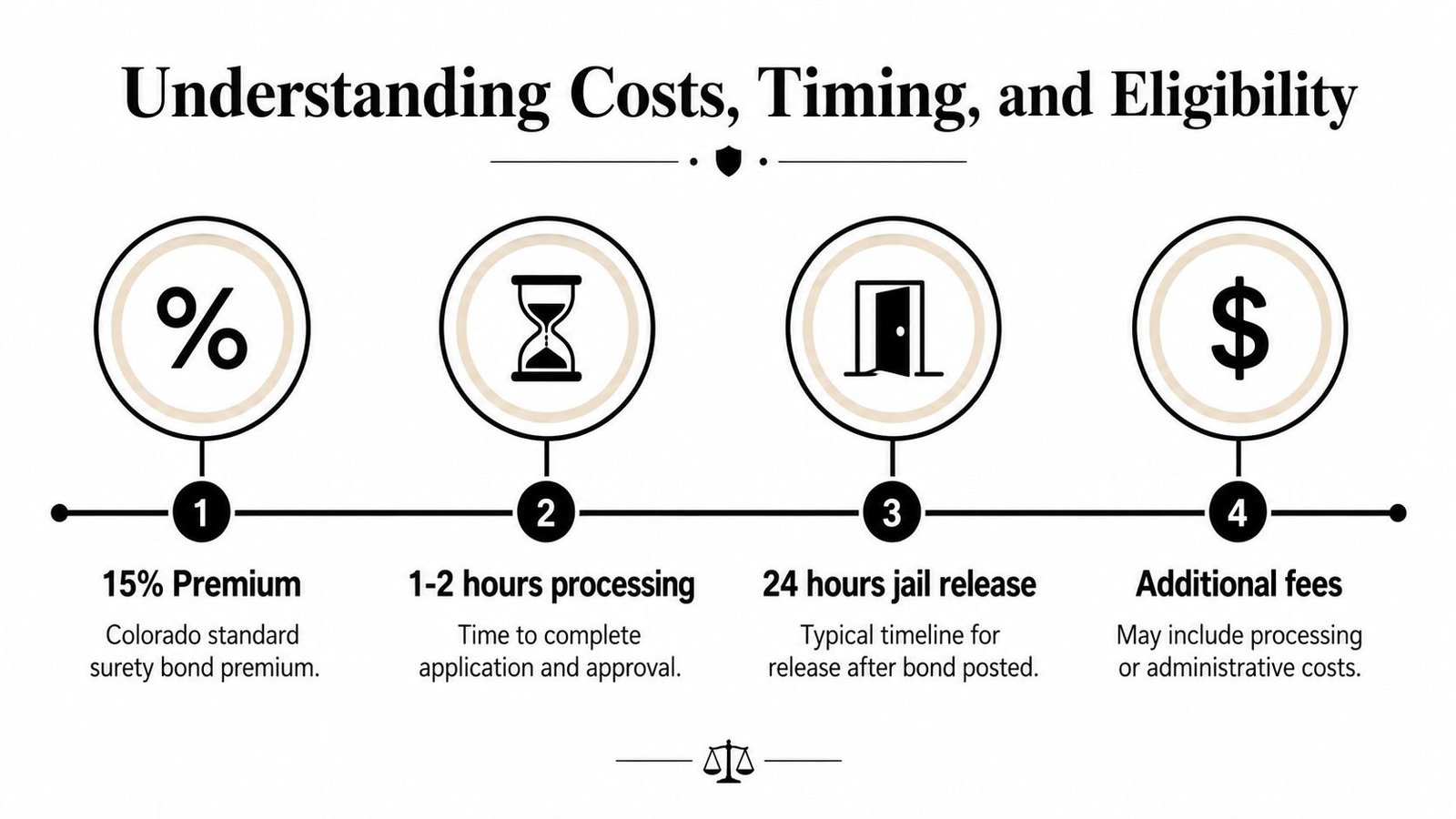
A realistic release file usually moves through the same checkpoints:
- Verified custody
- Confirmed bond eligibility
- Completed application
- Signed contract
- Approved payment
- Facility release processing
Do not treat an online bail amount as a release guarantee. The custodial authority still has the final say on processing.
That is the part families miss. A low inmate count, a late-night booking, or a record that looks simple does not guarantee a fast release, and a busy facility does not automatically mean the bond will fail. The question is whether the booking, bond, and facility steps line up cleanly enough to move the file forward. If they do not, correct the paperwork before you call it a delay problem.
Take the Next Release Step
Save the exact legal name, date of birth, facility, booking number, bond amount, and any hold information before you do anything else. Then verify current custody one more time and choose the release path that matches the actual record, not the guess. If the search results conflict, slow down and correct them before you pay, travel, or promise a visit.
Use these options if you need a bond conversation tied to your location or county:
Express Bail Bonds helps families confirm the record, prepare the application, and move a surety bond forward without wasting time on the wrong facility. If you're dealing with delta county inmates right now, get the custody details together and visit Express Bail Bonds to start the next step with a real person who can help you sort out the file.