
You find out about a bench warrant at the worst possible time. Maybe a family member got stopped for a traffic issue and learned there's an old failure to appear. Maybe someone missed court because they wrote the date down wrong, moved, or never understood that a routine case could turn into an active arrest warrant. In Colorado, that shock is common. It's also fixable.
The key is to stop guessing and start moving in the right order. A bench warrant is serious, but it's still a problem with a process. The fastest path usually isn't waiting to see what happens. It's confirming the warrant, getting legal guidance, arranging bond logistics ahead of time when possible, and handling the surrender in a controlled way.
That matters because bench warrants are not rare. In major U.S. jurisdictions, about 22% of defendants released before trial have bench warrants issued for failure to appear, and 59.8% of all arrest warrants in certain jurisdictions are for failure to appear, according to EBSCO's bench warrant overview. In other words, this is a system problem, not proof that your family is dealing with something unusual.
A Bench Warrant in Colorado Your First Steps
Your phone rings after a traffic stop, and suddenly an old missed court date turns into a real arrest risk. That is usually when families lose time by guessing, calling the wrong office, or hoping the court will sort it out without action.
A bench warrant is a judge's order to bring someone into court. In Colorado, the usual trigger is a missed appearance, but judges also issue bench warrants for ignoring other court requirements. The good news is that many of these cases can be handled in a controlled way if you act early and in the right order.
Start with control. Keep the person with the warrant out of unnecessary public contact, gather the case details, and get a lawyer and bondsman involved before anyone walks into a jail. That combined approach is what families miss. The lawyer handles the court strategy. The bondsman prepares for the release side if the judge requires custody and bond.
What to do in the first hour
- Pin down the issuing court and county. Release procedures, jail location, and court handling all depend on where the warrant came from.
- Limit avoidable contact with law enforcement. A simple stop for driving, parking, or a minor issue can turn into an arrest.
- Collect the key information. Full legal name, date of birth, case number, old paperwork, and any notice that may show the missed date or court division.
- Call in the right order. If the case is more than a simple missed hearing, start with defense counsel. If surrender looks likely, get bond arrangements lined up before the person appears.
One point matters more than families expect. Do not assume you can fix a bench warrant by paying something online or calling the clerk and explaining what happened. In most cases, the warrant stays active until a judge recalls it or the person is taken into custody.
The fastest path is often proactive surrender with a pre-arranged bond. That does not mean every person should rush into jail. It means you prepare first. A lawyer may be able to ask the court to recall the warrant without booking. If the court wants the person to appear in custody, a bondsman can often shorten the time in jail by having the indemnitor ready, the paperwork started, and the bond plan in place before surrender.
If your family is weighing that option, review the practical steps for turning yourself in on a warrant. Waiting usually creates more disruption than a planned response.
How to Confirm an Active Colorado Bench Warrant
You need certainty before you make any move. Families lose time when they rely on rumors, old paperwork, or a case search that hasn't updated yet. Confirming the warrant is the foundation for every next step, including whether the issue can be handled by motion, whether surrender is likely, and which jail or court will control the release process.
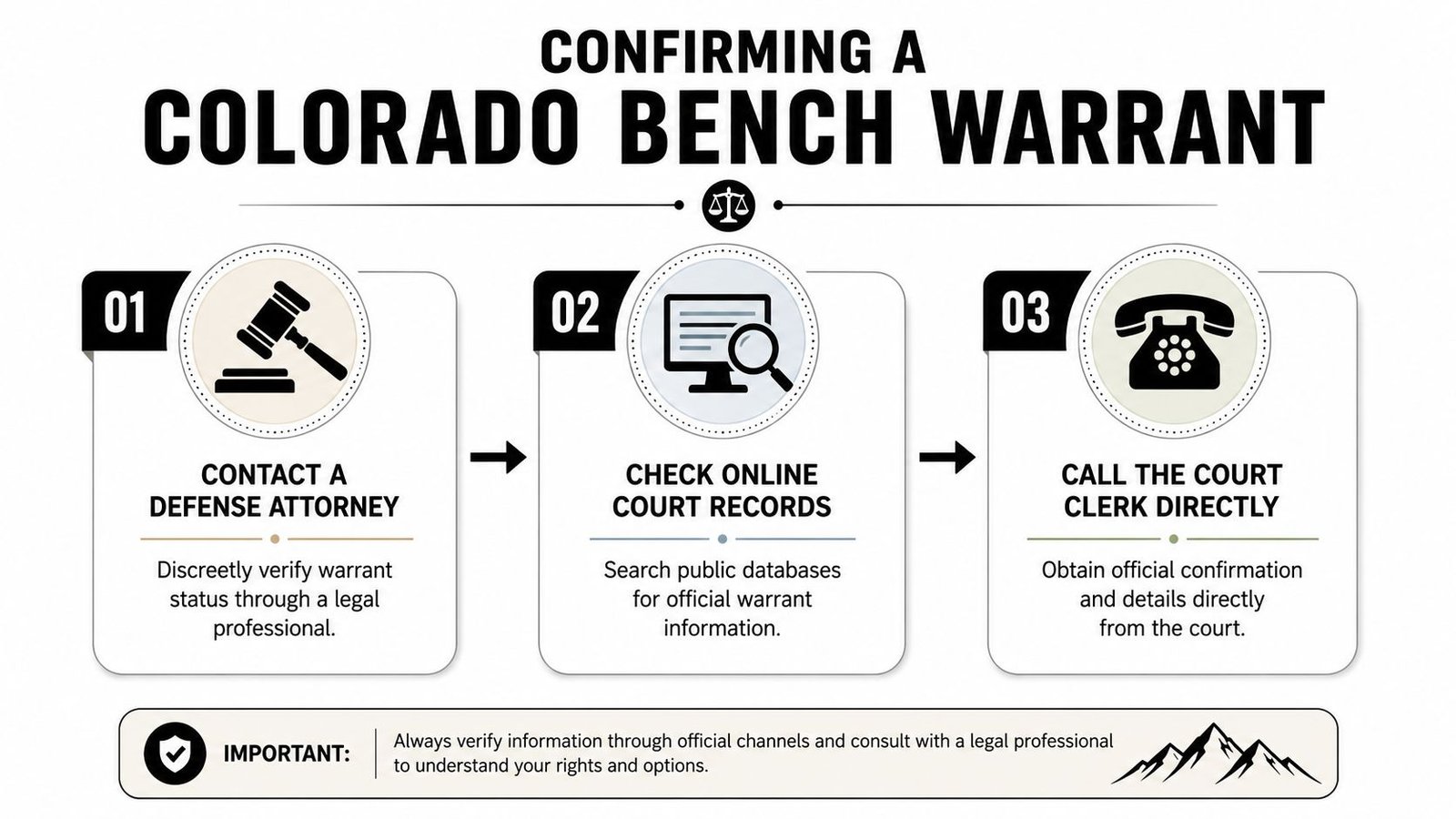
Three reliable ways to check
The most discreet option is often to have a defense lawyer verify it. Lawyers can contact the court, review the case posture, and decide whether a motion to recall the warrant makes sense before anyone surrenders.
The second option is checking online court information. County and state systems can help, especially if you know the county and the person's exact legal name. But online records can lag, and some details won't appear clearly enough to plan around.
The third option is calling the court clerk directly. That can confirm whether the case is active, whether a warrant exists, and which court division is handling it. The drawback is that clerk staff can confirm status, but they usually can't give legal strategy.
What the result usually tells you
A confirmed warrant gives you several practical answers:
- Which court issued it: That determines where a motion must be filed or where surrender happens.
- What the underlying case is: Traffic, misdemeanor, and felony cases can follow different timelines and custody expectations.
- Whether bond information is already available: Sometimes it is. Sometimes the court will require a new appearance before setting conditions.
- Whether quick legal intervention could avoid jail time: This is often the most important question.
A separate issue is the type of case behind the warrant. Lower-level matters can still trigger arrest. Data from major cities shows how much police time goes to old warrant enforcement rather than new charges. In 2019, 14% of all arrests in St. Louis City and 19% in Louisville were solely because of outstanding bench warrants, with no new criminal charge filed, according to the Data Collaborative for Justice press release. The same data notes that traffic violations were the most common charge type behind these warrants.
Don't assume a minor original case means low arrest risk. Administrative cases often become custody problems when a warrant is left alone.
If you want a practical overview of county-by-county search options and what to ask when you call, this guide on how to check if someone has a warrant is useful.
Online search versus real-world confirmation
Here's the trade-off families run into:
| Method | Best use | Main limitation |
|---|---|---|
| Attorney verification | Strategy and discretion | Requires hiring counsel |
| Online court search | Fast first pass | Can be incomplete or delayed |
| Court clerk call | Official case status | No legal advice |
If the family already knows the person missed court, don't let the search step become a week-long delay. The purpose is to confirm the problem, not to postpone solving it.
The Safest Way to Resolve Your Warrant
Your brother gets stopped for a broken taillight on the way to work. The officer finds the bench warrant, the car gets left behind, and the family starts making calls after he is already in custody. That is the version with the least control and the most delay.
A planned surrender usually gives families a better result. It lets you choose the county, line up the cosigner, and get bond paperwork started before anyone walks into the jail.
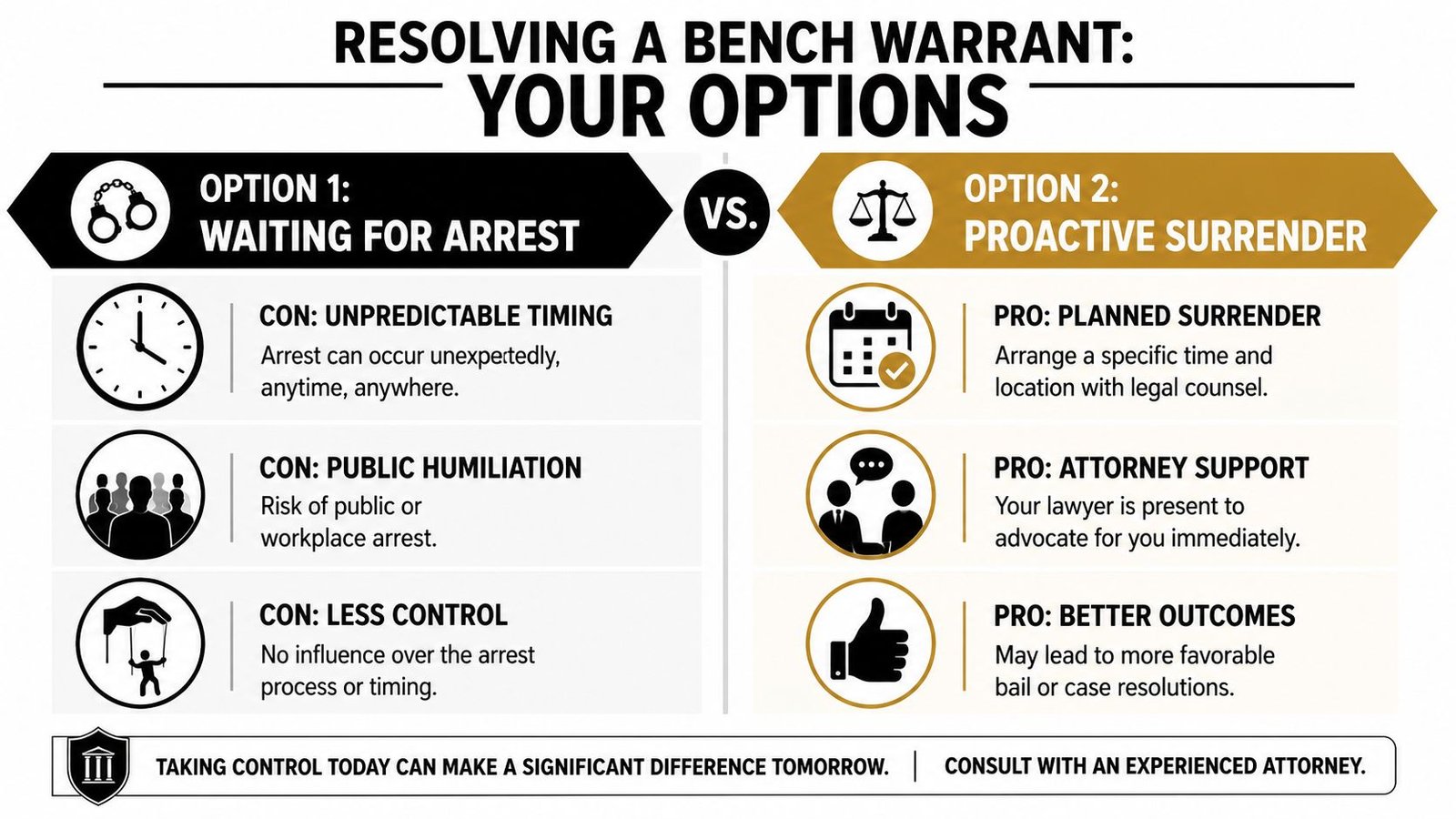
Why proactive surrender works better
In real bench warrant cases, the fastest path is often a coordinated one. The lawyer looks at recall options, court timing, and any risk that the judge will hold the person. The bondsman handles the practical side: who will cosign, what documents are needed, what amount the family can manage, and how quickly the bond can be posted if the court allows release.
That order matters.
If a person waits to be picked up, the family loses time at every stage. They may not know which jail has the person, whether the court will see them that day, or whether anyone is ready to sign bond documents. A controlled surrender does not guarantee same-day release, but it gives the family the best chance to shorten dead time and avoid a surprise arrest at home, work, or during a traffic stop.
Bench warrants also stay active until the court recalls them or the person is arrested on them. Hiding from it rarely helps. Organized action usually does.
The sequence that saves time
Use a simple plan:
- Confirm the warrant and the court involved.
- Have a defense lawyer review the case if there is a missed felony setting, a long-old case, multiple counties, or a history of failure to appear.
- Set up bond logistics before surrender, including the cosigner, ID, payment method, and jail procedures.
- Choose the right time and location for surrender based on the court and booking process.
- Walk in with one coordinated plan instead of trying to solve the bond and legal issues after booking.
Families often miss the advantage of working the lawyer and bondsman together. The lawyer may be able to ask for a warrant recall or argue for a reasonable bond. The bondsman prepares for the other outcome, which is that the person gets booked first and needs release arranged fast. That combined approach is usually more efficient than waiting to see what happens.
Communication can also affect how fast a case gets traction. Law offices are often in court, and urgent warrant calls come in at bad times. Articles on how AI helps lawyers screen calls show why some firms capture better intake details and respond faster when a bench warrant problem blows up after hours.
If you want the bond side ready before surrender, review these bench warrant bond consulting services. The goal is simple: reduce the gap between booking and release if the court sets bond.
A short overview may help before you act:
A random arrest puts the family into reaction mode. A planned surrender puts the family into decision mode.
What usually makes things worse
These mistakes add delay and risk:
- Ignoring the warrant. It stays active until the court deals with it.
- Assuming paying old fines fixes the warrant. In many cases, the judge still has to address the missed appearance.
- Walking into custody with no bond plan. That often leaves the family scrambling for a cosigner, money, and paperwork after booking.
- Calling five offices and choosing none. Families lose hours collecting bits of information without building one release strategy.
The safest approach is usually the calm one. Confirm the warrant. Get legal advice if the case calls for it. Put the bond plan in place first. Then surrender under controlled conditions instead of waiting for the warrant to control the situation.
Understanding Bench Warrant Bail Costs
Cost questions usually hit the family at the worst moment. A spouse wants to know whether this is a few hundred dollars, several thousand, or a case where nobody gets out until a judge sees the file. With a bench warrant, all three outcomes are possible, and the answer often depends on how the surrender is handled and whether the bond side and legal side are working together before anyone walks into custody.
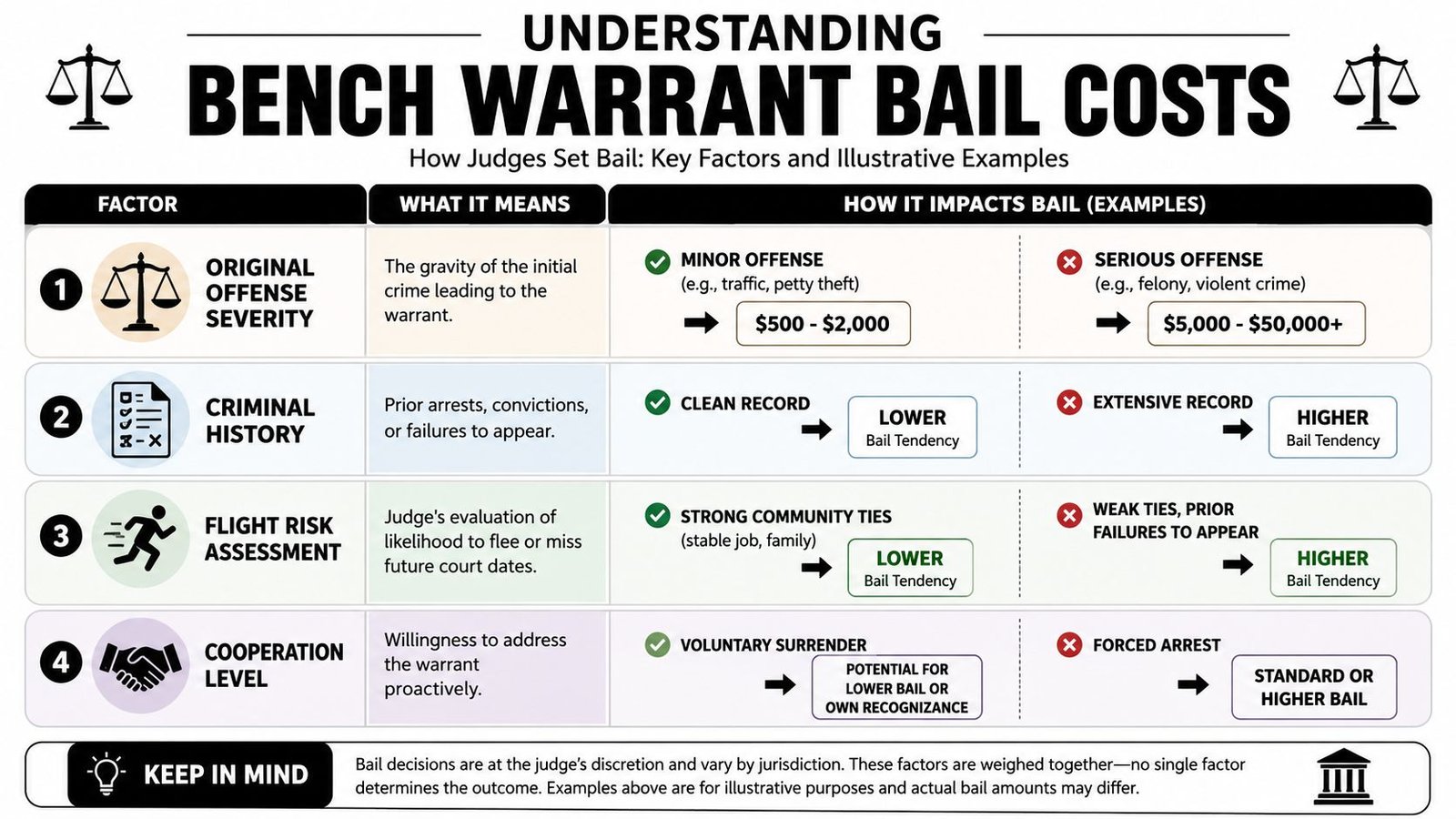
What a judge may do after a bench warrant
A bench warrant can change the bond terms from the original case. The court may keep the same bond, raise it, or place a no bond hold until the person appears in court. One Colorado legal resource explains that the standard surety bond premium is 15%, and that some larger bonds may qualify for a lower rate with an approved cosigner, according to this Colorado bail discussion.
That is why I tell families to focus on speed and control, not just the number. If the lawyer is addressing the warrant and the bondsman already has the cosigner, identification, and payment plan ready, the family can act fast if the judge sets a bond that day. If nobody prepares ahead of time, even a manageable bond can turn into extra nights in custody.
Cash bail versus surety bond
Families usually have two basic options after the court sets bond.
| Option | How it works | Main trade-off |
|---|---|---|
| Cash bail | Full amount goes to the court | Ties up the full amount until the case allows release of funds |
| Surety bond | Premium paid to a licensed bail bond company | The premium is the fee for the bond service |
For many households, a surety bond is the practical route because it avoids coming up with the full bond amount in cash. It also works better when time matters and the family needs a cosigner and paperwork handled without delay.
If you want a plain-language explanation of premiums, fees, and approval factors, read how much a bail bond costs in Colorado.
The extra cost families forget
Bond is not always the only money issue. If a lawyer is able to get the warrant recalled through the court instead of having the person arrested on it, there can still be an administrative fee. One Colorado source notes that a recalled bench warrant may involve about a $35 court fee, separate from any bond amount, according to this Colorado bench warrant article.
That fee does not replace bond. It is a separate court cost tied to the recall process.
Cost insight: The cheaper choice on paper can cost more in real life if delay leads to missed work, child care problems, towing, or a higher bond after an arrest in the field.
The best financial outcome often comes from the same strategy that lowers legal risk. Get the lawyer involved early if the case calls for it. Get the bond paperwork lined up before surrender. Then walk into the process with a plan instead of trying to build one from a jail lobby.
For families trying to size up the likely financial path, the best first stop is Express Bail Bonds, where you can review how surety release works in Colorado and what information a cosigner will need.
What to Expect at the Jail and Court
A planned surrender usually feels tense right up until the person walks through the door. Families expect one dramatic moment. What occurs is a series of routine steps, and the families who do best are the ones who show up with the bond lined up, the lawyer informed, and a ride home already arranged.
Arrival and booking
If surrender is required, the person should bring valid identification and any case details the lawyer or bondsman asked for. Jail staff will handle intake first. That usually means fingerprints, a booking photo, property inventory, basic questions, and medical screening.
This part takes time.
Even with a pre-arranged bond, release does not happen the minute someone walks in. The jail still has to complete its own process, confirm the warrant, and clear the file for release. A good bondsman can shorten avoidable delays. A lawyer can help reduce surprises on the court side. Neither one controls jail pace once intake starts.
Why the pre-arranged bond matters
The fastest path is usually proactive surrender with the bond ready before booking starts. That is the part many families miss. They focus on getting the person in front of the court, but significant time savings often comes from handling signatures, cosigner approval, and payment planning before the surrender happens.
If a family member is signing, review the responsibilities of a bail bond cosigner before surrender day. That avoids confusion in the lobby when the jail is waiting on paperwork and everyone is already stressed.
Bond posting and release
Once the court allows release and the bond is accepted, the file moves into the jail's release process. At that point, the biggest mistakes are practical ones, not legal ones. Dead phone batteries, missing ID, no pickup plan, and no one available to answer a call from the bondsman can all slow things down.
Use a simple checklist:
- Keep one phone on and answered: Jail staff, the lawyer, or the bondsman may need quick confirmation.
- Bring valid identification: Release paperwork stalls fast when names or IDs do not match.
- Plan transportation in advance: People are often released at inconvenient hours.
- Have clothes, medications, or other basics ready if allowed: The person may come out tired, hungry, and overwhelmed.
The less you leave for last-minute decisions, the smoother the day usually goes.
What court staff and judges are watching for
By the time release is being handled, the court's main concern is simple. Will this person come back when ordered?
That is why the lawyer and bondsman should be working from the same plan. The lawyer focuses on the warrant, the court setting, and any request to reduce disruption. The bondsman focuses on getting the bond approved and release handled without extra delay. Together, that approach shows preparation instead of chaos, which helps the case move in the right direction.
Judges care about follow-through. Stable contact information, a working phone, a ride to court, and a family member who knows the next date matter more than promises made under stress.
Law offices also know missed calls create real problems for families trying to coordinate surrender and release. Tools like Eden AI for law firms are built around faster intake and better message handling, which can help keep communication from breaking down at the worst time.
After release
The first few hours after release matter more than people think. Get the paperwork organized while details are fresh.
- Confirm the next court date in writing
- Save the case number, courtroom, and courthouse address
- Call the lawyer right away if one is involved
- Read every bond condition and follow it exactly
- Set reminders for court and transportation the same day
Families often relax the moment the person is out. That reaction is understandable. It is also where people make the second mistake that put them here in the first place. Getting out of custody solves the immediate problem. Finishing the case without another missed court date is the ultimate goal.
Guidance for Families Cosigners and Next Steps
A family usually calls after the hard part has already started. Someone missed court. A bench warrant is active. Everybody wants to help, but not everybody should cosign.
Cosigning only makes sense if the person can be managed through the next court date. That means stable contact, a real place to stay, and a plan for transportation, reminders, and communication with counsel. If those pieces are shaky, signing out of panic can create a second problem on top of the warrant.
What a cosigner is really agreeing to
A cosigner is taking on financial risk and day-to-day responsibility. The bond company is counting on that person to help keep the defendant in contact and in court. Before signing, ask direct questions about premium, collateral, check-ins, travel limits, and what happens if the defendant misses again.
Families who need a plain-language overview should review the duties of a bail bond cosigner before committing. That conversation goes better before surrender than after release.
Support that actually helps
Useful help is practical and specific.
- One person owns the calendar. Court dates, attorney calls, and check-ins should live in the same phone and on a paper backup.
- Transportation is decided in advance. Do not wait until the morning of court to figure out rides, gas, parking, or childcare.
- Contact information stays current. Bad addresses, full voicemail boxes, and disconnected phones create avoidable bench warrant problems.
- The lawyer and bondsman both have a reliable family contact. That keeps updates from dying with one missed call or one dead battery.
Law firms also miss after-hours calls unless they have a system in place. Tools like Eden AI for law firms show how some offices keep intake and urgent messages from slipping through when a warrant issue comes up at the worst time.
Why delay usually makes things harder
Bench warrants stay active until the court recalls them or law enforcement makes the arrest. As FindLaw explains, bench warrants can remain active indefinitely, or “forever,” and can be enforced across state lines, according to this FindLaw bench warrant article.
The practical problem is loss of control. An arrest during a traffic stop, at work, or in front of family gives you fewer options than a planned surrender with bond lined up ahead of time. That is why I usually tell families to treat speed as protection, not pressure.
The cleaner strategy is coordinated. Let the lawyer address the warrant and the underlying case. Let the bondsman prepare the bond so the surrender is organized and release can start without wasted time. Families who take that approach usually reduce stress, avoid surprises, and put the defendant in a better position from the first hearing after release.
Keep the goal simple. Get the warrant resolved in the most controlled way available, then make sure nobody misses court again.