
The phone rings late, and everything changes in about ten seconds.
A son, daughter, spouse, or close friend says they've been arrested. They're scared. You're confused. You don't know which jail they're in, what the bond amount is, or whether you need cash right now. This is when the search for bond consulting services typically begins, even if they don't call it that. What they really need is someone calm who can explain the process, tell them the next move, and help get their person out.
That's what a bail bond agent does when the job is done right. Not just paperwork. Not just payment. Guidance in the middle of a crisis, with clear answers and no wasted time.
That Urgent Call and What Comes Next
You answer the phone. Your loved one says, “I'm in jail.” Then the line gets noisy, rushed, and emotional. You catch a few details. Maybe the jail name. Maybe the charge. Maybe nothing useful at all.
Your first job isn't to solve the whole case. It's to slow the moment down and get control of the next step.
Start with four questions:
- Where are they being held: County jail, city detention center, or another facility.
- What is their full legal name: Spelling matters.
- Do they have a booking number: If yes, great. If not, you can still move forward.
- Has bail been set: If it has, write down the amount exactly.
If you can't get all of that from the first call, don't panic. A good bail agent can help you work through the missing pieces. In real emergencies, the biggest delay usually isn't the system. It's confusion.
The family that gets organized first usually gets moving first.
That's why bond consulting services matter. In the bail world, that means practical help from someone who knows how local detention facilities, booking procedures, and release timing work. You need someone who can tell you what matters now and what can wait until tomorrow.
Law offices deal with the same after-hours urgency. If you're curious how legal professionals improve law firm call handling when emergency calls come in at night, that gives you a good picture of why fast response matters so much in bail cases too.
If you need a feel for timeline and urgency, this guide on how quickly you can get a bail bond in an emergency is a useful place to start.
What Bond Consulting Services Mean for Bail
In bail, bond consulting services aren't abstract advice. They're the hands-on work a licensed bail bond agent performs to help secure a defendant's release through a surety bond.
Think of a bail agent like a specialist who knows one narrow, high-pressure system inside and out. If a real estate agent helps you guide through contracts, deadlines, and closing details, a bail bond agent helps you guide through jail procedures, bond paperwork, cosigner obligations, and court appearance requirements. You're not hiring talk. You're hiring guidance.
What the service actually includes
A proper bond service usually means the agent will:
- Review the basic case details: Name, jail, charge level, bail amount, and urgency.
- Explain the release option: Whether a surety bond is available and what the cosigner must provide.
- Prepare the agreement: Applications, indemnity paperwork, and any supporting documents.
- Post the bond: The agent submits the bond to the jail or court so release can begin.
- Stay involved after release: Court-date reminders, check-ins when needed, and guidance if problems come up.
That's why families often choose a bond service instead of trying to post the full amount in cash. It's usually the more workable option when money is tight and time matters.
Cash Bail vs. Bond Service A Quick Comparison
| Feature | Paying Full Cash Bail | Using a Bond Service |
|---|---|---|
| Upfront payment | You may need to produce the entire bail amount yourself | You pay the bond premium and meet the service requirements |
| Process complexity | You handle the payment process directly with the jail or court | The agent handles much of the paperwork and filing |
| Speed for first-timers | Can feel slow and confusing if you've never done it | Usually simpler because the agent guides each step |
| Financial exposure | A large amount of your money may be tied up during the case | Less cash is needed upfront than full bail |
| Help with questions | Limited practical guidance from the detention side | Ongoing guidance from the bail agent |
| Paperwork burden | You're responsible for understanding the process | The service includes document support |
Why families usually call an agent
Many individuals don't have the full bail amount available on short notice. Even when they do, they often don't want to tie up that much money while the case moves through court.
More important, they don't want to make a mistake. A missed signature, wrong name spelling, or misunderstanding about conditions can slow release and create more stress than necessary.
If you want the plain-language version of the role, this overview of what a bail bond agent is lays it out clearly.
The Core Services a Bail Bond Agent Provides
A bail agent's value isn't just financial. It's operational. Families call because they need someone to take a messy, emotional problem and turn it into a checklist that gets done correctly.
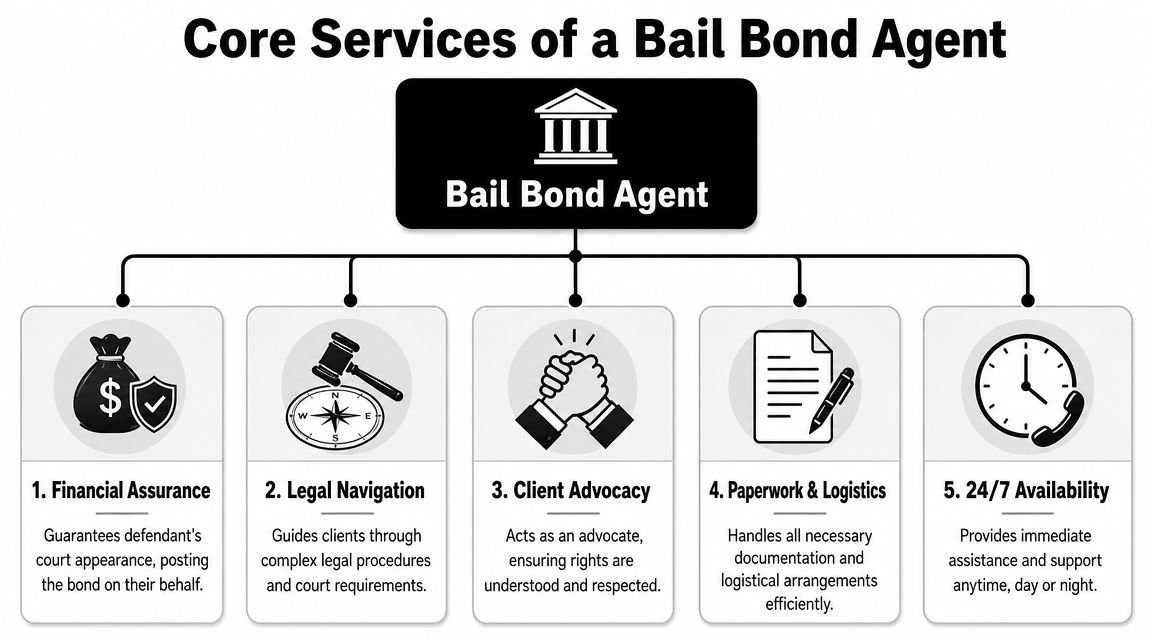
Initial case review and risk evaluation
The first thing a solid agent does is assess whether the bond can be written and what support is needed from the cosigner.
Practical rule: The agent isn't judging your family. The agent is checking whether the court risk makes sense and whether the cosigner can responsibly sign.
That review may include the bail amount, charge type, local jail procedures, and whether the defendant has reliable contact information, work history, or family support. The point is simple. If the agent writes the bond, they're taking responsibility with the court.
Paperwork and legal formalities
Many families often underestimate the work.
A bail bond doesn't move because people are upset. It moves because the documents are complete, accurate, and accepted.
A good agent handles the agreement, indemnitor forms, disclosures, and submission steps without making you guess what each page means. That matters because confusion creates delays. It also matters because cosigners should understand what they're signing before they commit.
If you want a broader consumer-level explanation of identity and record review, this article on understanding background screening helps explain why verification processes exist in high-stakes situations.
Cosigner review and money guidance
Not every bond is handled the same way. Some require only basic documentation. Others may require stronger cosigner support or collateral, depending on the amount and circumstances.
This is also where experienced agents calm people down. They tell you what you are required to produce, what can be signed electronically, and what financial obligation stays with the cosigner until the case ends. That's real bond consulting services in practice. Not theory. Decision-making under pressure.
Fast posting and release logistics
Once the file is ready, the priority becomes speed and accuracy.
One option families in Colorado use is Express Bail Bonds, which offers statewide surety bond help with electronic applications, payments, and contract documents so clients don't have to sit at a detention center for hours. That's not a luxury. It's often the difference between an orderly process and a miserable one.
The final piece is coordination with the jail. Posting the bond doesn't always mean instant release. The jail still controls booking completion, internal processing, and discharge timing. A good agent explains that upfront so you don't spend the next few hours expecting the door to open in ten minutes.
The Bail Bond Process from Start to Finish
Most families feel better once they can picture the sequence. The process feels less threatening when you know what's happening behind the counter and behind the locked doors.
A simple visual helps first.
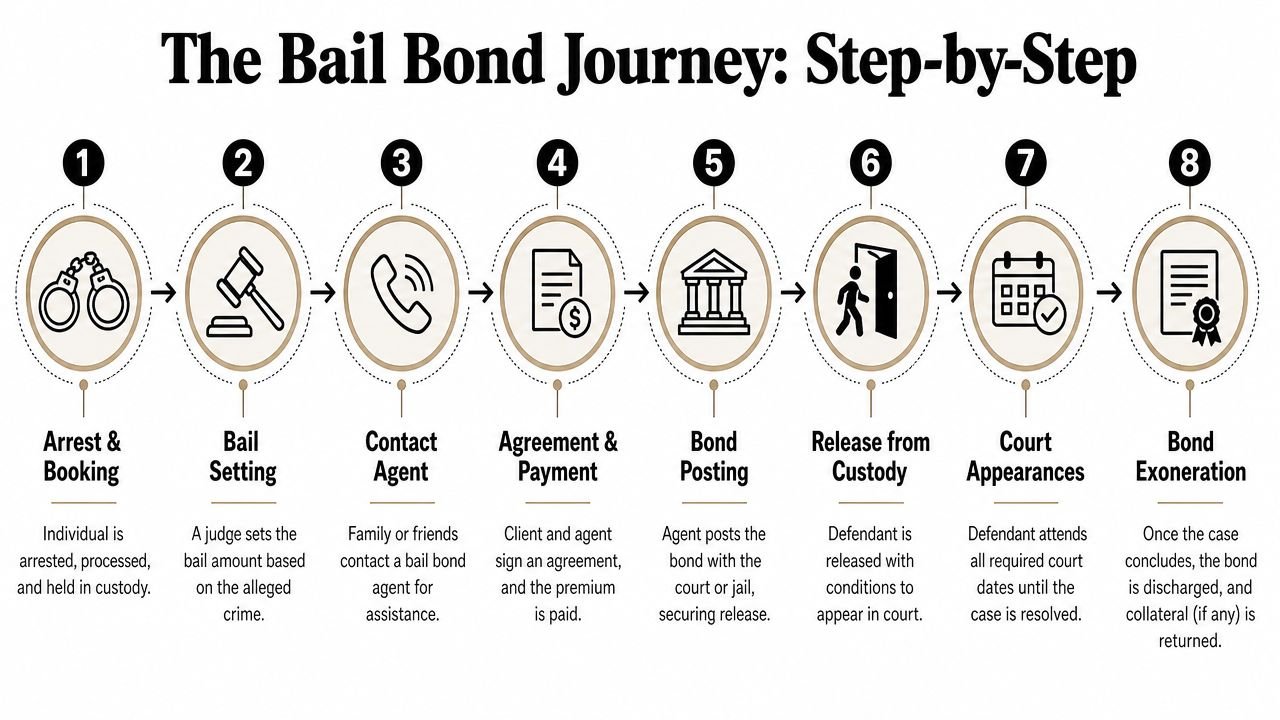
Step one through four
A person gets arrested and booked. Their information goes into the system. Then bail is either scheduled, preset, or set after a court appearance, depending on the case.
Next, a family member or friend calls a bail agent. The tone of the whole experience is set during this interaction. A calm agent asks for the defendant's information, confirms where they're being held, checks the bail amount, and explains what the cosigner needs to do.
Then comes the agreement. The cosigner reviews the contract, provides identification and supporting details, and pays the required premium. In many Colorado cases, this can be handled electronically, which is a major relief for out-of-town family members.
For a straightforward explainer on mechanics, see how bail bonds work.
This short video also gives a helpful overview of the general process.
Step five through eight
After the paperwork and payment are complete, the agent posts the bond with the jail or court. That authorizes release, but it doesn't skip the jail's internal release process.
Release time depends on the facility's workflow, not just on when the bond was posted.
That's the part families often find frustrating. They think the problem is over once the bond is accepted. In reality, the defendant may still need to finish classification steps, property return, or final release processing.
Once the defendant is out, the responsibility shifts. They must attend every court date and follow any conditions tied to release. The cosigner should stay in close contact and make sure notices aren't ignored. If the defendant disappears or misses court, the problem gets expensive and serious fast.
When the case is concluded and the court discharges the bond, the bond obligation ends. If collateral was part of the file, that's the point where it may be returned according to the agreement terms.
What you should do while waiting
Families feel helpless during the waiting period, but there are useful things to do:
- Keep the phone nearby: The agent may need one final signature or answer.
- Prepare pickup support: Have clean clothes, medication information, and a safe ride ready.
- Talk about court before emotions flare: The first ride home should include a simple plan for showing up to court and staying reachable.
That's the whole path in plain English. Arrest. Bail set. Agent contacted. Agreement signed. Bond posted. Release processed. Court appearances completed. Bond closed.
Understanding Bail Bond Costs and Fees in Colorado
Let's get to the question everyone asks first. What does it cost?
In Colorado, the standard premium is 15%, and for bonds over $5,000 it's often possible to secure a 10% premium with an approved cosigner, according to the publisher information for Express Bail Bonds. That premium is the fee for the surety bond service. It is non-refundable.
What that fee pays for
You're paying for the agent to write and post the bond, take on the risk with the court, prepare the documents, and manage the release process. Families sometimes assume the premium works like a deposit. It doesn't. It's the service charge for making the bond happen.
Money point: If the case is dismissed or the charges are reduced later, the premium still isn't returned because the service was already provided.
When collateral may come up
Some bonds require more than the premium. Larger or higher-risk files may involve collateral, especially when the agent needs extra assurance that the defendant will appear in court. That collateral can take different forms depending on the file and the agency's underwriting standards.
Ask direct questions before signing:
- Is collateral required: Don't assume.
- What triggers its return: Make sure the agreement states it clearly.
- Are payment options available: Many agencies can discuss workable terms.
If you want a more specific Colorado-focused breakdown, review how much a bail bond costs in Colorado.
How to Choose a Reputable Firm in Colorado
When your family is under pressure, a bad agency can make a hard night much worse. Choose slowly, even if the situation feels urgent.

Use this checklist
- Confirm Colorado licensing: If they can't clearly state their license status, move on.
- Ask how they handle after-hours calls: Bail problems rarely happen at convenient times.
- Listen for patience: A reliable agent answers basic questions without sounding annoyed.
- Check local familiarity: Colorado procedures vary by facility, and local knowledge matters.
- Read the contract before payment: If the terms feel rushed or vague, stop.
Local knowledge isn't a minor detail. It matters when the defendant is sitting in a specific facility and the family needs answers tied to that jurisdiction. If you're dealing with Golden, it helps to review how agencies handle Jefferson County bail bond matters. If the situation is farther south, this look at bail bonds in Centennial gives practical local context.
One more thing I'd insist on
Ask the agent to explain your responsibility as a cosigner in plain English. If they dodge the question, they're the wrong firm.
A useful extra resource is this guide to choosing bond companies. It gives you a solid screening lens before you sign anything.
Frequently Asked Questions About the Bail Process
If the charges are dropped, do I get the bond premium back
No. The premium pays for the bail bond service itself, not the outcome of the criminal case. Once the bond is written and posted, that fee has been earned.
That answer frustrates people, but it's better to hear it clearly now than be angry later.
What am I agreeing to as a cosigner
You're taking financial responsibility under the bond agreement and helping make sure the defendant appears in court as required. That means you should stay in contact, keep track of court dates, and tell the agency if the defendant's contact information changes or if you think they may run.
If you sign casually because you feel bad, you're making a mistake. Sign because you understand the obligation.
Can a bail bond be revoked
Yes. A bond can be pulled or surrendered in some situations, especially if the defendant violates conditions, disappears, or creates a serious risk that they won't appear in court. Agencies don't do this for fun. They do it when the file goes sideways and the risk becomes unacceptable.
If problems start, call the agent early. Silence makes everything worse.
Does release happen right after the bond is posted
Not always. The jail still controls the release timeline. Bond acceptance starts the process, but booking completion, internal checks, and release workload all affect timing.
Call the agent for updates, but understand that the jail's release desk sets the pace once the bond is in.
Can a family member handle everything from another city or state
Often, yes. Many agencies now use electronic applications, payment links, and digital document signing. That helps when the person helping is out of town, elderly, working overnight, or caring for children and can't drive to the jail.
The key is responsiveness. If the agency asks for ID, signatures, or supporting details, send them back quickly so the file doesn't stall.
If your loved one is in jail and you need calm, direct help right now, contact Express Bail Bonds. They handle Colorado surety bail bonds statewide, offer electronic processing, and can walk you through the next step without wasting time.