A call from jail usually comes at the worst possible time. You may be at home with your kids, at work, or sitting in another state trying to help someone you care about in Colorado. You want to move fast, but the process feels unfamiliar. The biggest question is often simple: how do I pay safely, and how soon can this get done?
That's where electronic payment processing matters. In plain terms, it lets you handle the financial side of a bail bond remotely instead of scrambling to drive across town, find an office, or carry paperwork and payment in person. For families under stress, that difference matters a lot.
Remote bail payment isn't magic, and it isn't a mystery. It's a secure digital process with a few moving parts: your payment method, the system that transmits the payment, the approval step, and the paperwork that allows the bond to be posted. Once you understand those pieces, the whole thing feels much more manageable.
The Modern Way to Post Bail Remotely
Your brother gets arrested late at night in Colorado. You live an hour away, or maybe you live in another county entirely. You're trying to answer basic questions while your phone keeps buzzing. What's the bond amount? Can you handle it tonight? Do you need to show up in person?
In many cases, you can start from home. That's why remote payment has become such a practical part of modern bail. You can review terms, complete forms, and submit payment electronically while an agent handles the in-person posting work on the detention side.
The move toward digital payments is much bigger than bail. PwC projects that global cashless payment volumes will rise by more than 80% from about 1 trillion transactions in 2020 to almost 1.9 trillion in 2025, then nearly triple by 2030, showing how common secure digital payment systems have become across daily life and essential services (PwC future of payments report).
Why remote payment feels easier in an emergency
When people are anxious, they don't need more errands. They need fewer obstacles.
Remote electronic payment processing helps by removing a few common problems:
- No extra driving: You don't have to rush to a jail lobby or office just to start the process.
- Faster decision-making: A family member can review payment options from a phone or laptop.
- Better coordination: Out-of-state relatives or cosigners can often participate without traveling.
- Cleaner records: Digital receipts and confirmations are easier to save and share.
The best payment process in a bail situation is the one that reduces confusion while protecting your information.
If you're trying to get grounded on how online bail services fit into the full release process, this overview of posting bail remotely in Colorado is a useful next read.
What people usually worry about
Most concerns fall into three categories. Is the payment secure? Will it go through quickly? What happens after I pay?
Those are reasonable questions. The rest of this guide walks through each one in plain language, starting with what electronic payment processing is and what it's doing behind the screen.
Understanding Electronic Payment Processing
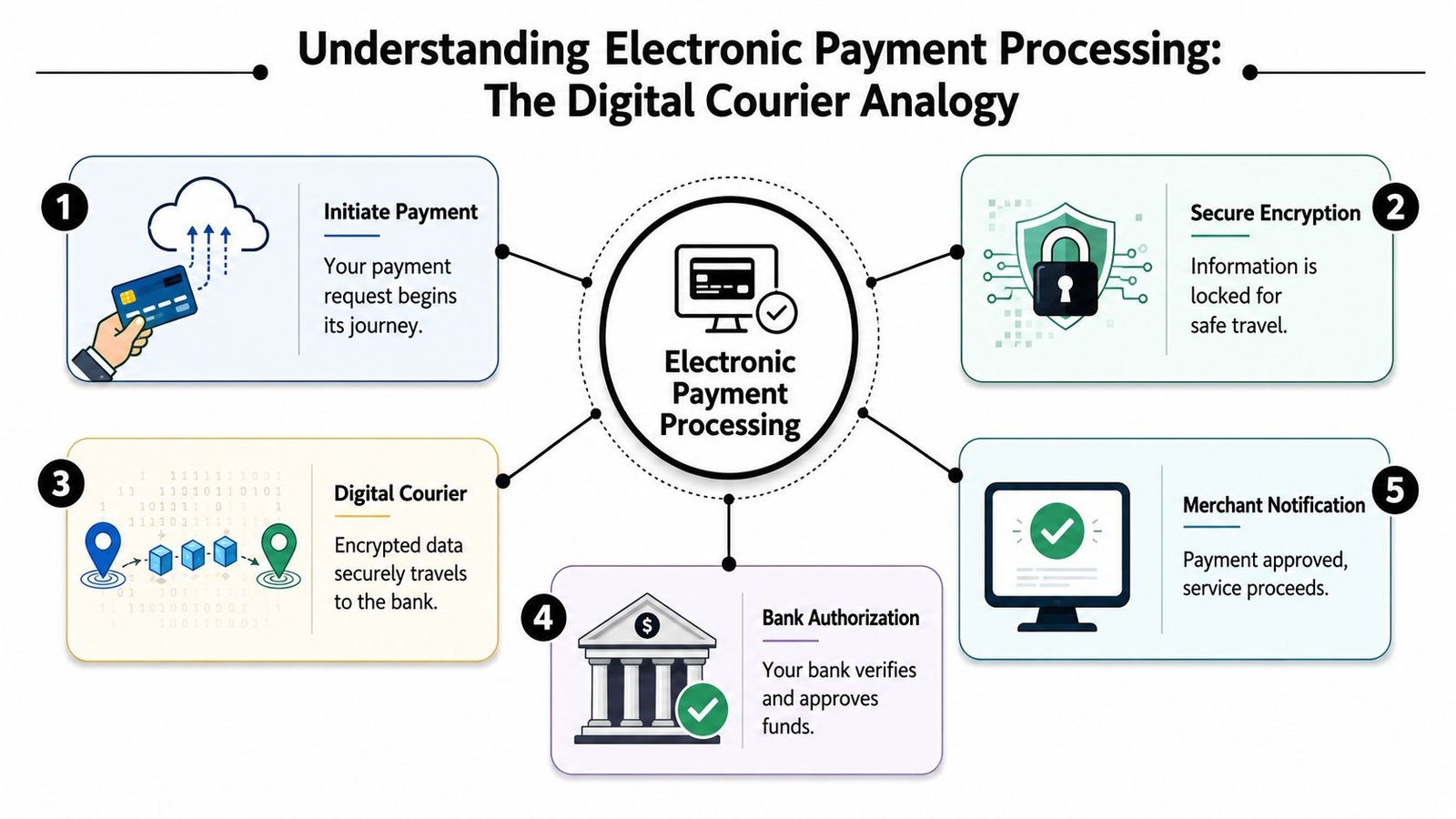
Electronic payment processing sounds technical, but the easiest way to think about it is this: it's a digital courier system for your money and payment details.
You enter payment information into a secure form. That information gets protected, sent to the right financial institutions, checked for approval, and then returned with an answer. If approved, the transaction moves into the next stage so the business can proceed.
The three main players
In card payments, there are a few core parts working together. Stripe's explanation of payment processing breaks this into authorization and settlement, which is helpful because those two steps are where many people get confused.
Here's the plain-English version:
- Payment gateway: This is the secure online entry point. It takes the payment details you type in and transmits them safely.
- Payment processor: This is the routing system. It sends the transaction through the card network and to the issuing bank.
- Banks and card networks: The issuing bank checks whether the card can be approved, then returns an approval or decline.
Authorization and settlement are not the same thing
When you click submit, the first thing happening is usually authorization. That means the system is checking available funds, card status, and basic risk signals in real time.
Settlement happens later. That's the step where approved transactions are finalized and the money is moved through the normal processing cycle into the merchant account.
Practical rule: An approved card payment means the transaction cleared the first gate. It doesn't mean every back-office step is finished that same second.
That distinction matters because people often assume “approved” means “the money physically moved instantly.” For many card transactions, approval is immediate, while final settlement follows after.
Where ACH fits in
ACH, sometimes called an eCheck or bank transfer, works differently. It's built for account-to-account movement and is widely used for recurring or business payments. The tradeoff is speed. ACH typically runs in batches rather than on an instant rail, which means timing can depend on processing windows and return handling. If you want a practical explanation of those timing windows, this guide to understanding ACH cutoff times is a helpful reference.
If you want a more practical look at which methods are often available in a bail setting, review these bail bond payment options.
Secure Payment Methods for Bail Bonds
When someone needs help fast, the best payment method is usually the one that balances speed, security, and simplicity for your situation. In bail transactions, two common options are card payments and ACH payments.
Card payments are often the quickest to start because debit or credit cards are widely available. ACH can make sense when you prefer to pay directly from a bank account and don't mind a process that may not move as quickly as a card authorization.
Card payments
With a debit or credit card, the process begins with the secure online form. The gateway transmits the card details, the processor routes the request, and the bank responds with approval or decline. That's why card payments often feel immediate from the customer side.
For a family trying to post bail remotely, the practical benefit is straightforward. You can complete payment from your phone or computer without handing card details over in a casual or risky way.
ACH and eCheck payments
ACH is a direct bank-to-bank style payment method. It's often used when someone wants to avoid using a card and would rather pull funds from a checking account.
The main tradeoff is operational. ACH is designed around batch processing, not instant transfer. That can make it cost-effective and suitable for planned obligations, but it also means businesses need to pay closer attention to processing windows, returns, and timing. Billtrust's overview of electronic payment rails gives a useful explanation of why ACH is dependable but not usually immediate.
Payment method comparison
| Feature | Credit/Debit Card | ACH (eCheck) |
|---|---|---|
| Approval speed | Usually fast at authorization | Usually slower because of batch processing |
| What you need | Card number and billing details | Bank account and routing details |
| Best fit | Urgent remote payments | Direct account-to-account transfers |
| Processing flow | Authorization first, settlement later | Batch-based bank transfer flow |
| Common concern | Card declines or billing mismatch | Timing and return handling |
What tokenization means in plain language
You may hear the term tokenization when talking about online card safety. The simplest explanation is that the system can replace sensitive card data with a substitute value, so the actual card number isn't passed around more than necessary.
Imagine checking a coat into a secure room and carrying a claim ticket instead of walking around with the item itself. That doesn't remove all risk from online payments, but it reduces exposure.
If you want a deeper security background on card-data standards, this guide to DSS 4.0 compliance gives useful context on the rules businesses follow to protect cardholder information.
For readers specifically wondering about card use in bail situations, this page on paying bail with a credit card answers the practical side of that question.
How We Ensure Your Payment Information Is Safe
When people pay remotely for bail, they're not just thinking about convenience. They're thinking about risk. They want to know whether their card number, bank details, and personal information are being handled the right way.
That concern is justified. Good electronic payment processing should feel simple for the customer, but behind that simplicity there should be several layers of protection.
Security starts with controlled handling
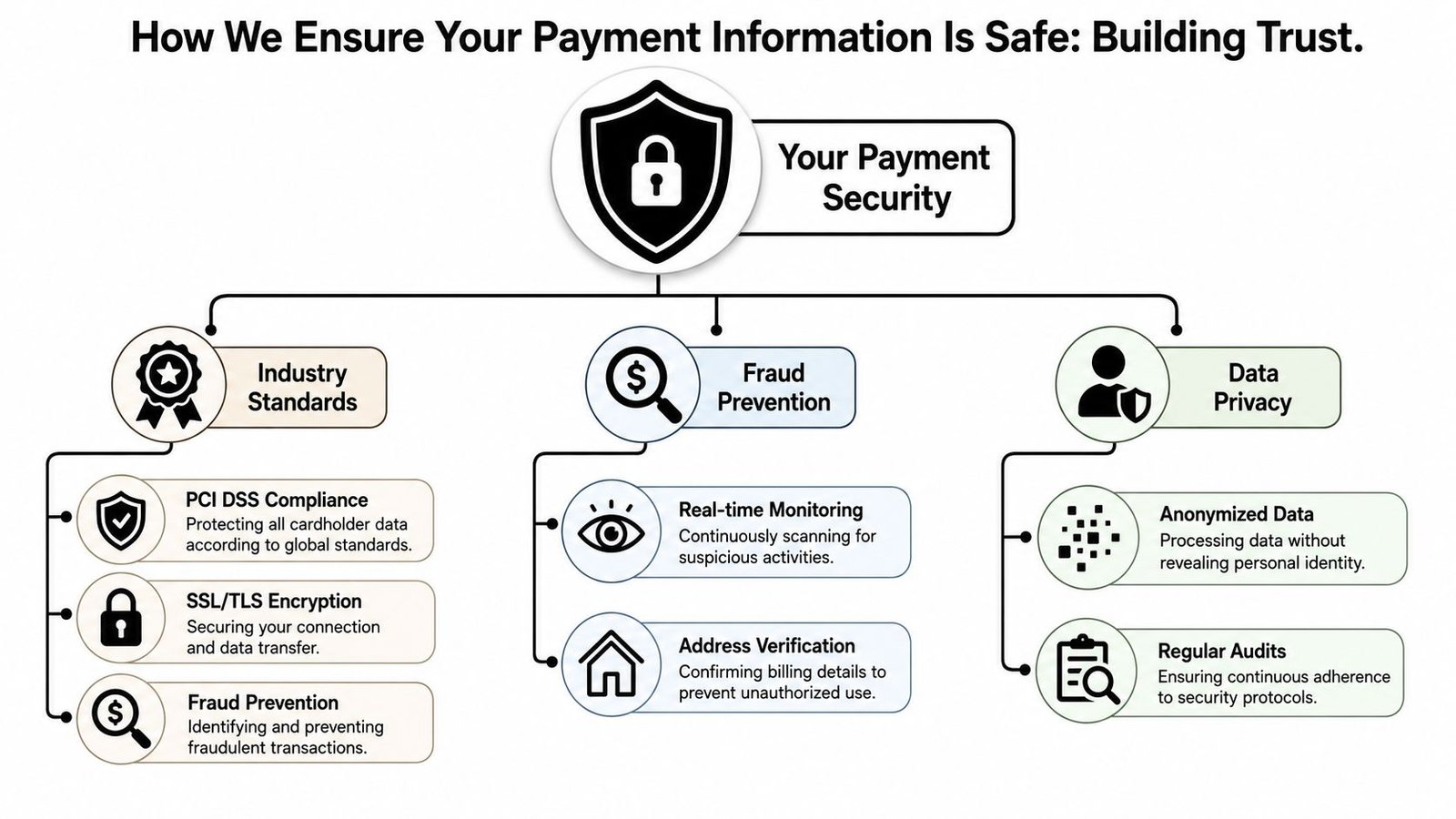
One major safeguard is PCI DSS compliance. You don't need to memorize the acronym. What matters is what it means in practice. Businesses that handle card payments are expected to follow established rules for protecting cardholder data.
Another key layer is encryption. If you type payment details into a secure portal, encryption helps turn that information into unreadable data while it travels. A useful mental model is a sealed envelope that only the intended systems can open.
Safety also means usability
Security isn't only about blocking hackers. It's also about making the payment process clear enough that ordinary people can complete it without mistakes, panic, or hidden friction.
The Boston Fed notes that payment inclusion isn't just access. It also involves use, safety, and affordability, and some households may have accounts while still remaining underserved if digital payment tools are hard to use or feel unsafe (Boston Fed research on underserved digital payment users).
We recognize that having a bank account doesn't automatically mean a payment process is easy or affordable. Research from the Boston Fed shows that payment inclusion is about more than just access; it's about providing services that are usable, safe, and low-cost. Our process is designed with this in mind.
The layers people usually notice
From the customer side, safe payment systems usually include visible and invisible checks working together:
- Secure connection: The form loads in a protected environment rather than through casual messaging.
- Billing verification: Payment systems may compare submitted information to expected records.
- Fraud screening: Transactions can be reviewed for unusual activity patterns.
- Receipts and confirmations: Clear records reduce confusion after payment is submitted.
A calm, secure process matters in bail because the payer is often distracted and emotionally stretched thin. The system should reduce the chance of errors, not increase it.
The Process for Remote Bail Payments in Colorado
Remote payment for a Colorado bail bond usually follows a practical sequence. First, the bail amount and case details are confirmed. Then the indemnitor or family member completes the bond paperwork and payment. After that, the agent posts the surety bond with the jail or detention facility.
The payment step is only one part of the full release timeline. Even when electronic payment processing moves smoothly, the actual release still depends on the jail's booking, verification, and discharge procedures.
What the payer usually does
For most families, the remote side of the process looks like this:
- Share the defendant's information: Name, location, and booking details help identify the case.
- Review the bond terms: This includes the premium, responsibilities, and any cosigner obligations.
- Complete documents electronically: Signatures and supporting details can often be handled online.
- Submit payment securely: Card or bank-based payment is processed through a secure portal.
- Wait for jail release procedures: Once the bond is posted, the detention facility controls release timing.
What to expect on a phone
Many people complete this from a mobile device. That's normal now. Mobile payments account for 35% of all digital transactions worldwide, according to the industry statistics summarized by Airwallex, which reflects how standard phone-based payment has become in everyday commerce (Airwallex payment processing statistics).
Paying from your phone is now a standard, secure practice. Mobile payments now account for 35% of all digital transactions worldwide, and our system is optimized to provide a seamless and safe experience on any device.
Colorado families also need to remember one important pricing point. The publisher notes that Colorado's standard premium is 15%, and for bonds over $5,000 they often secure 10% with an approved cosigner. That premium is the fee for the surety bond service, not the full bail amount.
If you're trying to understand the time between payment and actual release from custody, this guide on how long bail takes to process can help set expectations.
Step-by-Step Guide to Paying Express Bail Bonds Online
When you're ready to act, a simple checklist helps. The basic idea is to confirm the case, receive the secure payment path, review everything carefully, then save your confirmation.
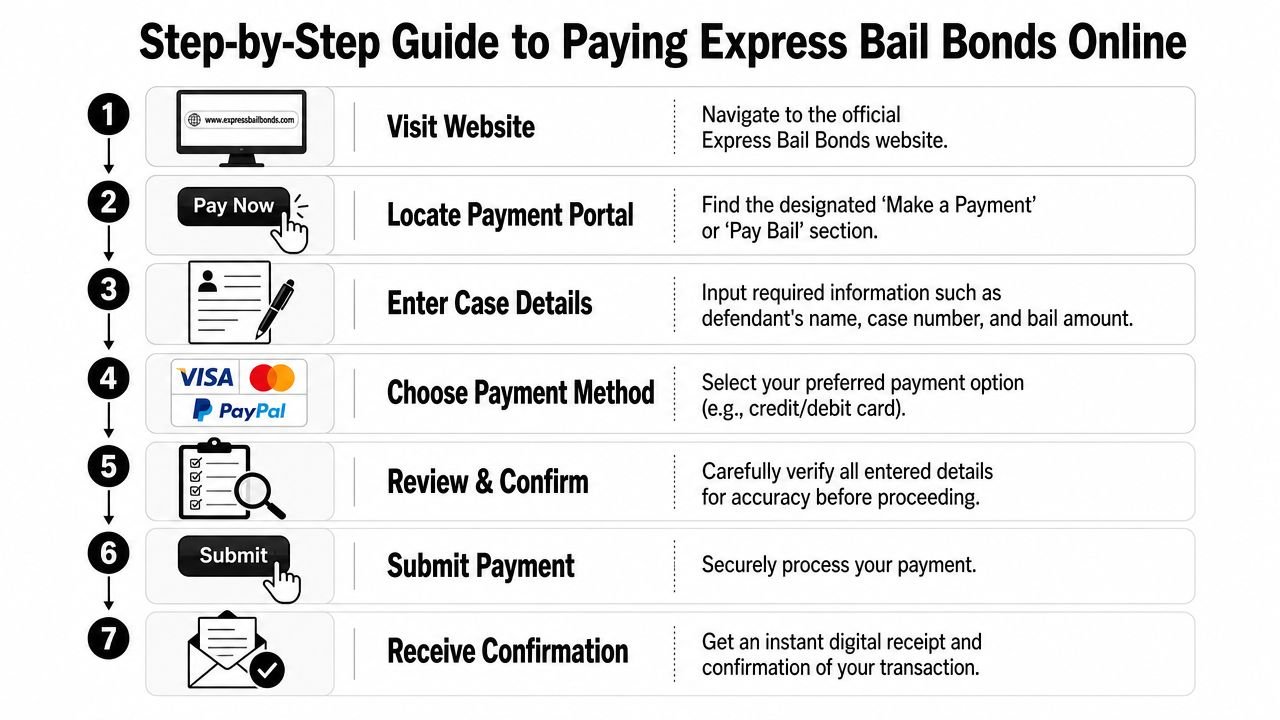
The payment steps
Start with the official payment page
Use the company's secure online route rather than sending card information by text or through an informal message. The correct place to begin is the online bail bond payment page.Enter the defendant's details carefully
Double-check the spelling of the person's name, the jail location, and any case or booking information you've been given. Small errors can slow down confirmation.Review the bond terms before paying
Make sure you understand the premium amount, the role of any cosigner, and what paperwork still needs to be signed. If anything is unclear, stop and ask before submitting payment.Choose your payment method
If time is tight, card payment is often the simplest route. If you're using a bank-based method, confirm that you have the correct account information ready.
Before moving to the final screen, it helps to see the flow visually:
What to do after you click submit
Watch for the confirmation message
A successful submission should generate an on-screen confirmation or follow-up communication. Don't close the page too quickly if a receipt is still loading.Save your receipt
Keep the emailed or downloaded record. If another family member is helping coordinate, send them a copy so everyone is working from the same information.Stay available for follow-up
Sometimes an agent may need a final signature, identification detail, or clarification before the bond can be posted. Keep your phone nearby after payment.
Save every document the first time you see it. In urgent situations, the biggest delays often come from missing confirmations, not from the payment screen itself.
Common Questions About Electronic Bail Payments
What happens if my payment is declined
A decline doesn't always mean you lack funds. Sometimes the billing address doesn't match, the bank flags the transaction, or the card has a daily limit. Check the entered details first, then contact your bank or ask whether another payment method is available.
How do I get a receipt for my payment
Most electronic payment systems provide a digital confirmation. Save the receipt email, screenshot the confirmation page, and keep any related contract documents in one folder on your phone or computer.
Is the bail bond premium refundable
In most bail bond arrangements, the premium is the fee paid for the surety service. It is generally not the same as posting cash bail directly with the court. If you're unsure how that applies to your case, ask for the fee terms in writing before paying.
Who should I contact if there's a payment problem
Contact the bail bond company first if the issue involves the payment portal, receipt, or paperwork. Contact your bank or card issuer if the issue is a fraud alert, decline, hold, or verification request.
Can someone outside Colorado pay remotely
Yes, remote payment systems are often used by family members or cosigners who aren't physically near the jail. The important part is using the secure payment path and completing the required paperwork accurately.
If you need help fast, contact Express Bail Bonds for 24/7 support with remote bail bond paperwork and secure online payment. You can also get local information for Jefferson County Golden bail bonds or review service details for Centennial bail bonds.