
Getting that call is a punch to the gut. One minute everything is normal, and the next, you learn someone you care about is in jail. The first question that floods your mind is, what do I do now? The quickest way to get them home is to find out where they are, what their bail is, and then work with a licensed bail bondsman to post a surety bond. This usually involves a non-refundable fee, typically 10-15% of the total bail amount, but it gets them released fast while their case moves through the courts. If you're in this situation, don't wait. Call Express Bail Bonds at 720-984-2245 for immediate help.
Your First Moves After an Arrest in Colorado
When your phone rings with news of an arrest, it’s easy to feel panicked and overwhelmed. But the first few hours are critical, and the best thing you can do is take a deep breath and focus. Instead of letting chaos take over, your job is to become a fact-finder. It's about taking back control.
Right now, you have two simple but essential goals: find out exactly which jail is holding your loved one, and get the specific bail amount set by the court.

Locating the Detainee
Before you can do anything else, you have to know where they are. Just because someone was arrested in Denver doesn't mean they're in the Denver County Jail. Depending on which agency made the arrest, they could be in a smaller city jail or even a facility in a neighboring county.
Thankfully, most Colorado counties have online inmate search tools that make this a lot easier. To use them, you’ll need a few key pieces of information:
- Full Legal Name: Get the spelling right, including any middle names.
- Date of Birth: This is crucial for telling people with similar names apart.
- Booking Number: If they were able to give you this number, it’s the fastest way to pull up their record.
These online portals are your best friend for real-time information. For a more detailed walkthrough, you can learn more about how to find someone in jail in Colorado in our complete guide.
Understanding the Charges and Bail Amount
Once you find them in the system, the inmate search results will show you what you need to know: the specific charges and the bail amount. The bail is what the court requires as a financial guarantee to let someone out of custody until their trial date.
Seeing that number is often the moment it all sinks in. But it's also the point where you can finally start making a real plan.
Your primary goal in these first moments is clarity. Finding the jail, the charges, and the bail amount transforms an overwhelming crisis into a manageable problem with clear next steps.
This information is the key that unlocks the door to their release. With these details, you can make an informed call to a professional who can walk you through the rest. Contact Express Bail Bonds for a free consultation to understand your options.
Your Colorado Jail Information Checklist
Use this quick reference to gather the essential details needed to start the bail process in Colorado. Having this handy will make your call to a bail bondsman much more efficient.
| Information Needed | Where to Find It | Why It's Critical |
|---|---|---|
| Defendant's Full Name & DOB | From personal knowledge or the initial call | Required for accurate inmate lookup and legal paperwork. |
| Detention Facility Location | County Sheriff's online inmate locator (e.g., Denver, Arapahoe) | The bond must be posted at the correct jail. |
| Booking Number | Provided by the defendant or found on the inmate search portal | The unique identifier for the specific arrest case. |
| Total Bail Amount | Listed on the inmate search results or provided by the jail | Determines the cost of the bail bond premium. |
| Specific Charges | Displayed on the inmate search portal next to the bail amount | Helps the bondsman understand the context and any potential restrictions. |
Once you have this checklist filled out, you’re no longer just reacting—you’re taking action. You now have everything you need to confidently contact a professional and start the process of bringing your loved one home.
For immediate, 24/7 assistance, call Express Bail Bonds at 720-984-2245 and get expert help right now.
Cash Bond vs. Surety Bond: Making the Right Call
Once you know the bail amount, you’ve hit the first major crossroad. How you move forward from here determines everything. In Colorado, you're looking at two main options: paying the full amount in cash directly to the court or using a surety bond through a licensed agent. Understanding the difference is absolutely critical to making a fast, smart, and financially sound decision for your family.
Let's be real—seeing a bail amount of $10,000, $25,000, or even higher is a shock. Most of us don't have that kind of money sitting around. A cash bond means you have to come up with the entire bail amount and hand it over to the court. For a $10,000 bail, you'd need to find $10,000 in cash, usually on very short notice. For most people, that's just not going to happen.
The Realistic Choice for Most Families: A Surety Bond
This is exactly why a surety bond is the most common path to getting someone home. Instead of scrambling to find the full bail amount, you work with a licensed bail bondsman—like us at Express Bail Bonds. You pay a much smaller, non-refundable fee called a premium.
In Colorado, that premium is typically 10-15% of the total bail.
So, for that same $10,000 bail, the premium would only be $1,000 to $1,500. You pay that fee, and our company guarantees the full $10,000 to the court. This agreement ensures the defendant shows up for all their court dates. If they don't, we're on the hook for the full bail amount, not you.
A surety bond makes freedom affordable. It turns an impossible financial hurdle into a manageable one, letting your loved one get back home quickly to focus on their defense.
This approach lets you secure a release without wiping out your savings or selling assets. If you want to dig deeper into the pros and cons, check out our guide on surety bond vs a cash bond.
Let's Look at a Real-World Scenario
To make it crystal clear, imagine the bail is set at $25,000.
The Cash Bond Route: You would have to gather $25,000 in certified funds and deliver it to the jail. While you'd get that money back when the case is over (minus court fees), it could be tied up for months or even years.
The Surety Bond Route: You call Express Bail Bonds and pay a $2,500 premium (at a 10% rate). Your loved one is released, and your financial part is done—as long as they make it to all their court hearings.
Surety bonds are a trusted, regulated financial tool that keeps the justice system moving. In fact, the global surety market is a massive industry that grew from $19.62 billion to $21 billion in just one year, a growth rate of 7%. This just goes to show how established and essential this service is. You can learn more about the growth of the global surety market and its role in legal proceedings.
What About a Personal Recognizance (PR) Bond?
There is a third possibility, though it's far less common: a Personal Recognizance (PR) bond. This is when a judge decides to release someone on their own promise to appear in court, with no money required upfront.
PR bonds are usually only granted to people who have:
- A clean or minimal criminal record.
- Strong ties to the local community, like a steady job and family nearby.
- Charges that are low-level and non-violent.
While a PR bond is the best-case scenario, you can't ask for one. It's a decision made entirely by the judge at the first court hearing. For the vast majority of cases, a surety bond is the most reliable and immediate way to get someone out.
If you’re feeling overwhelmed and aren't sure which way to go, the best thing to do is talk to an expert. Call Express Bail Bonds anytime at 720-984-2245 for a free, no-pressure consultation. We’ll walk you through your specific situation.
Working with a Bail Bondsman: The Modern Process
When you get that call, the idea of dealing with a bail bondsman can feel overwhelming, adding another layer of stress to an already difficult situation. But I want to set your mind at ease: the process has changed dramatically over the years. Gone are the days of frantic, middle-of-the-night drives to a sketchy office or the jail itself, armed with a manila folder stuffed with documents.
Today, the entire thing can be handled right from your phone or computer. From that first confidential call to the final e-signature, modern agencies have made getting help fast and discreet. It’s no longer a confusing maze; it’s a series of clear steps you can take from your own home.
This chart breaks down the fundamental difference between paying the court directly in cash versus using a surety bond.
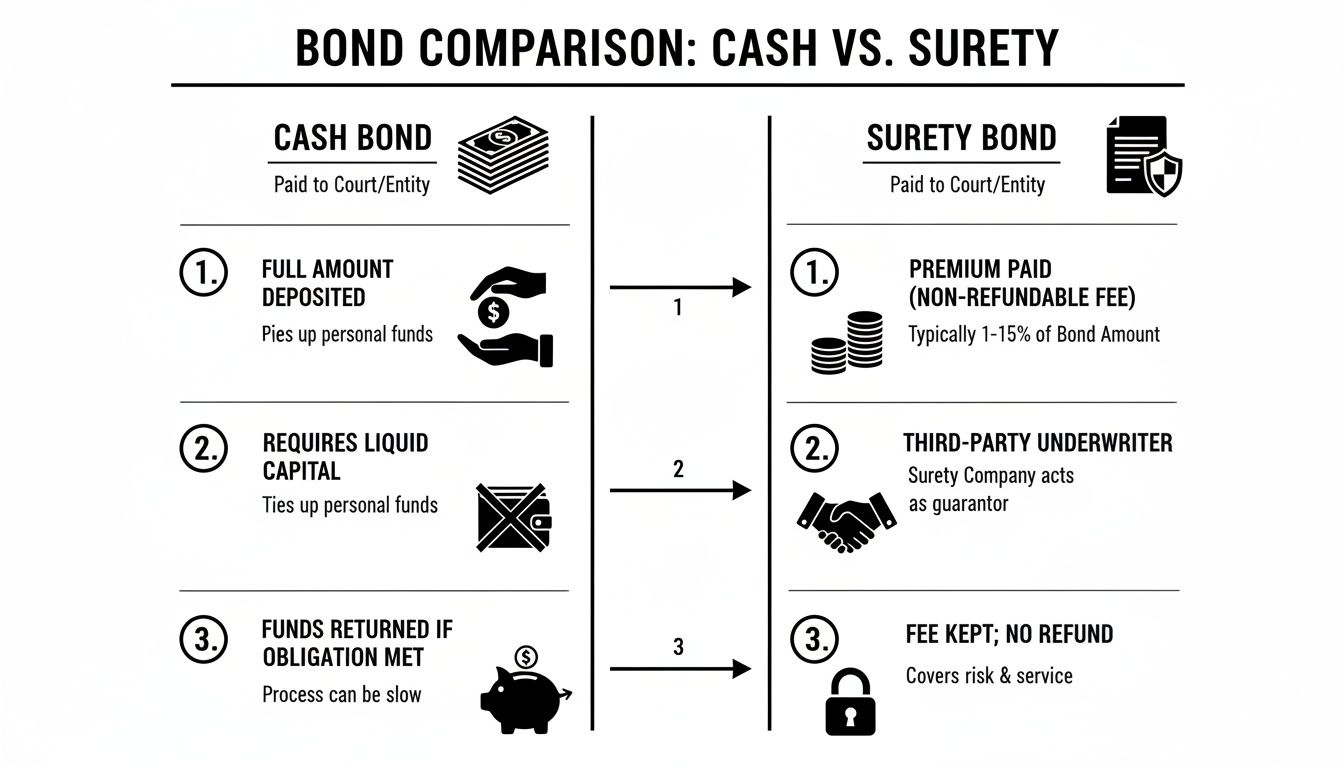
As you can see, the surety bond makes release far more attainable by only requiring a small percentage of the total bail upfront. For most families, this is the only feasible option. Contact our team today to get the process started.
The Cosigner’s Crucial Role
In any bail bond agreement, the most important person—besides the person in jail—is the cosigner (we sometimes call them an indemnitor). When you cosign, you are taking on the financial responsibility for the full bail amount, guaranteeing that the defendant will show up for all their court dates.
It’s a serious commitment, which is why there are a few basic qualifications. These aren't designed to be difficult, but to make sure you're in a stable position to take on this responsibility.
Typical Cosigner Qualifications:
- A steady job or source of income.
- A valid, state-issued ID (like a driver's license).
- Verifiable income (pay stubs often work well).
- Decent credit history is helpful, but not always a deal-breaker.
Becoming a cosigner is the single most important act of support you can offer. It's a promise to the bail agency and, more importantly, to your loved one. You can get a deeper understanding of this partnership by reading our guide that explains what is a bail bondsman and how we work with families.
Technology Makes Bail Fast and Easy
When someone you care about is in jail, every minute feels like an hour. That’s why we’ve invested in technology to eliminate delays. You don’t have time to mess with printers, scanners, or fax machines.
At Express Bail Bonds, the entire process is digital. You can fill out applications on our website, sign contracts securely with your finger or mouse, and pay with a credit or debit card right over the phone or via a secure online link. It doesn't matter if you're across town or in another state—you can get the ball rolling immediately.
The ability to handle everything electronically is a game-changer. It means we can post the bond at the jail much faster, often within just a few hours of your first call. That gets your loved one home sooner.
Understanding the Costs and Paperwork
So, what does it cost? In Colorado, the fee for a bail bond is called the premium. This is a non-refundable payment, typically set at 10-15% of the total bail amount.
For example, on a $10,000 bond, the premium you would pay is between $1,000 and $1,500. This is our fee for posting the full $10,000 with the court on your behalf.
To get started, it helps to have a few things handy. Gathering these items now will make the process go much smoother.
What to Have Ready:
- Your Driver's License or State ID: We need this to verify your identity.
- Proof of Income: A recent pay stub or bank statement is perfect.
- Defendant’s Info: We'll need their full name, date of birth, and which jail they're in.
Our agents are here 24/7 to walk you through every form and answer every question. Our job is to bring clarity and a sense of control back to a chaotic situation.
Don't let the process intimidate you. Call or text Express Bail Bonds now at 720-984-2245 to get started from anywhere, anytime.
What to Expect After the Bond Is Posted
Posting the bond brings an incredible wave of relief, but it’s important to understand this is just the beginning of the next chapter, not the end of the story. The process doesn’t stop the moment payment is made. What comes next requires patience, clear communication, and a commitment to responsibility from everyone involved—the defendant, the cosigner, and your bail agent.
Navigating the Release Timeline
Once we’ve posted the bond at the jail, the clock starts on the release process. And trust me, it’s rarely instantaneous. The actual time it takes can swing wildly depending on the specific facility and how swamped they are.
In a smaller county jail, you might see your loved one walk out in as little as one to two hours. But at major facilities like the Denver or Arapahoe County jails, a wait of four to eight hours is far more typical. It gets even longer during peak times like weekends or holidays. The jail staff has their own internal procedures to follow, and while your loved one is technically free, it takes time for the system to catch up.
Understanding the Defendant's Responsibilities
Getting out on a bond isn't a "get out of jail free" card; it's a conditional release with serious strings attached. The defendant must follow a strict set of rules to keep their bond active and stay out of custody. These aren't suggestions—they are non-negotiable requirements that form the bedrock of the agreement.
The single most important rule after release? Show up. The entire legal and financial agreement hinges on the defendant attending every single required court appearance until the case is fully resolved.
Beyond making every court date, there are other standard obligations:
- Regular Check-ins: The defendant will need to stay in touch with their bail agent, usually with a quick phone call to confirm where they are and acknowledge upcoming court dates.
- Adherence to Court Orders: A judge might impose other conditions for release, like no-contact orders, substance abuse counseling, or travel restrictions. Violating any of these can get the bond revoked in a heartbeat.
- Stay in Communication: It’s crucial for the defendant, cosigner, and bail agent to maintain an open line of communication. If a phone number changes or someone moves, the bail agency needs to know immediately.
The bail bond industry is a huge part of our justice system, with the U.S. market estimated at $3.5 billion. This is because the roughly 20,886 bail bond businesses in the country play a vital role in making sure defendants appear for their court dates. The whole system relies on people honoring their release conditions. You can read more about the consistent demand for bail bond services in the U.S. and see how it underpins the legal process.
The Role of the Cosigner After Release
If you're the cosigner, your job isn't over once your loved one is released. You’re still the primary point of contact and the financial guarantor for the bond. A big part of your role now is helping ensure the defendant meets all their obligations.
This means staying on top of court dates and gently reminding them of their responsibilities. If you ever lose contact with the defendant or worry they might miss a court date, you must call your bail agent right away. Proactive, open communication is the absolute best way to solve problems before they even start.
The journey through the court system is often long and confusing, but you don't have to go it alone. Our team at Express Bail Bonds is here to offer clarity and support every step of the way. If you have any questions about post-release responsibilities, please call or text us at 720-984-2245. We're always here to help.
Costly Mistakes to Avoid in the Bail Process
When you’re under pressure to get a loved one out of jail, it’s easy to make a quick decision that ends up costing you more than just money down the road. The whole process is incredibly stressful, but knowing what pitfalls to look out for can save you a lot of grief. The best thing you can do is learn from the mistakes others have made.
The first instinct might be to go with the very first number you find, but that can be a huge misstep. Be wary of any bail agent who seems unprofessional or isn't licensed. A legitimate bondsman will be patient, answer all your questions, and walk you through every step without making you feel rushed. In Colorado, all bail bonding agents must be licensed, and you have every right to ask for their license number to verify it.
If an agent is using high-pressure sales tactics or making promises that sound way too good to be true, consider it a major red flag. Your peace of mind is worth finding a reputable agency that plays by the rules and treats you with respect. You can trust Express Bail Bonds to guide you professionally.
Providing Incomplete or Inaccurate Information
One of the most frequent reasons for a delay is simple—incorrect information on the bail bond application. When you’re stressed and trying to move fast, it’s all too easy to misspell a name, mix up a birth date, or forget a previous address. But even a tiny error can bring everything to a screeching halt.
A bail bond is a legal contract, and every piece of information you provide has to be accurate for verification.
- Slow down and read: Go through every question on the application carefully.
- Double-check the details: Make sure the defendant's full legal name and date of birth are perfect.
- Be completely honest: Provide truthful information about your job, where you live, and your relationship to the defendant.
Being dishonest or even just careless can get the application rejected. That means your friend or family member stays in jail longer. It's so much better to be upfront and thorough from the very beginning.
Underestimating the Cosigner's Financial Risk
This is, without a doubt, the single biggest misunderstanding in the entire bail process, and it can be financially devastating. When you cosign a bail bond, you’re doing more than just helping someone get out of jail; you are signing a legally binding financial contract. You become the indemnitor, which is a formal way of saying you are personally guaranteeing the full bail amount to the bail bond company.
If the defendant skips a court date, that financial responsibility lands squarely on your shoulders.
A $50,000 bond doesn't just vanish if the defendant decides not to show up for court. As the cosigner, you would be on the hook for paying that entire $50,000 back to the bail agency. This is not a risk to take lightly.
Before you put your name on anything, have a serious, direct conversation with the defendant. Make sure they understand that if they don't follow through on their court obligations, it will have severe financial consequences for you.
Waiting Too Long to Act
Finally, don't let indecision paralyze you. While it's smart to take a breath and think things through, waiting too long to start the bail process just creates more problems. The longer someone is in custody, the more it disrupts their life—their job, their family, and their ability to work with an attorney to prepare a defense.
Moving quickly allows a professional agent to get the paperwork started and post the bond as soon as possible, which means less time spent behind bars.
The bail bond industry is a surprisingly large global economic sector, estimated to be worth $5.7 billion. This market, which operates in nearly 200 countries, is built on the direct relationship between agents and clients. By contacting a professional right away, you're plugging into a well-established system designed to get people released efficiently. You can find more about the global dynamics of the bail bond services market and its role.
Avoiding these common mistakes can truly make all the difference. If you feel lost or unsure about any part of this, don't guess. Call or text Express Bail Bonds anytime at 720-984-2245 for clear, professional guidance you can count on.
Common Questions We Hear Every Day
When you're dealing with a loved one's arrest, your mind is racing with questions. It’s completely normal. We’ve been doing this for a long time, and we've heard it all. Here are the straight answers to the most common questions we get from families across Colorado, based on our years of experience.
What Happens if the Charges Get Dropped?
This is a big one, and the answer can be tough to hear. Even if the charges are dropped the day after you post bond, the premium you paid to the bail bondsman is non-refundable.
Think of it like an insurance premium. You paid us to take on the financial risk of guaranteeing the full bail amount to the court. Once we’ve done that and secured the release, our service has been rendered. The fee covers that risk and the work involved, regardless of the case's outcome.
Can My Loved One Leave Colorado While on Bond?
Absolutely not—unless a judge says it's okay. Leaving the state without the court's explicit, written permission is a serious violation of bail conditions. This is a fast track to getting the bond revoked and a new warrant issued for their arrest.
If there's a legitimate reason for travel, like a critical work trip or a family emergency, the defense attorney needs to file a formal motion with the court. It’s not a casual request; it has to be officially approved.
What Exactly Is a Bond Forfeiture?
A bond forfeiture is the court's response when a defendant misses a mandatory court date. It's the moment the hammer comes down.
The judge immediately issues a bench warrant for the defendant's arrest and orders the full bail amount to be paid. This is when the financial agreement you made as a cosigner becomes very real.
A bond forfeiture is the worst-case scenario for everyone involved. The cosigner is suddenly responsible for the entire bond amount, and the defendant faces new legal trouble. The key to avoiding this is simple: communication.
If the original bond was $25,000, the cosigner is now legally on the hook to pay that full $25,000 to us, the bail bond agency. If you fear a loved one might miss a court date, call us immediately at 720-984-2245.
What Does "Bond Exoneration" Mean?
This is the good news! Bond exoneration is the official term for when the bail bond contract is successfully finished. It means the defendant did everything they were supposed to—they showed up for every single court appearance until the case was completely resolved.
Once the court "exonerates" the bond, all financial obligations for both the cosigner and the bail bond agency are officially over. This is the finish line we're all aiming for from day one.
What if I Can’t Afford the Full Premium Upfront?
We get it. Even 10-15% of a large bond can be a significant financial strain. Don't assume you're out of options. Depending on the details of the case and the cosigner's financial stability, many bail agencies, including ours, can offer flexible payment plans. It never hurts to ask. A quick, confidential phone call can give you a clear picture of what's possible.
The legal system can feel like a maze, and every court has its own way of doing things. While a guide explaining what happens at a bail hearing might offer a general overview, your specific situation requires direct, professional advice.
Don't let unanswered questions make a stressful situation worse. The team at Express Bail Bonds is here 24/7 to give you clear, honest answers and walk you through every step. For a free, no-obligation consultation, call or text us anytime at 720-984-2245 or find us online at https://expressbailbonds.com.