
When a loved one gets arrested, you'll hear the words "bail" and "bond" thrown around a lot. People often use them interchangeably, but they are absolutely not the same thing. Getting this one distinction right is the most critical step in getting someone out of jail quickly and affordably.
Here’s the simple breakdown: Bail is the full cash amount you pay directly to the court. A bail bond is a guarantee you get from a licensed company, like us, for just a fraction of that total bail amount. If you're in a tough situation and need immediate help, call Express Bail Bonds now at 720-984-2245 for a free consultation.
Understanding the Critical Difference Between Bail and Bond
When a judge sets bail, they are putting a price tag on a person's release. This price is meant to ensure the defendant shows up for all their required court appearances. This single decision by the judge creates two very different paths to get out of jail, and each path has major financial consequences.
The way we handle pretrial release has changed dramatically over the years. The use of secured money bail has skyrocketed, with the number of felony cases requiring financial release jumping from 37% to 61% between 1990 and 2009 alone. At the same time, the average bail amount doubled to a staggering $55,400. You can dig deeper into data on the bail bond industry to see how these trends continue to impact families.
Bail vs. Bond at a Glance
To make it even clearer, let's put the two options side-by-side. This table gives you a quick snapshot of how paying cash bail compares to using a bail bond service.
| Feature | Cash Bail | Bail Bond (Surety Bond) |
|---|---|---|
| Who Is Paid | The full amount is paid directly to the court. | A non-refundable fee is paid to a bail bond agency. |
| Out-of-Pocket Cost | 100% of the bail amount. | Typically 10-15% of the total bail amount. |
| Who Provides the Money | The defendant, their family, or friends. | A licensed bail bond company like Express Bail Bonds. |
| Refundability | The full amount is returned if the defendant attends all court dates. | The premium is non-refundable; it is the fee for the service. |
Looking at them this way, the practical difference becomes obvious. A cash bail requires a massive upfront payment, while a bail bond makes release possible without having to drain your savings.
The key takeaway is simple: A bail bond makes release accessible when the full cash bail amount is financially out of reach for most families.
Trying to figure this out while you're stressed and worried is tough. If you need someone to walk you through it or have questions about how a bond works here in Colorado, our agents are ready to help 24/7. Contact Express Bail Bonds for a completely confidential consultation, and let us help you navigate this.
Comparing the True Costs of Securing Release
When a loved one is in jail, the financial burden can feel overwhelming. The real difference between posting bail yourself and using a bail bond comes down to one critical question: how much cash do you need right now? The answer uncovers two very different paths to getting someone out.
If a judge sets a cash bail, you’re on the hook for the entire amount, paid directly to the court. So, if bail is $20,000, you need to have $20,000 in cash or a cashier's check ready to go. For most people, that’s an impossible sum, which means their loved one stays locked up.

The Bail Bond Alternative
This is where a bail bond, also called a surety bond, completely changes the game. Instead of struggling to find the full bail amount, you work with a bail bond agency and pay a non-refundable fee known as a premium. Here in Colorado, that premium is typically between 10% and 15% of the total bail.
Let’s go back to that $20,000 bail. With a bail bond, your out-of-pocket cost is just $2,000 to $3,000. The bondsman then gives the court a bond for the full $20,000, guaranteeing the defendant will show up for their court dates.
Suddenly, securing a release becomes financially realistic. You can dive deeper into how surety bonds versus cash bonds stack up in various circumstances.
A Real-World Financial Scenario
Think about a common situation: someone is arrested, and the judge sets bail at a steep $50,000. Their family simply doesn't have that kind of money just sitting around.
- Option 1 (Cash Bail): The family scrambles. They might have to drain their savings, ask relatives for loans, or even sell assets to come up with $50,000. All the while, their loved one remains in jail, potentially for days or weeks.
- Option 2 (Bail Bond): The family calls Express Bail Bonds. They pay a $5,000 premium (10%), and our agent posts the bond right away. The defendant is often released within a few hours.
The core difference is accessibility. A bail bond transforms an impossible sum into a manageable fee, providing a practical path to freedom without causing financial ruin.
The economic reality of the cash bail system is staggering. Over 526,000 people are held in jail before trial across the U.S., many because they can't afford bail. This has given rise to a $2 billion private bail bond industry built to fill that gap. In Colorado, the standard premium makes release possible, especially when studies show bail is often set unfairly high for certain individuals.
For very large bail amounts, a bondsman might ask for collateral—like a deed to a house or a car title—to secure the bond. But for the vast majority of cases, a signature from a reliable cosigner is all that's needed. If you're looking at a bail amount that feels out of reach, contact Express Bail Bonds. We'll give you a free, no-obligation quote so you know exactly what the real cost will be.
Navigating the Release Process Step by Step
Getting someone out of jail is about more than just money. It's about navigating a system that can be incredibly confusing and slow, especially when you're under stress. The difference between paying cash bail on your own and using a bail bondsman isn't just financial—it’s the difference between hitting bureaucratic roadblocks and taking a clear path to release. When every minute counts, understanding these two paths is essential.
Paying cash bail directly to the court might seem simple at first glance. But in reality, it can be a slow, frustrating ordeal. You first have to come up with the entire bail amount, often in a very specific format like a cashier's check. Then you've got to physically get it to the right courthouse or jail, which often keeps limited hours, leading to major delays.
The Cash Bail Process: A Detailed Look
Just imagine this: it’s 2 AM on a Saturday, and you need to get a $10,000 cashier's check to post bail. Your bank is closed. This is the kind of real-world problem families run into all the time.
If you go it alone, here’s what the process generally looks like:
- Step 1: You have to find out the exact bail amount and what forms of payment the specific jail or court will even accept.
- Step 2: Next, you need to get the funds, which usually means a trip to the bank during business hours to get a certified check.
- Step 3: Then you drive to the facility—which could be miles away—and likely wait in line to hand over the payment and all the paperwork.
- Step 4: After all that, you still have to wait for the jail's own internal processing, which can easily add hours to the release time.
This path puts all the logistical legwork on your shoulders. During an already difficult time, that’s a heavy burden to carry. One tiny mistake on the paperwork or the wrong type of payment can get you rejected, forcing you to start the whole process over.
The Bail Bond Process: A Streamlined Alternative
This is where working with an experienced agency like Express Bail Bonds changes everything. We’ve designed our process to cut through the red tape and make it as fast and simple as possible. You can handle most of it right from your home, letting us deal with the complexities so you can focus on supporting your loved one.
Our proven method is straightforward:
- Initial Call: You call us anytime, 24/7. We’ll ask for some basic information about the defendant and walk you through exactly what to expect.
- Fast Electronic Paperwork: We immediately email you the necessary documents. You can sign and send them back electronically within minutes.
- Secure Payment: You pay the non-refundable premium (usually 10-15%) securely online or over the phone.
- Immediate Posting: The moment the paperwork is done, one of our licensed agents is on their way to the jail to post the bond. It doesn’t matter if it’s the middle of the day or the dead of night.
"When a family calls us, they're in crisis. Our job is to take the weight off their shoulders. We know the clerks, the procedures, and the potential pitfalls at every jail in Colorado. That expertise is the real difference between a loved one waiting hours versus days for release."
This is the core difference in the actual release process. A bail bond isn't just a financial instrument; it's a professional service. You're paying for expertise and for someone to handle all the frustrating logistics for you.
If you need help right away and want to sidestep the common headaches of the release process, call or text Express Bail Bonds now at 720-984-2245. Let our experience work for you.
Understanding Your Release Options in Colorado
When a judge in Colorado sets bail, they have a few different tools at their disposal. It’s crucial to understand exactly what kind of bond has been ordered because each one carries very different requirements for you and your family, both financially and in terms of what you need to do next. Knowing the lingo and what it means in the real world is the key to making a smart, fast decision.
The three most common ways someone gets released from jail are through a Cash Bond, a Surety Bond, or a Personal Recognizance (PR) Bond. They all achieve the same goal—getting your loved one released while guaranteeing they show up for court—but how they work behind the scenes is night and day.
This flowchart lays out the two main paths a family might take after an arrest. It shows you the practical difference between paying the full cash amount yourself and working with a bail bondsman.
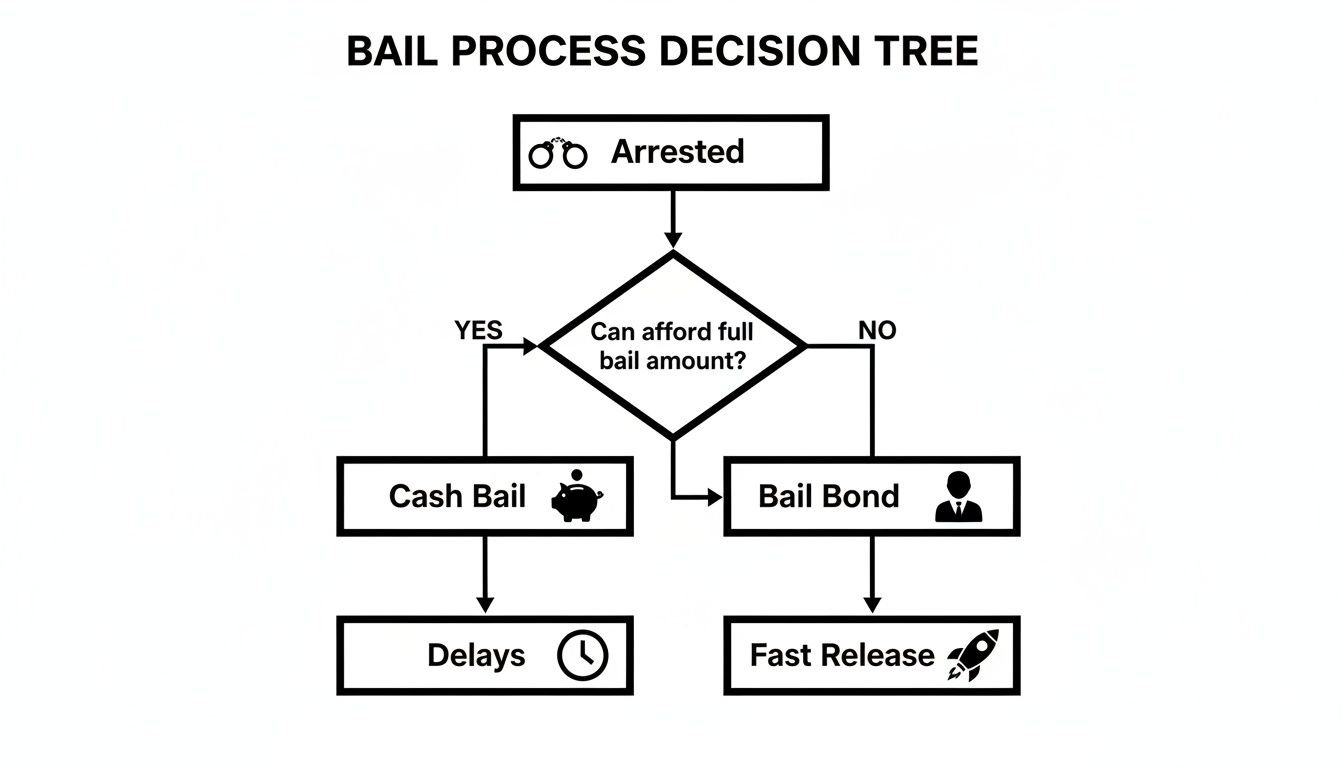
As you can see, the path through a bail agent is built for speed. It's designed to cut through the red tape and get someone released quickly, avoiding the logistical headaches that often come with paying cash directly to the court.
Comparing Release Options in Colorado
To help you get a clear picture of what you might be facing, let’s dig into the details of the most common release options set by Colorado courts. Each one has its own rules, costs, and eligibility criteria.
The table below breaks down the key differences between a Personal Recognizance Bond, a Cash Bond, and the Surety Bonds we handle every day at Express Bail Bonds.
| Bond Type | Who Pays? | Cost to Defendant | When It's Used |
|---|---|---|---|
| Personal Recognizance (PR) | No one (Defendant signs a promise) | $0 upfront (but fees may apply later) | For low-level offenses when the judge believes the defendant is not a flight risk and has strong ties to the community. This is the best-case scenario, but it's not very common. |
| Cash Bond | Defendant or their family pays the court directly | The full bail amount in cash. If bail is $10,000, you pay $10,000. The money is returned (minus fees) after the case is over. | Often used for moderate offenses or when the judge wants to ensure the defendant has a significant financial stake in returning to court. Can be a huge financial burden for most families. |
| Surety Bond | A bail bond agent (like Express Bail Bonds) | A non-refundable premium, which is a small percentage (10-15%) of the full bail amount. We cover the rest. | This is the most common solution when a cash bond is unaffordable. It allows families to secure a release quickly for a fraction of the total bail amount, for nearly any type of charge. |
Simply put, a PR bond is an ideal but rare outcome. A cash bond requires a huge sum of money upfront. A surety bond, on the other hand, makes release accessible and affordable by letting you pay a small fraction of the total cost.
Important Distinctions to Know
Here are the key takeaways from the options above:
Personal Recognizance (PR) Bond: This is the one everyone hopes for. The defendant is released based on their signature—a written promise to show up for their court dates. No money changes hands to get them out. Judges typically reserve PR bonds for people with minor charges and deep roots in the community, who they trust won't skip town.
Cash Bond: Just like it sounds, you have to pay the entire bail amount in cash (or a certified check) straight to the jail or court. If the judge sets bail at $10,000, you need to come up with all $10,000. While you get that money back once the case closes (minus court fees), tying up that much cash can be a massive financial strain.
Surety Bond: This is where we come in. Instead of paying the full bail amount, you pay a non-refundable fee, known as a premium, to Express Bail Bonds. That fee is just a percentage of the total bail. We then post a bond with the court for the full amount, guaranteeing the defendant's appearance. It’s the go-to solution when a cash bond is just too high to pay.
One critical thing to keep in mind: A judge can occasionally issue what's called a "cash-only" bond. In that specific situation, bail bond agencies are legally not allowed to help. The full amount must be paid in cash, directly to the court.
Understanding these differences is your first step. If you're trying to figure out the best way forward based on the bond that was set, our guide on how to bail someone out of jail in Colorado offers even more detail. Our team is here 24/7 to walk you through your options and give you the immediate support you need. Contact Express Bail Bonds for immediate help.
What Happens if a Court Date Is Missed
When someone is released from jail, they have one primary legal obligation: show up for every single court date. Failing to appear has serious consequences, but the financial fallout looks very different depending on whether you paid cash bail or used a bail bond.
This is arguably one of the most critical distinctions between the two.
If you paid the full cash bail directly to the court, the outcome is financially devastating. The court will forfeit the entire amount. That means if the bail was $20,000, you’ve just lost $20,000. It's gone for good.
The Impact of a Failure to Appear
As soon as that court date is missed, the judge takes immediate action. This sets off a chain reaction with two major consequences for everyone involved.
- Bench Warrant Issued: The judge issues a warrant for the defendant's immediate re-arrest.
- Bail Forfeiture: The money—whether it's the cash you paid or the bond we posted—is forfeited to the court.
Now, if you used a bail bond, the accountability shifts. The bail agency is now on the hook for paying the full bail amount to the court. Of course, the agency will then turn to the cosigner (the indemnitor), who is legally and financially responsible for covering that debt. You can learn more about the specifics of what happens if you miss court and the legal trouble that follows.
The real difference here is the built-in accountability that comes with a bail bond. A professional agency has a powerful financial incentive to make sure the defendant gets to court, which protects both the court system and the family who cosigned.
This proactive support is a benefit that people often overlook when choosing between bail and a bond. A good bail agent doesn't just post the money and walk away. At Express Bail Bonds, for example, we send reminders and stay in contact with the defendant and their family to make sure everyone knows their obligations. It’s a support system designed to prevent these exact kinds of problems.
It's also interesting to note that the common-sense idea that having your own money on the line guarantees an appearance isn't always true. Some research has shown that defendants released on cash bail can actually have lower appearance rates than those on unsecured bonds. This suggests that just having a financial stake isn't the most effective way to ensure people show up. You can read the full research about bail reform findings if you want to dig into the data.
If you’re looking for a partner who will help you navigate the process and manage court responsibilities, contact Express Bail Bonds. Our professional support provides a layer of security that goes far beyond a simple financial transaction.
Your Action Plan After an Arrest
Getting that phone call is one of the most stressful moments anyone can face. Your mind races, and it's easy to feel panicked and powerless. But what you do in those first few minutes can make a huge difference.
Here’s a straightforward, step-by-step guide to help you act quickly and effectively, ensuring you’re doing everything possible to get your loved one home.

First Crucial Steps to Take
Before you do anything else, take a deep breath. Clear thinking is your best asset right now. Focus on gathering a few key details—the more information you have, the faster we can help.
Gather Key Information: First, you’ll need the defendant's full legal name and their date of birth. You'll also need to know which jail or detention center is holding them. If you're not sure where they are, don't worry; we can usually track that down for you.
Contact a Licensed Bail Agent: Your next move should be to call a professional. An experienced agent can immediately look up the charges, confirm the bail amount, and walk you through the difference between bail and bond for this specific situation. This call will give you a clear picture of the exact costs involved.
Understand the Cosigner's Role: To get a bail bond, someone needs to step up as the cosigner (also called an indemnitor). This person takes on the financial responsibility to guarantee the defendant shows up for their court dates. Our agent will explain exactly what this entails before you sign anything.
Prepare for Release: Once the bond is posted, the jail starts its own release process. This isn't instant; it can take anywhere from 30 minutes to several hours, depending on how busy the facility is. Use this time to figure out transportation and make sure your loved one knows about their upcoming court obligations.
The legal system is confusing and intimidating, even on a good day. Trying to navigate it alone, especially when you're under immense pressure, can lead to expensive mistakes and unnecessary delays. Your best first step is always to call an expert for guidance.
This action plan is here to cut through the chaos and give you a clear path forward. You don't have to figure this out on your own. Call or text Express Bail Bonds 24/7 at 720-984-2245 for immediate, confidential help. Let our experienced team handle the process so you can focus on supporting your family.
Frequently Asked Questions About Bail and Bonds
When you get that dreaded phone call, a million questions start racing through your mind. We get it. Our agents talk to families every single day, and we hear the same concerns time and time again.
Here are straightforward answers to the questions we're asked most often. Getting clear on these points can help you feel more in control during a stressful time.
Is the Bail Bond Premium Refundable?
The short answer is no. Think of the premium not as a deposit, but as a one-time fee for a critical service.
This fee compensates the bondsman for taking on the full financial risk of the bail amount with the court. It also covers the work involved in navigating the system—handling the paperwork, coordinating with the jail, and being available 24/7 to get your loved one out fast.
How Long Will It Take to Get Released?
Our part is incredibly fast. Once you're in our office or on the phone with us, we can typically have all the paperwork done and the bond posted in less than 30 minutes.
From there, the timeline is in the jail's hands. The detention center has its own release process, and how long that takes can vary from an hour to several hours, depending entirely on how busy they are at that moment.
What if I Can't Afford the Full Premium?
An arrest is almost never planned, and the cost can be a real shock. If paying the full premium upfront is a hardship, please tell us. We're here to work with you.
We often set up flexible payment plans for qualified cosigners, breaking the cost down into more manageable payments. For very large bonds, we can sometimes offer a reduced premium rate to make it possible to bring your family member home.
Will I Need to Provide Collateral?
Probably not. The vast majority of the bonds we write don't require any collateral at all. For most situations, the signature of a responsible cosigner is all the guarantee we need.
Collateral, like a car title or property, typically only comes into play for exceptionally large bail amounts or in cases where the court has deemed the defendant a significant flight risk. For the average person, a signature is enough.
Figuring out the bail process is overwhelming, but you aren't in this by yourself. The experienced team at Express Bail Bonds is standing by 24/7 to answer your questions and get to work immediately. If you need help getting someone released anywhere in Colorado, visit our website or call us right now.