
That phone call usually comes fast and makes no sense at first. A loved one says they've been arrested, they're in a Colorado jail, and they need help now. You're trying to catch the name of the facility, the charge, whether bail has been set, and what you're supposed to do next.
Panic slows people down. Clear steps speed things up. When families search for get out fast bail bonds, what they usually need isn't theory. They need the shortest path from arrest to release, without wasted trips, missing paperwork, or bad information.
The Call from Jail and Your Path to a Quick Release
A lot of families think they're the only ones dealing with this. They aren't. On any given day in the U.S., nearly two-thirds of the 731,000 people in local jails are unconvicted pretrial detainees, and over 476,000 are there because they can't afford bail, according to Civil Rights Corps data on pretrial detention and local jails.

That matters for one reason. This is a routine emergency, not an impossible one. Jails, courts, clerks, and bondsmen handle this every day. The families who get someone out faster usually do three things well. They stay calm, they collect the right details, and they use a process built for speed.
What the call usually sounds like
The person in custody often doesn't know much yet. They may not know the bond amount. They may not even know the exact charge wording. Sometimes all they can tell you is the jail, or that they were picked up in Denver, Jefferson, Arapahoe, or another county.
That's enough to start.
Practical rule: Don't spend the first hour arguing about what happened. Spend it confirming who has custody, whether bail has been set, and who can sign as cosigner if needed.
A professional surety bond is often the quickest workable route when the court sets an amount the family can't pay in full. It turns a chaotic problem into a series of tasks. Verify booking. Complete the application. Sign documents. Post the bond. Wait for jail processing.
If you need the full release path laid out in plain terms, the 24-hour booking and release guide is a useful place to start.
What helps right away
The family member who stays organized should take point. That person should keep a running note with:
- Full legal name of the person in custody
- Date of birth if available
- Jail or county holding them
- Booking number if anyone has it
- Any court-set bail amount you've been told
- Your own contact details as potential cosigner
The goal isn't to know everything immediately. The goal is to know enough to move.
Your First Moves After a Colorado Arrest
The first phase is not payment. It's intel gathering.
In an expert bail workflow, the first step is immediate information collection in the first 0 to 30 minutes after arrest, and incomplete information can delay over 65% of cases by two hours or more, according to this breakdown of fast-release bail workflow and common delays.
Gather these details first
Start with the items that enable the rest of the process:
Full legal name
Nicknames create problems. Use the exact legal name if you know it.Booking number
This is one of the fastest ways to confirm the person in custody.Jail location
County matters in Colorado. A Denver arrest can lead to one process. Jefferson County or Arapahoe can move differently.Date of birth
This helps separate your loved one from anyone with a similar name.Basic charge information
You don't need a full legal analysis. You just need enough to confirm the case and bond status.
Where families lose time
The most common mistake is acting on half-correct information. A relative hears “Jeffco,” another person says “Denver,” and someone else spells the last name wrong. That kind of confusion burns time fast.
If you don't have the booking number yet, don't freeze. Confirm the jail first. Then verify the full name and date of birth carefully.
If the person was arrested recently, there may be a short lag before the jail system updates. Keep your notes tight and be ready to call or search again.
What to do in the next hour
Use a simple checklist:
- Confirm custody location before calling around
- Write down names exactly as they appear in records
- Keep one family contact handling communication
- Save screenshots or notes from inmate locator results
- Stop duplicate efforts so three people aren't giving three versions of the story
For a plain-English overview of the process after an arrest, this page on what happens after you get arrested can help you understand what the jail and court are doing while you're gathering details.
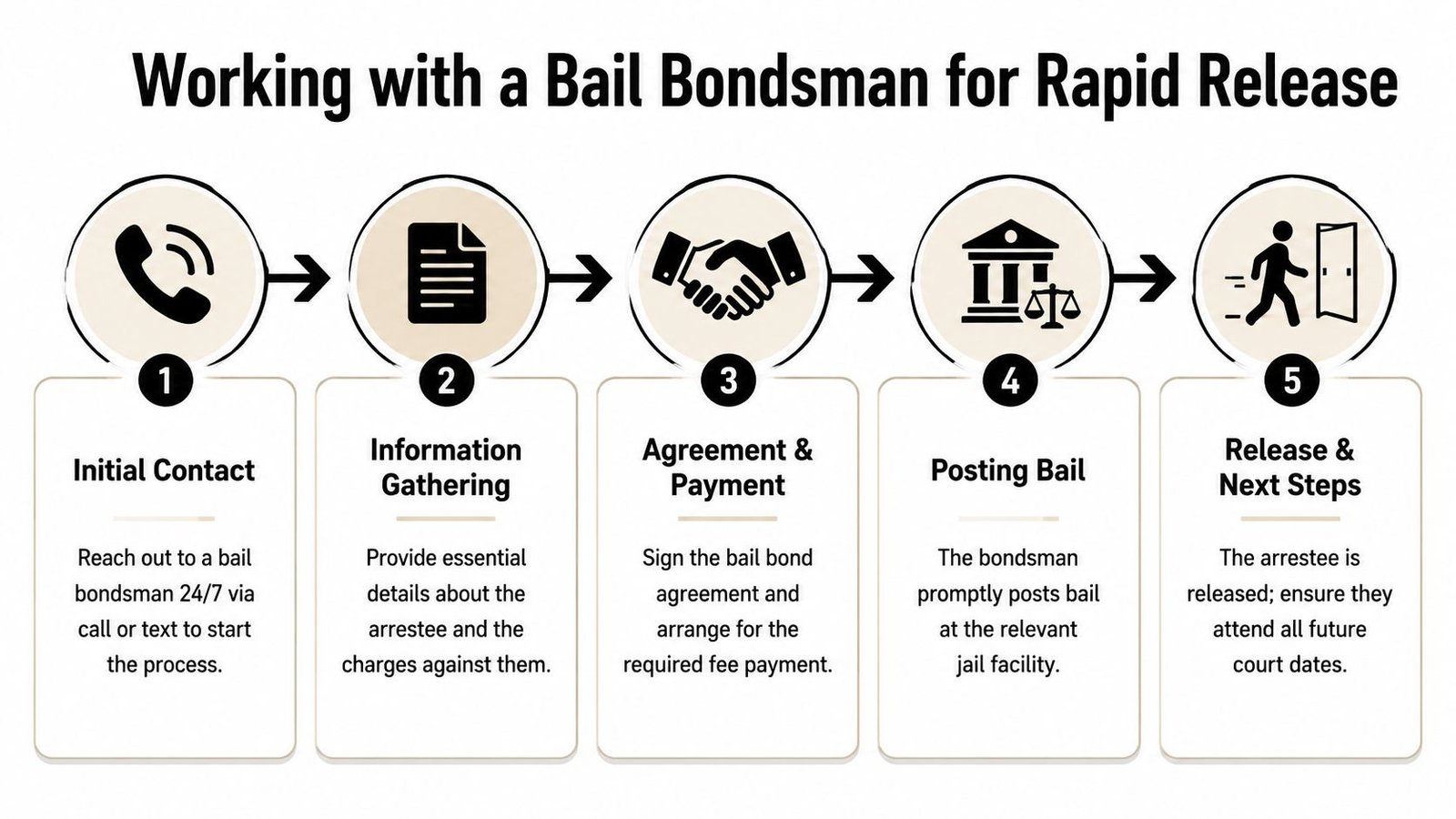
Working with a Bail Bondsman for Rapid Release
At this stage, the goal is simple. Get the bond approved, signed, and posted without creating a new delay.
In Colorado, the fastest cases usually move through remote processing. A bondsman can take the application by phone, send the indemnity agreement by text or email, collect signatures electronically, and accept payment without requiring the family to drive across town in the middle of the night. That matters in Denver, Arapahoe, Douglas, Jefferson, and Adams County, where release speed often depends on how fast the paperwork reaches the jail and whether the file is complete the first time.
What the first conversation should cover
A good bail call should feel organized, not rushed. The agent needs enough to locate the case, confirm the bond amount or bond type, screen the cosigner, and decide whether the bond can be posted immediately or only after the jail updates the booking.
Expect direct questions about:
- The defendant's full legal name
- Date of birth
- The jail or holding facility
- The bond amount or “no bond” status, if known
- The charges, if you have them
- Who will be the cosigner
- Whether the cosigner can sign and pay right away
If a family gives partial information, the file can stall while the bondsman verifies basics that should have been settled before the call. One clear point of contact helps. Three relatives calling with different spellings and different stories usually slows approval.
What the cosigner should have ready before the application starts
The cosigner, also called the indemnitor, is the person legally backing the bond. In practice, that person needs to be easy to verify and easy to reach. A shaky cosigner can stop a fast release cold, even when the bond amount itself is manageable.
Have these ready before you start:
- Government-issued photo ID
- Current address information
- Employer and income details, if requested
- A working phone number and email
- Debit card, credit card, or other approved payment method
- Any documents the agent asks for to confirm stability or identity
Express Bail Bonds offers electronic applications, signatures, and payments for Colorado cases. That is useful when the cosigner is at home, out of state, or trying to handle the bond after normal business hours.
For many families, the process works like this. The agent screens the bond, sends the contract package electronically, the cosigner signs from a phone, payment is processed, and the bond is posted once the jail is ready to accept it.
Here's a short overview of how this usually works in practice:
What actually speeds up release
Remote processing saves drive time, but paperwork quality is what really moves a case. Clean ID photos, exact names, matching dates of birth, a responsive cosigner, and signed documents returned quickly do more for release speed than repeated status calls.
I tell families the same thing every day. Slow answers cost time. So do unread emails, declined payment attempts, blurry license photos, and a cosigner who is still deciding whether to sign after the documents are already out.
If you want a plain-English explanation of the working relationship, this guide on how to use a bail bondsman lays out what the bondsman handles and what the cosigner is agreeing to.
Understanding Colorado Bail Bond Costs and Payments
Colorado families need one local rule explained clearly. The standard bail bond premium is 15%, and it's often reducible to 10% for bonds over $5,000 when there's an approved cosigner, according to this Colorado-focused explanation of bail bond premiums.
That premium is the fee for the surety bond. It is non-refundable. It is not the same as paying the full cash bail amount directly to the court.
What that means in real terms
If the court sets a $10,000 bond, the standard Colorado premium would typically be $1,500. If that bond is over $5,000 and the cosigner qualifies for the reduced rate, the premium may be $1,000.
That difference is why many families use surety bonds instead of trying to come up with the full amount at once.
| Bail amount set by court | Standard Colorado premium | Possible reduced premium with approved cosigner |
|---|---|---|
| $10,000 | $1,500 | $1,000 |
The trade-off families should understand
Paying cash directly to the court can make sense for some people. But it requires access to the entire bail amount immediately. Many families don't have that kind of liquidity during an overnight arrest, a weekend booking, or a sudden out-of-county hold.
A surety bond lowers the up-front cash burden, but the premium is the cost of getting that faster access to release.
Ask two questions before you agree to anything. What is the exact premium, and what does the cosigner have to provide today to keep the bond moving?
Payment and paperwork
What matters most is whether the agency can handle signatures and payment without forcing unnecessary travel. Electronic paperwork and remote payment options usually move better than a process that depends on office hours or in-person handoff.
If you need a breakdown of typical methods and what families are usually asked for, review the bail bond payment options page before you commit.
Navigating Common Delays and Colorado Jail Timelines
The bond itself is only part of the timeline. After posting, the jail still has to process the release. That's where families often get frustrated, because the bond can be done and the person still isn't walking out yet.
Colorado's move toward digital filing has changed that in a useful way. According to this discussion of Colorado electronic surety processing, state judicial data from 2025 showed that electronic surety bonds are processed 40% faster, averaging 2-4 hours, compared with in-person paper filings that can take 8 hours or more.
What usually causes the holdup
Most delays come from one of four places:
Bad or incomplete information
Wrong names, missing booking numbers, or unsigned documents stop the file cold.Timing problems
Late-night arrests, weekends, and holiday staffing can slow internal jail release steps.Administrative holds
Another county, another case, or another agency may need to clear the person before release.Paper-based processing
If someone insists on doing everything in person, the process can drag.
Estimated Jail Release Times in Major Colorado Counties
These are practical planning ranges based on the Colorado electronic processing data above and typical county variation. Actual release still depends on booking load, staffing, and whether the inmate has any other holds.
| County Jail | Average Release Time (Post-Bonding) |
|---|---|
| Denver County Jail | 2-4 hours |
| Jefferson County Jail | 2-4 hours |
| Arapahoe County Jail | 2-4 hours |
| El Paso County Jail | Can run longer during heavy processing periods |
| Weld County Jail | Can vary based on intake and release volume |
Families in Golden and surrounding areas often want county-specific help. The Jefferson County bail bond page is the relevant local resource if the arrest happened there.
What actually helps
A calm, complete file beats a rushed, sloppy file every time. If the cosigner sends readable ID, signs quickly, and answers the phone when the agent calls back, the bond moves. If three relatives keep changing the plan, it slows down.
Don't promise the person in custody an exact walkout minute. Give them a window, then let the jail finish its release work.
If you want a clearer sense of what happens after posting, this page on how long bail takes to process gives a practical overview.
Frequently Asked Questions About Colorado Bail Bonds
A family member calls from jail, everyone starts talking at once, and the same questions come up every time. Here are the straight answers that help you make the next decision without slowing the release down.
Can someone always get out on a bail bond
No. A person can still be held if another county placed a hold, if there is an immigration or probation issue, or if the court added conditions the jail has to clear before release. In Colorado, that gap between “bond posted” and “walked out” causes a lot of confusion for families.
Ask one direct question before you expect a pickup time. “Are there any other holds or release conditions besides this bond?” That answer saves hours of guessing.
What happens if the defendant misses court
The court can issue a warrant and start bond forfeiture. That puts the defendant in a worse position and can leave the cosigner responsible under the bond paperwork.
Treat every court date like a deadline that cannot move unless the court says so in writing. Put it in the phone calendar, write it down at home, and make sure the defendant knows the date, time, courtroom, and county.
Is paying the premium the same as paying bail
No. The premium is the fee paid to the bond company for writing the surety bond. Cash bail is the full bond amount paid directly to the court or jail.
The right choice depends on what the family can do today. Cash bail may tie up a large amount of money. A surety bond usually lowers the upfront out-of-pocket cost, but it requires a qualified cosigner and completed paperwork.
Can an out-of-state family member cosign
Often, yes. Colorado bond paperwork can usually be handled remotely if the cosigner can provide valid ID, respond quickly, and sign documents electronically.
This helps in real cases. A sister in Texas or a parent in Wyoming may be able to cosign without driving to Denver, Arapahoe, or Jefferson County in the middle of the night. The key is speed and accuracy. If the ID photo is blurry, the phone keeps going to voicemail, or the signer hesitates after the paperwork is sent, the file stalls.
What should I do right now if I'm holding this together for the family
Start a clean file. Write down the defendant's full legal name, date of birth, jail location, booking number if available, and the name and contact information of the one person who will cosign.
Keep one family member in charge of calls and texts. That avoids conflicting instructions and repeated delays. If Express Bail Bonds is handling the bond, send documents back fast, make sure every signature is complete, and answer the phone when the agent calls. Families lose time when three relatives debate payment, someone sends the wrong ID, or the cosigner disappears for an hour.
Fast release work is usually simple. One decision-maker, correct information, signed documents, and patience while the jail finishes its own release process.