
The call usually comes at the worst time. Late at night. Early before work. In the middle of dinner. A family member says they’ve been arrested, they don’t know what happens next, and suddenly you’re trying to make decisions while you’re still processing the shock.
That’s where a bail bond application needs to feel simple, not intimidating. If you know what information to gather, what the bond company is checking, and what can slow things down, you can move much faster. In Colorado, a lot of that can now be handled electronically, which matters when every hour in custody feels longer than it should.
First Steps After an Arrest What Happens Now
A bail bond exists to secure someone’s release while their case moves through court. The court sets a bond amount. If the family can’t post the full amount directly, a licensed surety agent can post the bond for them in exchange for a premium.
That arrangement is a standard part of a large U.S. system. The industry reached about $3.5 billion in revenue in 2026, and in Colorado the standard model is a 15% premium, often reduced to 10% for bonds over $5,000 with an approved cosigner, according to IBISWorld’s bail bond industry profile.
Focus on the immediate questions
When a family first calls, the same questions come up fast:
- Where is the person being held: You need the jail or detention center.
- Has bond been set: If not, you may need to wait for advisement or a judge’s order.
- What kind of bond is it: Surety, cash-only, or another form.
- Who can sign: The right cosigner can move things along.
If you’re still trying to understand the early legal steps, what happens after you get arrested in Colorado gives a useful overview of the sequence from booking to release.
The first mistake families make is trying to solve everything at once. Start with location, bond amount, and bond type. Those three details shape every next step.
What helps and what slows things down
What helps is calm, accurate information. A full legal name, date of birth, and jail location can save a lot of back-and-forth.
What doesn’t help is guessing. If the charge, booking number, or bond type is wrong, the application can stall before it really begins. That’s why the fastest bail bond application usually starts with a quick fact check before any paperwork is signed.
Gathering Your Essential Documents and Information
Most delays happen before the form is even submitted. Families are ready to act, but they’re missing one item the agent needs to underwrite the bond or verify identity.
Getting organized first makes the process cleaner. It also reduces the chance that a cosigner has to stop midway through the application to dig up pay stubs, photo ID, or employment details.
What you need about the defendant
Start with the person in custody. The core information usually includes:
- Full legal name: Use the name the jail will have on file.
- Date of birth: This helps avoid mistakes when names are common.
- Booking number: If you have it, the search goes faster.
- Jail location: County and facility matter.
- Charges and bond amount: These affect eligibility and underwriting.
Then gather anything else that helps show stability, such as employment, residence, and family ties. That information often becomes relevant during review.
What the cosigner should have ready
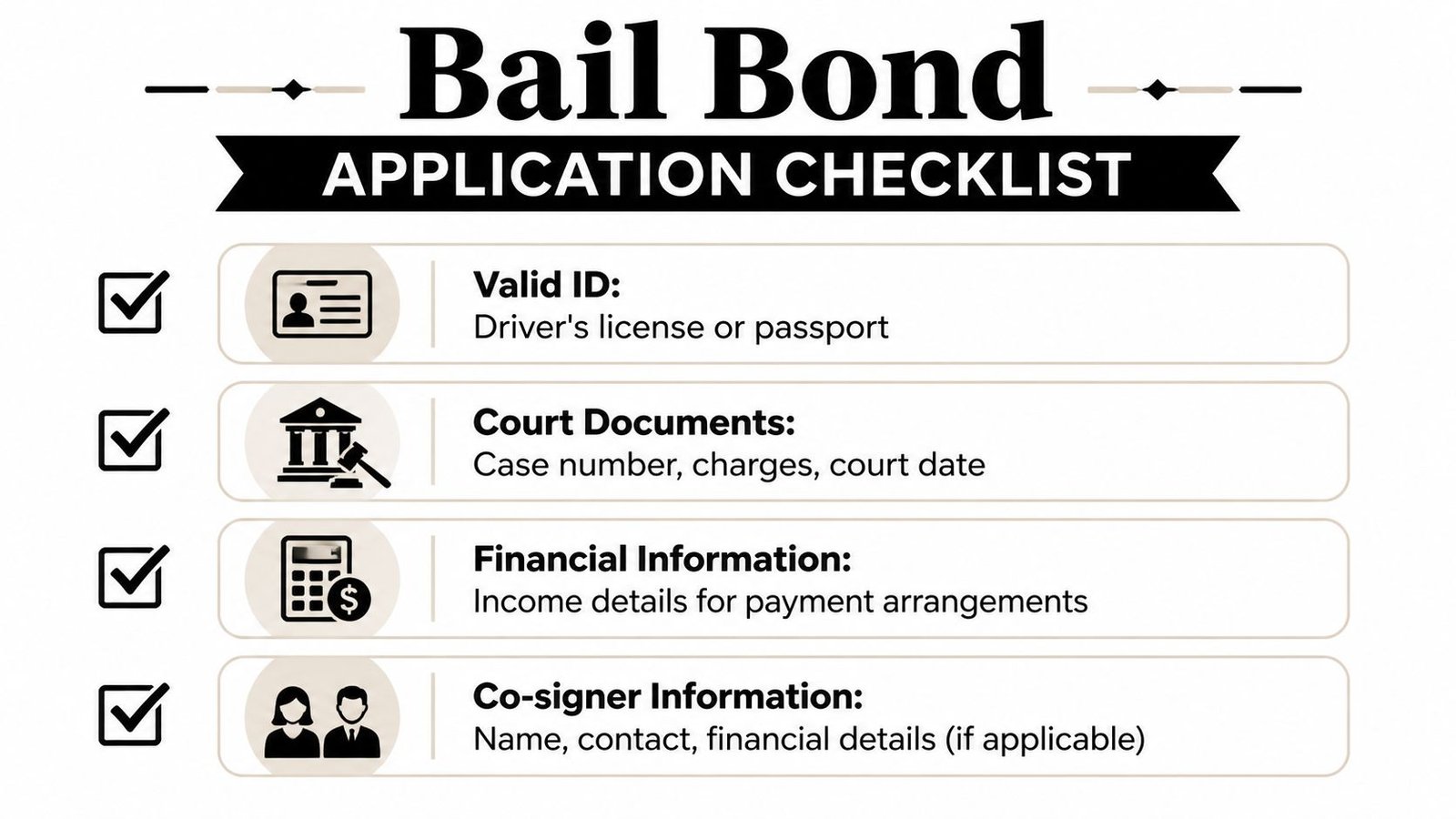
The cosigner is the financial backer, so their information matters just as much. In most cases, have these ready before you start:
- Valid photo ID: Driver’s license or passport.
- Social Security number: Often needed for identity and credit review.
- Proof of income: Pay stubs, benefits statement, or other income records.
- Employment information: Employer name, role, and length of employment.
- Proof of address: Especially useful if residence history is part of review.
- Banking or asset details if requested: This depends on bond size and risk.
A lot of people don’t realize that out-of-state family members can often complete this process remotely. That matters because a major information gap online involves remote cosigners, even though 30% to 40% of bonds can fail due to inadequate cosigners, and in Colorado a 15% premium can be reduced to 10% with a qualified cosigner, with electronic financial documents and indemnity agreements submitted from anywhere, as noted in this out-of-state cosigner guidance reference.
A simple preparation rule
If you want the application to move quickly, gather documents in one folder on your phone before you call or start the online form.
A practical checklist looks like this:
| Item | Why it matters |
|---|---|
| Defendant identity details | Prevents booking errors |
| Jail and bond information | Confirms the bond can be written |
| Cosigner ID | Verifies signer identity |
| Income and employment records | Supports financial review |
| Address and contact details | Helps complete contracts correctly |
If you’re preparing for court-related logistics too, what to bring to court in Colorado can help you keep the next stage organized.
Preparation rule: The fastest applications come from families who upload clear documents the first time. Blurry photos, cropped IDs, and missing pages create avoidable delays.
Completing the Colorado Bail Bond Application Form
The actual application is usually more straightforward than families expect. It feels less like a legal exam and more like a risk review. The bond company is deciding whether it can responsibly guarantee the full amount to the court.
That’s why the questions aren’t random. They’re trying to answer three things. Who the defendant is, who is financially backing the bond, and how likely the defendant is to return to court.
Defendant details on the form
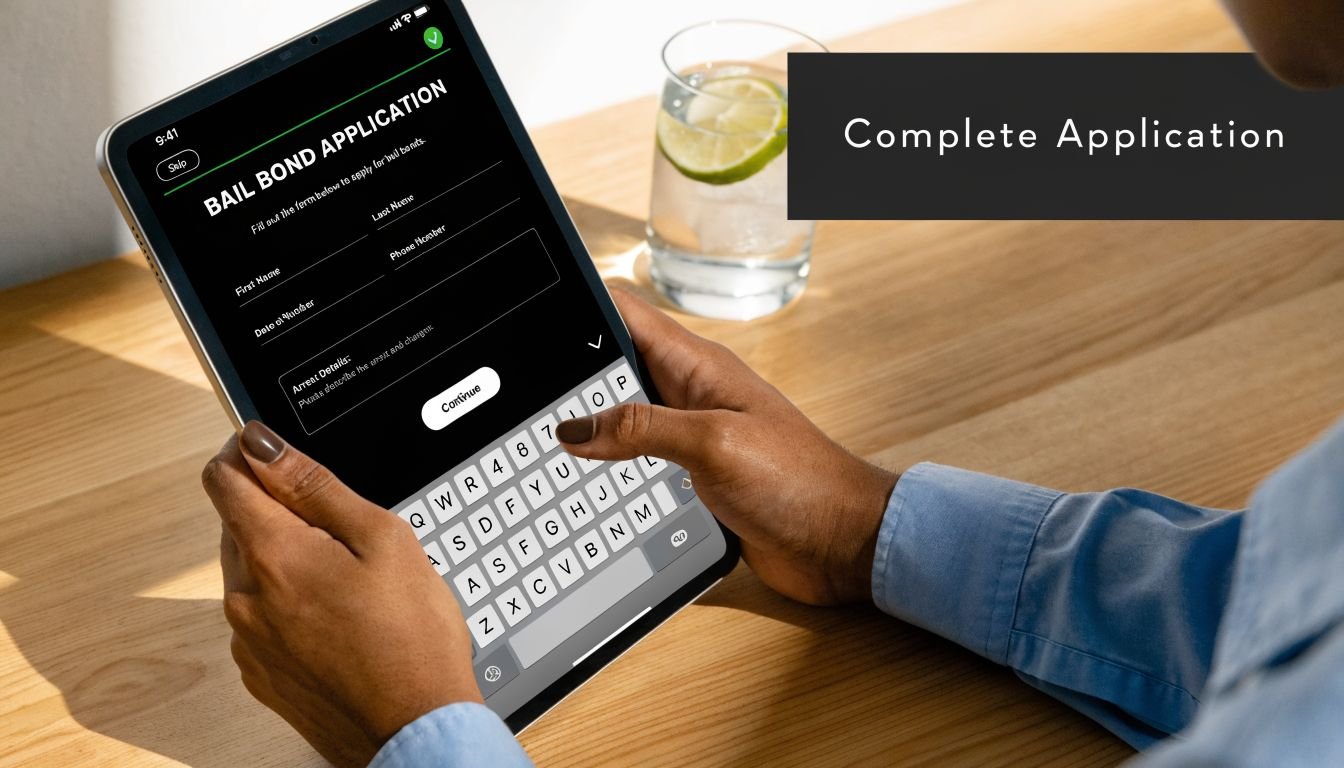
The first section usually asks for identity and case information. Expect fields such as full name, date of birth, jail location, charges, booking number, and bond amount.
From there, the form often asks about practical life details. Address history, employment, family in the area, and local ties all matter because they help the agent assess whether the person is likely to remain available for court.
According to this step-by-step bail bond application guide, community ties matter in risk assessment, and homeownership boosts approval by 20% to 30%. The same source notes that incomplete financial documents cause 40% of delays, while automated underwriting can produce approvals in as little as 2 hours.
Cosigner and financial responsibility
The next part is where many first-time applicants slow down. The cosigner isn’t just entering payment details. They’re agreeing to indemnify the bond.
That means the form may ask about:
- Income and employment history
- Current residence
- Relationship to the defendant
- Assets or collateral if required
- Prior experience cosigning for anyone else
Some families get uncomfortable here because it feels personal. But this is standard underwriting. If the bond company is posting a large surety bond, it has to know who is standing behind that obligation.
If a cosigner hesitates to disclose basic financial information, the problem usually isn’t the form. It’s that they may not be the right signer for the bond.
Why electronic submission works better
The old in-person model forced families to drive to an office, print paperwork, wait for signatures, then send someone else to the jail. That still happens in some places, but it’s slower and harder on everyone.
Remote applications work better when the agency accepts phone uploads, electronic signatures, and digital contracts. That lets an out-of-state parent, spouse, or sibling complete their part without traveling across Colorado or flying in from another state.
Three habits make electronic filing go smoothly:
Upload complete documents
Don’t send just the front of an ID if the back is required. Don’t cut off corners or expiration dates.Answer every field carefully
Small mismatches matter. A wrong apartment number or employer name can trigger extra verification.Stay available after submitting
Underwriters often need one or two follow-up answers. Fast replies keep the process moving.
If you want a plain-English explanation of how a bondsman works in practice, how to use a bail bondsman in Colorado is worth reading before you sign.
What usually causes problems
The application itself rarely fails because it is “too hard.” It fails because the supporting information doesn’t line up.
Common trouble spots include:
- Missing financial documents
- An unavailable cosigner
- Unclear bond type
- Rushed answers that don’t match jail records
A clean application is not the one submitted fastest. It’s the one submitted accurately.
Explaining Bail Bond Costs Premiums and Collateral
This is the question families ask first, even when they feel awkward asking it. That’s understandable. You need to know what you’re committing to before anyone signs.
In Colorado, the premium follows state guidelines. The source material provided here states that the premium is typically 10% minimum and capped at 15% in regulated states like Colorado, and for a $50,000 bond, the standard 15% premium equals $7,500, according to this 2025 beginner’s guide to bail bonds.
Premium means the fee for the bond service
The premium is what you pay the surety company or agent for posting the bond. It is not the full bond amount. The company is taking on the obligation to the court, and the premium is the charge for that service.
Important: The premium is generally non-refundable. It is the fee for writing and posting the bond, not a deposit held for later return.
For a simple example, if bail is set at $50,000, a standard 15% premium would be $7,500 under the state guideline described in the source above.
When collateral may come into play
Collateral is different from the premium. Collateral is additional security the bond company may require on larger or riskier bonds.
That can include property, a vehicle title, or other assets. Whether collateral is required depends on the facts of the case, the defendant’s record, the bond amount, and the strength of the cosigner.
Here's a practical perspective:
| Cost element | What it does |
|---|---|
| Premium | Pays for the bond service |
| Collateral | Secures the bond company against loss |
| Payment arrangement | Sets how the premium will be handled |
The speed trade-off families should understand
Remote processing can change the release timeline in a meaningful way. The source above states that remote app processing can cut release time by 50%, from over 8 hours to 2 to 4 hours in some cases.
That doesn’t mean every jail releases on the same schedule. It means the paperwork side can move faster when documents, signatures, and payment arrangements are handled electronically instead of in person.
If you want a Colorado-specific breakdown of fee structure, how much a bail bond costs gives a practical overview.
The Critical Role of a Bail Bond Cosigner
A strong cosigner does more than help pay for the bond. They give the application credibility. They show the bond company that someone stable, reachable, and responsible is willing to stand behind the defendant.
That’s why the right cosigner can make the difference between a clean approval and a stalled file.
What the cosigner is really agreeing to
A cosigner’s main job is to help ensure the defendant appears for court and follows bond conditions. If the defendant disappears, misses court, or violates terms in a way that causes forfeiture, the cosigner can face serious financial consequences.
This isn’t symbolic paperwork. It’s a legal obligation tied to the full bond.
The role also works. Defendants using professional bail bonds are 20% more likely to attend required court hearings than those released on their own recognizance, according to this industry facts summary on bail bond compliance. The source attributes that advantage to the cosigner’s financial stake and the accountability it creates.
Who makes a good cosigner
Not every willing relative is the right fit. The best cosigner is usually someone who:
- Knows the defendant well
- Answers the phone consistently
- Has stable income or assets
- Will take court dates seriously
- Can step in early if warning signs appear
A weak cosigner often creates problems later. They may mean well, but if they can’t stay involved, the bond becomes harder to manage.
A good cosigner doesn’t just trust the defendant. They’re willing to hold the defendant accountable.
If someone is considering this responsibility and wants more detail, what a bail bond cosigner is responsible for is a useful reference. For local contact context, families also often look up a nearby office through this Colorado bail bond location listing.
Post-Submission What to Expect and Next Steps
After the bail bond application is submitted, the waiting starts. This is the part that feels longest because the family has done its part and now wants to know when release happens.
The sequence is usually straightforward. The agent reviews the file, confirms the bond can be posted, gets signatures finalized, and files the bond with the jail or court. After that, release timing is mostly in the hands of the detention facility.

Jail processing varies by county
Even when the bond is posted quickly, jails don’t all release people at the same pace. Staffing, shift changes, medical clearance, property return, and internal booking queues all affect timing.
That’s why county-specific information matters. If someone is held in Golden, Jefferson County bail bond details can help you understand the local detention process. If the case is tied to Centennial or the Arapahoe area, Centennial bail bond information is often the better reference.
What the defendant should do after release
Release is not the end of the problem. It’s the start of compliance.
The defendant should:
- Read all paperwork before leaving
- Confirm every court date
- Save the agent’s contact information
- Follow any check-in or travel instructions
- Report problems early, not after a missed hearing
One issue that confuses families is the cash-only bond. A surety agency can’t post that type of bond. The source material states that in major Colorado markets such as Denver and Arapahoe counties, cash-only bonds made up 20% of felony postings post-2025 reforms, and the practical next step is to pay the court directly or request a hearing to seek conversion of the bond type, as described in this cash-only bond discussion.
If the bond is cash-only, don’t keep calling surety agencies hoping for a different answer. Confirm the court procedure immediately and ask whether a hearing can change the bond type.
Frequently Asked Questions About Bail Bond Applications
What if the defendant misses court by accident
Call the bail agent immediately. Don’t wait and hope it resolves on its own. In many cases, fast communication gives the best chance to explain what happened and respond before the situation gets worse.
Can someone get approved with weak credit
Sometimes, yes. Credit matters, but it usually isn’t the only issue. The bond company may look at the whole picture, including employment, relationship to the defendant, available collateral, and whether another cosigner would make the file stronger.
How long does release really take after the bond is posted
There isn’t one answer that fits every jail. Some releases move fast. Others take longer because of jail processing, shift changes, or internal release procedures. The paperwork may be done, but the facility still controls the physical release.
Can out-of-state relatives cosign
In many cases they can, if they can provide the needed documents and complete remote signing. The key is being reachable, organized, and prepared to submit everything electronically.
What if the bond is declined
Ask why. Sometimes the issue is fixable. The company may need a stronger cosigner, better documentation, or more clarity on the defendant’s situation. If the bond is cash-only, the solution is different and usually involves the court rather than a surety bond company.
If you want a local point of contact while sorting out those questions, many families also check this Colorado office listing.
If you need fast, clear help with a Colorado bail bond application, contact Express Bail Bonds. They serve detention facilities statewide, handle electronic applications, documents, and signatures remotely, and can help families move from confusion to action without wasting hours on an in-person process.