
A late-night arrest turns a family into phone operators, record keepers, and money managers all at once. One person is trying to calm the house, someone else is calling detention centers, and nobody is sure whether they need a county bondsman, a federal hearing, or just a better explanation of what comes next.
That's where federation bail bonds usually enters the search box. People typing that phrase are really trying to answer a simple question, can a licensed bail agent help here, or is this a federal case with a different release process entirely? The answer matters because the wrong assumption wastes precious time, and time is the one thing families don't feel they have.
A useful way to think about a bail bond is like a financial promise to the court. The defendant is promising to show up, the court is setting conditions, and a surety bond is the outside guarantee that helps make release possible when a family can't pay full bail upfront. If you want a visual of how that financial promise works, the concept is laid out clearly in this define signature bond financial concept illustration.
For readers who've also seen military or federal-investigation terminology online, a plain-language resource like the UCMJ Lawyer Directory overview can help with the broader idea that not every arrest follows the same court path. The key is to separate the label from the process. Once you know who set the bond and which court controls release, the rest gets much easier to follow.
What a Bail Bond Actually Is and Why It Matters
A bail bond is not a free pass, and it's not a gift. It's a way to satisfy the court that the defendant will come back, even if the family can't write a full check for the bail amount that night.
The basic mechanics in plain English
Here's the part that gets mixed up most often. Bail is the amount the court says must be secured for release, while a surety bond is the contract that lets a licensed agent back that obligation for a fee. In the commercial bail system, the family usually pays a premium to the agent, the agent posts the bond, and the court gets the assurance it wants.
That's why the industry often works a bit like a co-signer on a loan. The agent takes on the risk that the defendant might miss court, so the family pays for that risk transfer instead of depositing the entire bail amount themselves. In federal and state settings alike, the key question is who is taking on the risk and under what conditions.
Practical rule: if you're being asked for a premium, you're usually dealing with a surety arrangement, not a cash bond.
The phrase federation bail bonds is often a search shortcut, not a formal legal term. People use it when they're unsure whether they need help with a state surety bond, a federal release, or both. That confusion is normal, especially at 3 a.m. when someone's trying to gather paperwork while another family member waits on hold.
A smart first step is to ask one direct question, “Is this a county case or a federal case?” That tells you whether you're dealing with a commercial bond in the ordinary sense, or a court-centered release process where financial surety may not even be the main tool. If you get that answer wrong, you can end up chasing the wrong paperwork and the wrong provider.
Federal Versus State Bail Bonds in Colorado
A Colorado family can get pulled into two very different systems, and the first step is telling which one they are standing in. If the arrest happened in a county jail, it is usually a state case, and a commercial surety agent can often help. If the case is in U.S. District Court, the release process follows a different framework, and the court uses risk-based rules rather than a preset money schedule, as described in the Congressional Research Service summary of the Bail Reform Act R40221.
Why the fork matters
The difference changes the whole job. In state court, families usually focus on the bond amount, the premium, and whether a local or statewide agent can post fast. In federal court, the judge or magistrate looks first at flight risk and community danger, then may order nonfinancial conditions such as drug testing, travel limits, or pretrial monitoring.
Federal release can also come with a longer list of conditions. A legal summary notes that the decision-maker has 14 possible conditions to choose from, including job-seeking requirements, educational participation, medical treatment, and curfew compliance, according to this federal bail guide. In practical terms, that means the paperwork can be about behavior and oversight, not only money. The Express Bail Bonds pretrial services guide cover helps show how those court conditions can fit into the bigger release process.

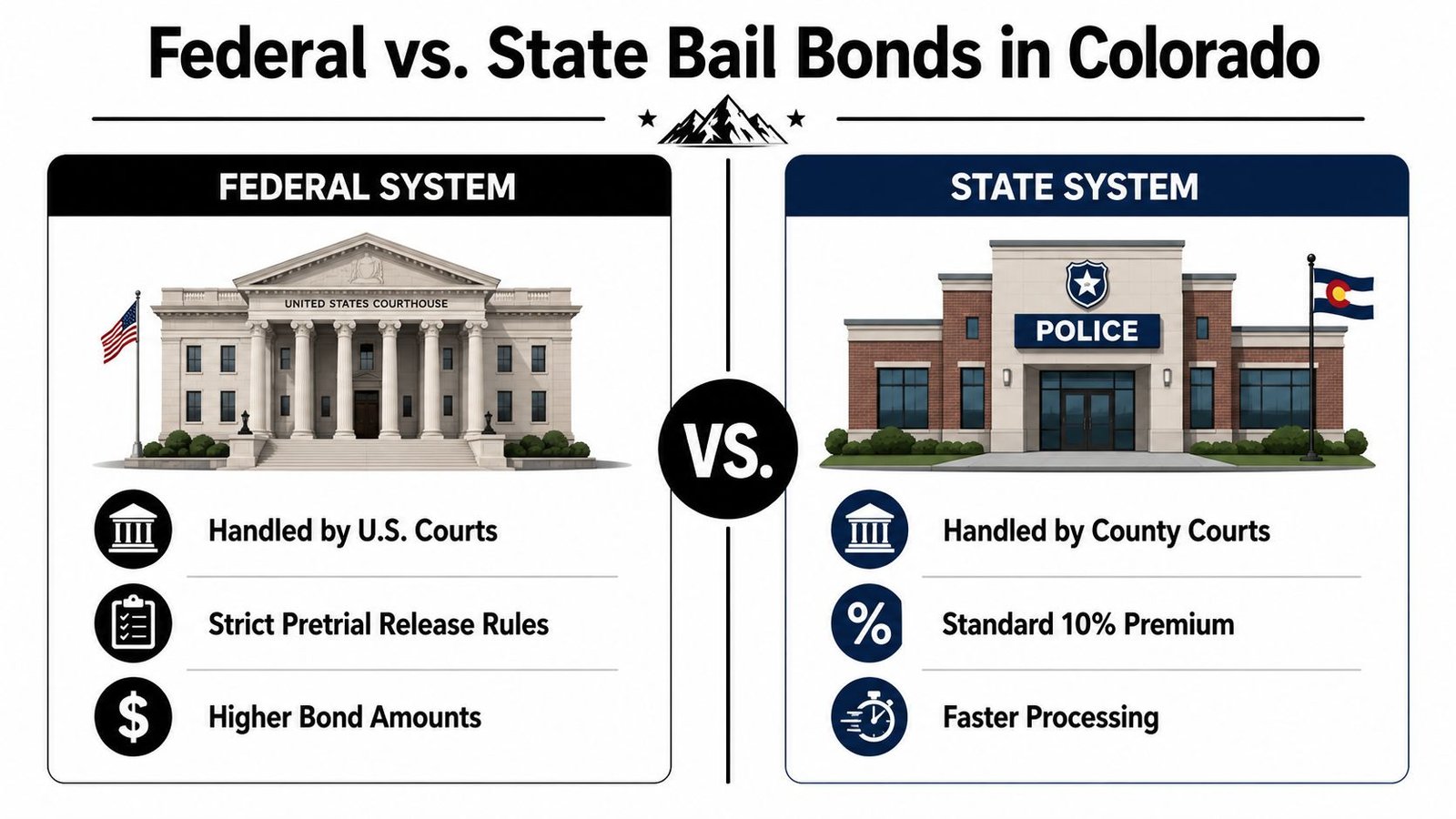
A lot of families assume “federal” automatically means “higher bail.” That is not always the right way to look at it. In many federal cases, the key question is whether the court will release the defendant under specific conditions, not whether a bondsman can be paid a premium. That is why commercial sureties are not a standard feature of federal criminal practice, as noted in the NCJRS abstract on bail bondsmen and federal courts.
The practical test is simple. If the hearing is in county court, you are usually looking at a local or statewide surety path. If the hearing is in federal court, ask the lawyer or clerk what release conditions the judge is considering before anyone starts shopping for a bond.
The Step-by-Step Release Process
The phone call usually starts the same way. Somebody says the defendant's name, someone else asks for the booking location, and the family tries to keep all the details straight while emotions are running hot. The fastest releases tend to happen when the caller has the defendant's full legal name, date of birth, and jail location ready before the conversation starts.
From the first call to the bond posting
A licensed agent will usually walk you through the application, the indemnity agreement, and the payment side in one pass. If collateral is needed, that comes into the conversation before the bond is posted, because the agent has to know what secures the risk and who is signing for it. If you're using a remote cosigner, electronic paperwork can save a lot of back-and-forth, which is why families often prefer a statewide agency that can handle signatures without forcing everyone into the same lobby.
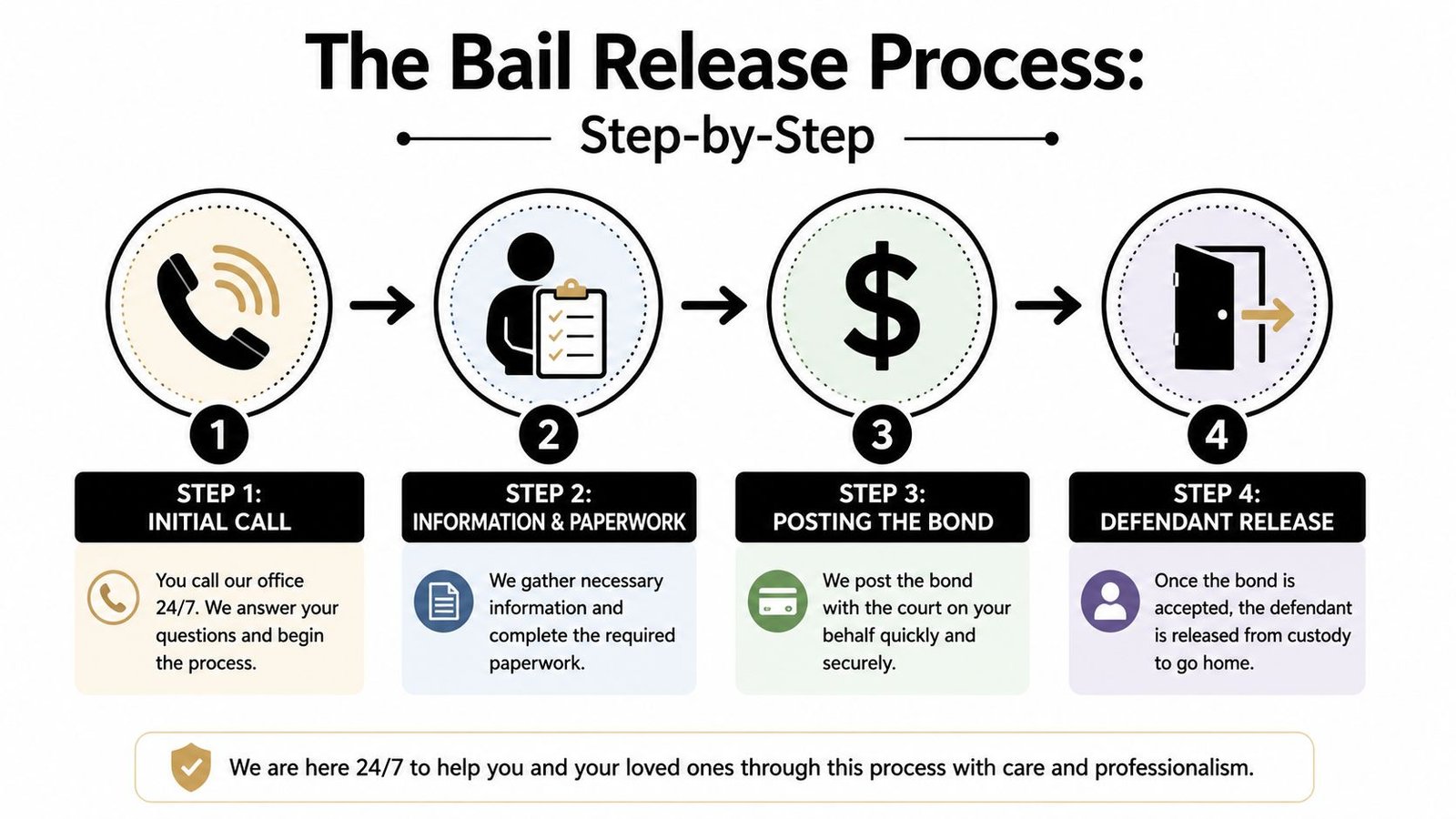
The sequence is straightforward once the facts are in hand.
- Initial call. Give the booking information and ask whether the case is state or federal.
- Paperwork. Complete the application, indemnity agreement, and any property or cosigner forms.
- Payment and collateral. Arrange the premium and, if required, the supporting assets.
- Posting and release. The agent posts the bond, then the jail processes the release.
The bond can be posted fast, but the jail still controls the actual walkout time.
That last part surprises families most. Posting the bond doesn't mean the door opens instantly. The detention facility has to run its release procedure, and that timing varies with the jail's workload and the case type.
A good example of how the paperwork is organized online can be seen in the Pueblo County jail inmate search guide, which shows how detention information and release steps often sit side by side. That's why a payment plan or cosigner readiness matters so much. If the family is still deciding who signs, the release clock slows down.

Fees, Premiums, and Hidden Costs You Should Plan For
A family usually hears the premium first, because that is the amount due to the bail agent to post the bond. In Colorado, the standard surety premium is 15% of the bond amount, and for bonds over $5,000 with an approved cosigner, some agencies can often secure 10% pricing. That difference matters because the premium is usually non-refundable once the bond is posted, even if the case later ends. Families who are already balancing work, travel, and jail calls need that number in front of them before they decide anything.
A real budgeting example
Take a $20,000 bond. At 15%, the premium would be $3,000. At 10%, the premium would be $2,000. That gap is the difference between covering the bond with one savings account or needing help from a relative, which is why the rate, the cosigner requirement, and any property collateral should be clear before anyone signs.
| Bond Amount | Premium at 15% | Premium at 10% (Bond Over $5,000 + Cosigner) | Typical Collateral Expectation |
|---|---|---|---|
| $10,000 | $1,500 | $1,000 | Often collateral or a strong cosigner may be requested |
| $20,000 | $3,000 | $2,000 | Collateral may be expected depending on underwriting |
| $50,000 | $7,500 | $5,000 | More scrutiny on assets and signer stability |
The collateral conversation can surprise families. A home does not automatically solve the problem, because underwriting looks at usable equity, not just the listing price. A property with a large mortgage can appear valuable and still fall short if the remaining equity is too low. One federal-bail explanation notes that equity means market value minus liens, and that lenders and agents typically look for equity at least equal to the bond amount, as outlined in this federal bail overview. That is why a homeowner may be asked for tax records, a mortgage statement, or proof that the asset is available to support the bond.
A simple example helps. If the bond is large and the only possible collateral is a house, the agent is not asking, “Does the house look expensive?” The question is, “What value remains after liens and other claims are paid?” That is the number that matters to the surety.
Families also run into payment-plan financing charges, court-related costs, and the exposure created by a missed court date. If the defendant skips, the bond can be forfeited, and that risk is exactly why the agent asks for collateral and paperwork up front. A short online guide to purchasing a surety bond online and understanding the process. can help families see why the application, signatures, and payment terms all sit together in one process.
The larger strain is not only financial. Bail can pull money away from rent, gas, and childcare, and that pressure lands on the household as much as on the person in custody. The broader burden on families is discussed in the bail literature summarized by Prison Policy Initiative's report on bail and household strain, and that is the part many ads leave out.
How to Verify a Bail Agent and Spot Red Flags
A family usually gets only one chance to choose the right bail agent without adding more stress to an already hard day. The safest approach is simple, ask for the license, ask for the contract, and ask for the fee in writing before anyone hands over money.
What to check before you sign
Start with the state license. A real Colorado agent should be traceable through the Department of Insurance, and the agency should give you the license details without hesitation. If the person on the phone avoids that question, treat it as a warning sign, because a legitimate office should not act like its own credentials are a secret.
The contract should be plain enough for a tired family member to read once and understand. You should see the premium, the collateral terms, the cosigner obligations, and what happens if the defendant misses court. If someone wants cash only or says there is no written contract because “we move fast,” pause and review everything before you agree.
- Confirm the license number. Ask for it and verify that the agency can document it.
- Get the fees in writing. The premium, payment plan terms, and collateral language should all be visible.
- Ask about release method. Find out whether the paperwork can be handled electronically or only in person.
- Check the office address. A verifiable physical office helps if the case moves counties.
- Read reviews carefully. Look for repeated comments about communication, refund disputes, and contract clarity.
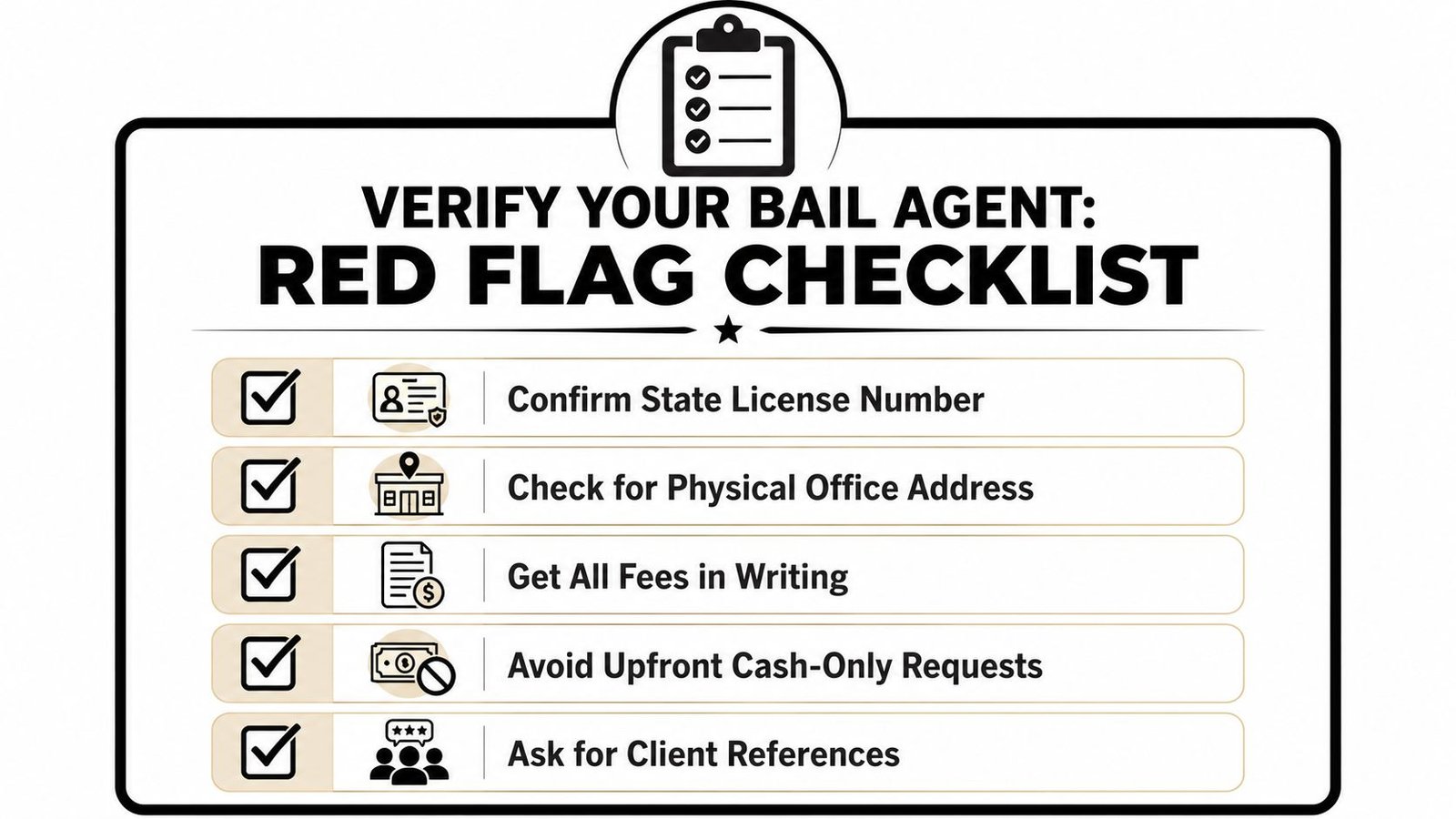
Practical rule: if the fee changes after the first phone call, slow down and read the paperwork again.
Families should also ask who will handle the case if the jail changes or the defendant is moved. A statewide agency can reduce confusion in those moments because the paperwork, payment, and release steps do not depend on one office alone. A long-running Colorado agency like Express Bail Bonds, which has been licensed in the state since 1988, gives families a verifiable footprint to check instead of relying on a quick promise over the phone.
When to Choose a Statewide Agent Like Express Bail Bonds
The best choice depends on how fast the family can act and how far the case may move. If the full bail amount is sitting in a bank account and the court accepts cash bond, self-posting can be the cheapest path. If not, a surety agent becomes the practical middle ground.
Choosing between your three main options
A local storefront agent works fine when the case stays in one county and everyone can get there in person. A statewide agent makes more sense when relatives are out of state, the jail is far from home, or the defendant may be transferred between facilities. Those are the moments when electronic paperwork and broad Colorado coverage really matter.
Express Bail Bonds is one Colorado example of a statewide surety agency that handles applications, payments, and contract documents electronically, with coverage across detention facilities statewide. For families in Denver, Jefferson County, Golden, or Centennial, that can shorten the number of stops between the arrest and the release process. If you're checking coverage, the local pages for Jefferson County and Golden, Colorado and Centennial bail bonds show how county-level access fits into a larger statewide workflow.
Before you choose, ask four questions.
- Is the license current?
- Can I sign remotely?
- What are the premium and collateral terms in writing?
- What happens if the defendant changes facilities?

A family that answers those questions quickly can often avoid a lot of delay. A family that can't should treat the bond conversation like any other high-stakes financial agreement, read every line, ask about every fee, and don't sign until the terms are clear.
Frequently Asked Questions After a Loved One Is Arrested
The first question is always about time. Once the bond is posted, release still depends on the jail's processing, so overnight delays at larger facilities aren't unusual.
The second question is about money. The premium is generally not refunded if the case is dismissed, but collateral should be returned once the bond is closed out and all obligations are satisfied. If you're wondering whether the arrest will show up publicly while you wait, you can also check if your mugshot is public so you know what information is already floating around.
The third question is whether a cosigner can handle everything remotely. In many Colorado cases, yes, electronic contracts can make that possible, which is especially helpful when family members live in another state.
The last question is what happens after release. The defendant needs to make every court date, follow travel restrictions, and avoid any new charges that could put the bond at risk.
If you need a calm, direct next step, visit Express Bail Bonds to review Colorado coverage, compare county pages, and start the paperwork without guessing at the process. Their statewide surety bond workflow can help families move from panic to action with the right documents, the right fee explanation, and a clearer path to release.